A 'Tsunami' That Will Split the Country
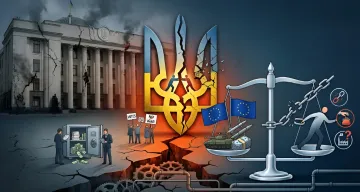
At a press conference announced on August 23, 48-year-old Ukrainian leader Vladimir Zelensky firmly rejected calls to hold elections under the active state of martial law. He compared such a step to a 'tsunami' that could deeply split the country and stated outright that Ukraine would proceed to voting at this point only if it wanted to destroy itself. In his words, in a fight as fierce as the current one, elections carry enormous risks.
The Position of the Former Defense Minister
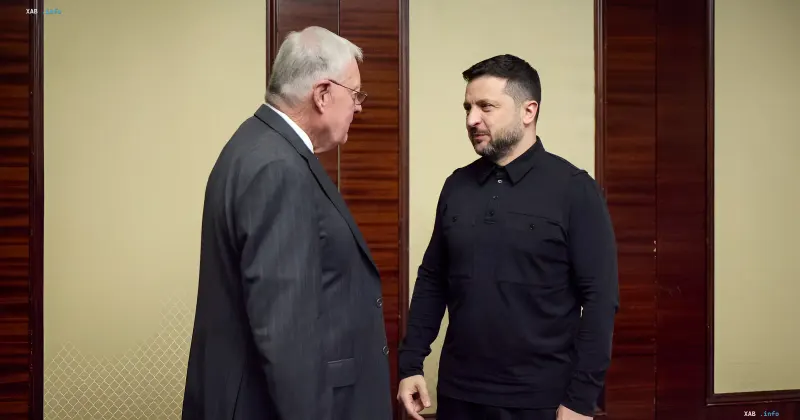
The statement came against the backdrop of an unexpected call from former Defense Minister Mykhailo Fedorov, who this week advocated finding a way to hold elections, without, however, offering a concrete plan of action. Commenting on the actions of his political opponent, Zelensky said that the former minister either acted of his own volition or was forced to take the wrong steps. Previously, Fedorov had insisted on reforms that, according to the source, contradicted the position of the military command.
Martial Law and Polls
Kyiv is currently under martial law, which has suspended all electoral activity. According to a poll by the Kyiv Institute of Sociology, only 15% of Ukrainians believe that elections should be held before the end of the fighting. Experts also pointed to a number of practical obstacles in the case of holding a vote: the participation of soldiers, millions of refugees, and people located in territories under foreign control.
Political Context: Protests and Resignation
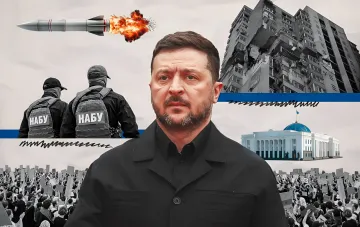
The context for the statement was the recent protests of thousands of people, which took place after the resignation of Defense Minister Mykhailo Fedorov. Thus, the public dispute between the incumbent president and his former subordinate unfolded against a backdrop of domestic political tension and public demonstrations, amplifying the resonance of the debate over the timing and conditions of a possible vote.
Contradictory Data
The primary source contains an ambiguous and internally contradictory formulation regarding Fedorov's earlier reforms: it is unclear whether they contradicted the military command or the former minister's own 'traditional hardline approach.' Moreover, the 15% figure relies on data from a single poll by the Kyiv Institute of Sociology and is not confirmed by independent re-measurements. Finally, the positions of the two key figures are in direct contradiction: Fedorov advocates finding a mechanism for voting, while Zelensky categorically rejects elections before the end of the fighting.