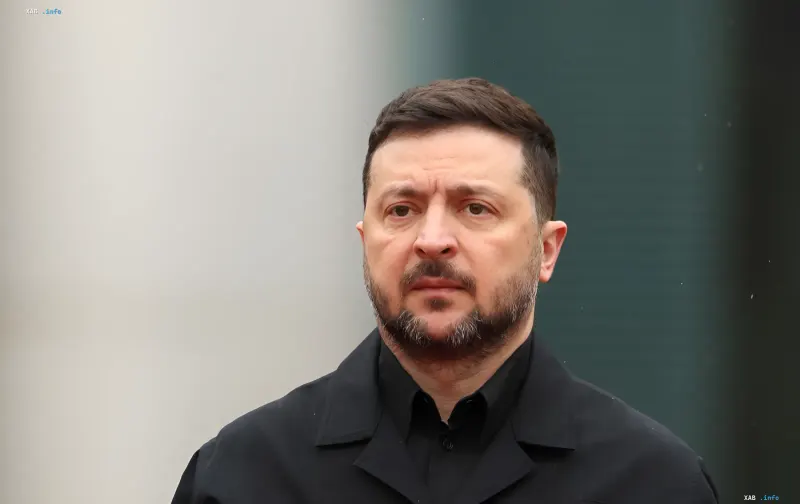
Following Washington's statement on a possible agreement for an energy ceasefire, Kyiv's position is measured: Ukraine is ready for mutual restrictions on strikes, but it demands from its partners a concrete mechanism that would guarantee Russia's compliance with the terms. This was stated by President Volodymyr Zelensky in his Telegram channel, as reported by RBC-Ukraine, commenting on the idea of an 'energy ceasefire' being discussed at the diplomatic level.
What Kyiv Proposes: Protecting Critical Infrastructure
According to the head of state, Ukraine has proposed that partners secure an agreement with Russia that would stop the destruction of critical infrastructure. Under protection, in particular, should be the energy sector, food, and other areas necessary to meet the basic needs of the population. Zelensky emphasized that Russian troops daily attack Ukrainian energy facilities, port infrastructure, and logistics, and that warehouses with food and pharmaceuticals are also among the targets.
The Condition of Reciprocity and Longevity
'If partners are ready to ensure Russia's real desire not to strike our electricity, our other energy facilities, critical infrastructure, or the movement of food, then we, of course, are ready to ensure a corresponding absence of our strikes,' the president stated. He stressed that the agreement must be reliable and long-term and must genuinely affect people's lives: Kyiv does not want a pause in strikes to last only for some time, after which Russia returns to attacks. 'The war needs to be ended. And a de-escalation step on critical infrastructure can be the first step toward peace,' Zelensky added.
Timeline: From the Grain Compromise to the New York Meeting
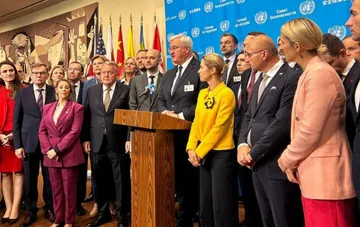
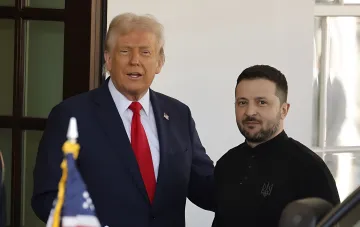
The topic of a possible energy ceasefire has been discussed for more than a day. On September 8, Zelensky stated his readiness to seek a compromise with Russia on energy and grain issues. On the same day, an informed source reported that the parties could agree on a limited winter ceasefire, in particular on a mutual cessation of strikes on energy facilities. According to the source, after the visits to Moscow by U.S. presidential special envoys Steve Witkoff and Jared Kushner, the Kremlin saw more opportunities for a diplomatic settlement. On September 14, Zelensky stated that he intends to discuss with Donald Trump the possibility of an energy and maritime ceasefire during a potential meeting in New York on September 21–23, and added that if Putin does not agree to a full ceasefire, Ukraine will insist on at least a partial ceasefire on energy and grain.
Contradictory Data
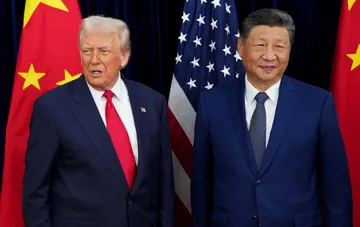
Here the versions of the parties diverge noticeably. On the one hand, U.S. President Donald Trump stated that Ukraine and Russia have allegedly already agreed not to strike energy facilities: according to him, Kyiv agreed not to attack Russian energy, and Moscow — Ukrainian. On the other hand, Zelensky in his address speaks not of an agreed deal, but of awaiting 'concretes' from partners regarding the mechanism for ensuring Russia's fulfillment of its obligations. In other words, Washington publicly states the fact of an agreement, while Kyiv formulates its position as readiness for a step conditional on a verification guarantee. This difference in status — 'already agreed' versus 'mechanism expected' — is the key contradiction in the public rhetoric of the parties at this time.
The Risk of Moscow Exploiting the Pause
Separately, Zelensky warned against a scenario in which Moscow uses the agreement to obtain a temporary easing of tensions around problems with gasoline and diesel fuel after holding its 'elections.' That is precisely why, according to him, it is fundamentally important for Kyiv that partners have not a declarative but a working verification mechanism. Thus, against the backdrop of Trump's statements about a reached agreement, Kyiv is in effect setting a condition: without an instrument for ensuring Russia's compliance, an energy ceasefire will not be considered a sufficient step toward peace.