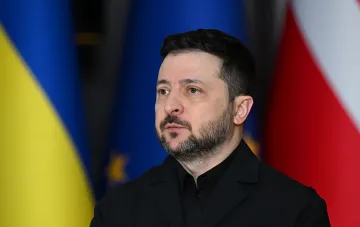
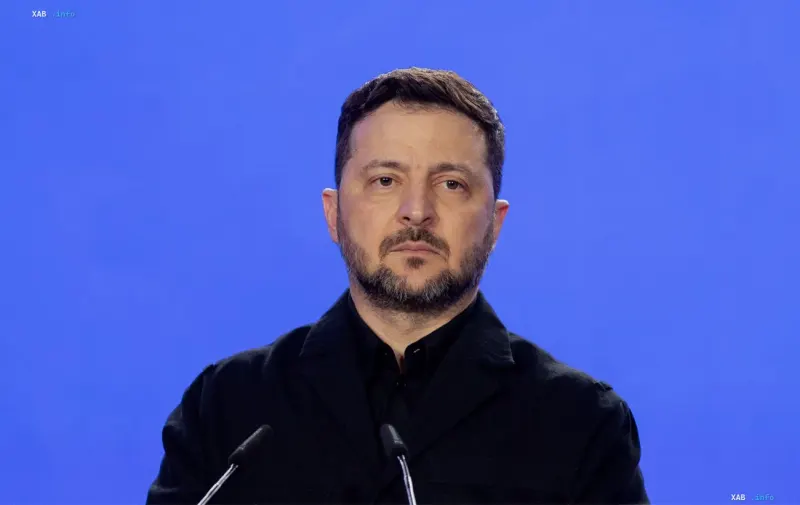
Speaking at a session of the UN General Assembly, President of Ukraine Volodymyr Zelensky stated that if Russia continues its strikes on Ukraine's energy infrastructure and heating systems, the weather factor could become a serious strategic obstacle for Moscow as early as the coming winter. In his words, no Russian official could have imagined a scenario in which "General Frost," who had served Russia for centuries, would one day switch sides to those defending themselves against it.
A Historical Metaphor in a New Context
The term "General Frost" in Russian-language journalism and military history traditionally refers to harsh winter conditions — severe frosts, blizzards, the freezing of equipment and communications — which for centuries have created additional difficulties for armies invading the territory of Russia and Eastern Europe. Napoleon's French troops, the German divisions of the Wehrmacht, and other conquerors of various eras have all faced this "invincible adversary." In his address to the UN General Assembly, Zelensky reinterpreted this metaphor: if Russia is deliberately destroying Ukraine's heating and power grids, then in the conditions of an abnormally cold winter, the lack of functioning heating and energy supply could turn into a factor for the Russian troops and occupation administrations that historically "fought on Russia's side."
The Condition: Strikes on Energy
The President of Ukraine directly tied the realization of this scenario to a specific condition. "We will make sure this happens already this winter if Russia continues to attack our energy sector and heating," he stated. Thus, Zelensky outlined a clear cause-and-effect logic: the continuation of Russian attacks on Ukraine's energy infrastructure will create the preconditions under which the cold season will become for Moscow not merely a climatic phenomenon, but a tool intensifying pressure on its positions. The statement came against the backdrop of ongoing Russian missile and drone strikes on Ukrainian power plants, substations, and heating networks, which, on the eve of the heating season, are causing concern both in Kyiv and in European capitals.
An Energy Ceasefire: The Positions of Washington and Kyiv
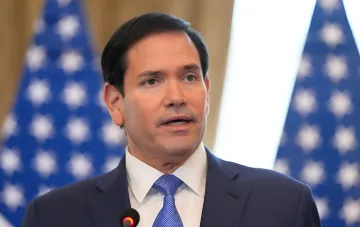
The context for Zelensky's statement was recent information conveyed by US Secretary of State Marco Rubio: in his words, Russia has shown interest in a so-called energy ceasefire — a limited cessation of mutual strikes on energy facilities. In response to this signal, Zelensky stated that Kyiv is ready to agree to such a format. Ukraine, in his words, is ready to suspend strikes on Russian energy facilities on the condition that Moscow also stops its attacks on Ukraine's energy sector. Thus, the statement about "General Frost" was made within the same discourse: Zelensky simultaneously indicated readiness to negotiate an energy ceasefire and warned of the consequences should Moscow reject this format.
Contradictory Data
In the provided fact-checking sources, the main theses of Zelensky's statement are consistent: all four outlets (RBC-Ukraine, Comments.UA, Korrespondent, Radio Svoboda) record the speech at the UN General Assembly, the "General Frost" metaphor, and the link to the winter season. The differences concern only the wording: RBC-Ukraine and Comments.UA emphasize the threatening nature of the statement ("threatened"), while Radio Svoboda uses a softer construction — "threatened to make the winter painful for Russia." Korrespondent focuses on the combat context — "will fight against the Russian Federation." The essence of the message is identical in all cases; no discrepancies in dates, figures, or the status of the parties to the conflict have been identified.
What This Means for the 2026–2027 Winter
Zelensky's statement at the UN General Assembly records two parallel vectors. The first is diplomatic: Kyiv publicly confirms its readiness for an energy ceasefire, creating space for negotiations with Washington's mediation. The second is military-strategic: Ukraine warns that if Moscow refuses the ceasefire, the cold season of 2026–2027 could become a period in which the energy infrastructure destroyed by Russian strikes and the absence of heating turn into a factor complicating the position of Russian forces. For European countries, which depend on the stability of Ukraine's energy system and are concerned about the risk of a humanitarian crisis in the conditions of an abnormal winter, this statement becomes an additional argument in favor of pressuring Moscow to achieve an energy ceasefire.