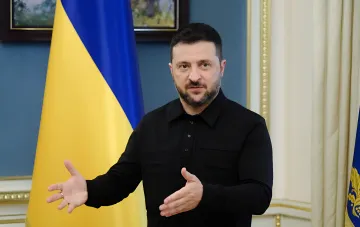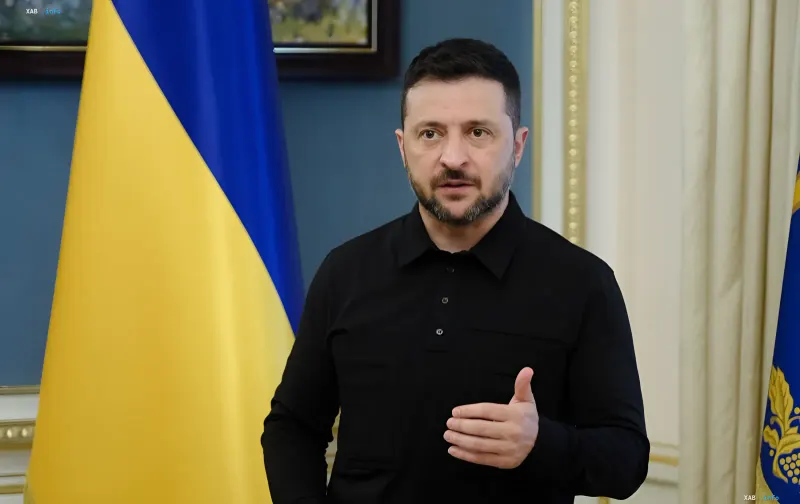
During a meeting with journalists, Ukrainian President Volodymyr Zelensky commented on the strained relations with Kyiv Mayor Vitali Klitschko, which arose against the backdrop of the capital's preparations for the winter heating season. The head of state stated that attempts to attract additional managers to work on strengthening Kyiv's infrastructure raise concerns for Klitschko regarding a potential change in city leadership.
"The Mayor gets the impression that someone wants to replace him"
According to Zelensky, every time the issue of strengthening Kyiv ahead of winter is discussed with potential managers, the capital's mayor forms the impression that there is an intention to oust him behind it. "As soon as we discuss with some managers how to strengthen Kyiv, the mayor gets the impression that someone wants to replace him," RBC-Ukraine quotes the president as saying. At the same time, Zelensky emphasized that he has "nothing personal" against Klitschko and does not intend to interfere in political issues, but believes that under wartime conditions, the capital's critical infrastructure must be protected, and its resilience plans fully prepared.
Kharkiv as an example of interagency coordination
As a positive example of coordination between city and regional authorities, the president cited Kharkiv. According to him, despite constant Russian attacks, the head of the regional administration and the mayor of Kharkiv work together, forming a group of managers capable of promptly solving problems and maintaining the situation in the city. "It's very cool when a group of managers works in every city, who can solve problems and keep the situation in the city under control. There, the RSA head and the mayor work together," Zelensky noted, adding that in wartime it is important not to look for culprits, but to jointly protect critical infrastructure and ensure the operation of key facilities. "We have one common enemy, one winter, and one country. And we need to do something about it," the head of state concluded.
Chronology of the conflict: from accusations to a report in the Rada
Tension between the president and the capital's mayor had been growing throughout October. On October 9 and 13, Zelensky publicly accused the Kyiv authorities of improper preparation for the heating season and slowing down the implementation of the city's resilience plan. On October 13, the Verkhovna Rada summoned Vitali Klitschko to report to parliament. Speaking to deputies on October 14, the mayor of the capital rejected the accusations, pointing to large-scale Russian shelling of thermal power plants, the government's blocking of funds intended for cities, and a shortage of air defense assets to protect critical infrastructure.
Context: winter crisis and the issue of urban resilience
Zelensky's statements came against the backdrop of a general escalation of discussion regarding the readiness of Ukrainian cities for winter amid the ongoing war. The issue of preparing energy infrastructure, coordinating actions between central and local authorities, and distributing resources for recovery after attacks remains one of the keys to ensuring the livelihood of the population. The president's position, in his own words, boils down to the need for joint work of all institutions — without looking for culprits and without political intrigues, — while the capital's administration, according to Klitschko, points to objective constraints created by both military actions and decisions of the central government.