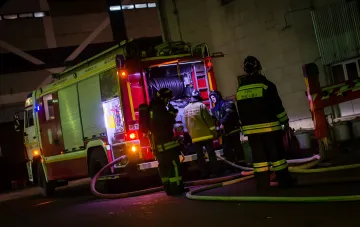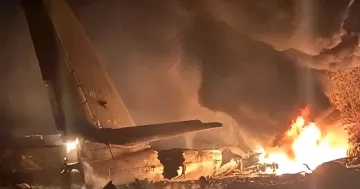
On the night of September 20, 2026, the Ukrainian Armed Forces carried out a massive strike on Moscow and the surrounding areas. President Volodymyr Zelensky confirmed on his Telegram channel the destruction of one of the key enterprises of the Russian oil industry and a logistics facility, emphasizing that this amounts to "billions of dollars supporting the enemy's war machine." According to information received by the XAB.info editorial team, as a result of the nighttime drone attack, the Gazprom Neft-MNPZ oil refinery in Moscow caught fire; the facility reportedly supplies around 40% of the Russian capital's fuel needs.
Scale of the strike and targets hit
In his statement, Zelensky did not name the specific enterprise, limiting himself to the phrasing "one of the key enterprises of the Russian Federation's oil industry and a logistics facility of the aggressor." However, the editorial summary prepared following the nighttime events mentions the name "Gazprom Neft-MNPZ" — one of the largest oil refineries in the Moscow region. In addition to the oil refining hub, a logistics facility was hit, which, by Kyiv's logic, strikes at the supply chains critical to the functioning of the Russian war machine. Separately, the president reported the use of "sanctioned" strikes on an enterprise in the Voronezh region, indicating an expansion of the geography of long-range operations beyond the capital's agglomeration.
Armament: from FP-1 to 'Flamingo' and Pelican
Zelensky's statement lists an impressive array of weapons employed in the nighttime operation: FP-1, RZ-100, MICH-2000, "Palynitsa", Vendetta, "February", "Bars", "Flamingo", "January" and Pelican. The presence in the list of both unmanned aerial vehicles and long-range missile systems (the latter including, in particular, "Flamingo") points to a combined strike tactic: drones were used to overload air defense systems, while precision-guided missiles were intended to hit specific infrastructure targets. Zelensky thanked everyone "who is strengthening Ukraine's long-range capabilities," indirectly confirming the involvement of external suppliers in supporting the operation.
Kyiv's position: "Moscow must choose peace"
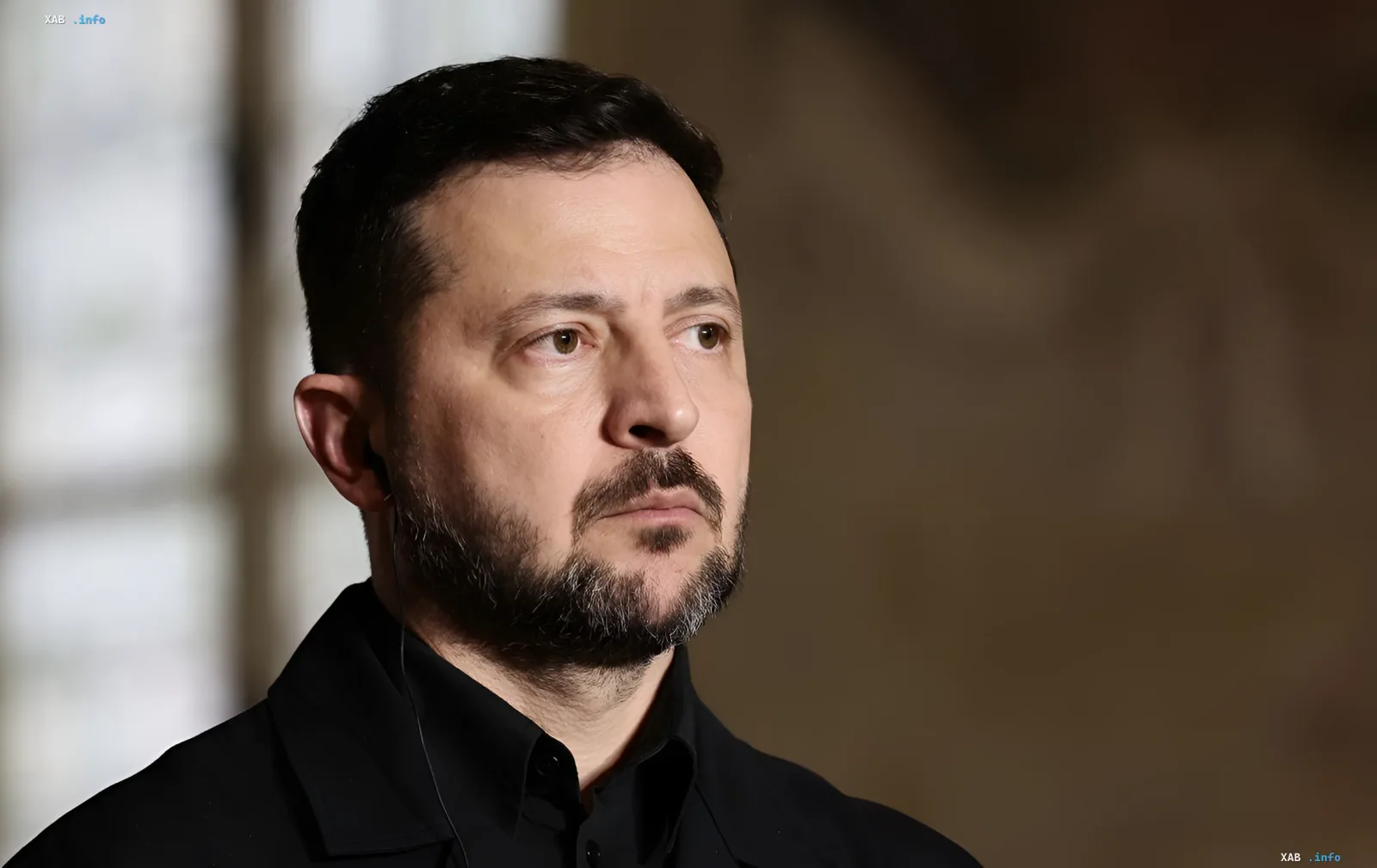
In political terms, Zelensky stated that Moscow "must not build tiered air defense rings at the expense of other regions, but end its cruel war and choose peace." The president listed the "steps for de-escalation on the table": a settlement in the energy sector and ensuring food security. "Political will is needed," he emphasized, effectively shifting responsibility for the continuation of the conflict onto the Russian side while simultaneously demonstrating that Ukraine retains the ability to strike critical infrastructure deep in the rear.
Contradictory data
Significant discrepancies exist in assessments of the scale of the attack and its consequences. According to data cited in the Russian summary and recounted in the editorial text, 450 drones were shot down alone on approach to Moscow. Meanwhile, the source ukraina.ru, citing the chronicle of events on the morning of September 20, claims 1,600 drones were shot down over Moscow — a difference of more than threefold. Moreover, the Ukrainian side confirms the destruction of a specific oil refinery and a logistics facility, whereas Russian reports focus on a "record attack" covering "dozens of regions" and on air defense success, effectively downplaying the confirmed damage. A separate dissonance is created by the political framing: Ukrainian media (RBC-Ukraine, Fakty, Charter97) present the event as a successful military operation, while ukraina.ru interprets the strike as an attempt by Zelensky to "sabotage the elections," which finds no corroboration in Kyiv's statements. The name of the specific refinery ("Gazprom Neft-MNPZ") appears in the editorial summary but is not mentioned in Zelensky's direct statement, requiring additional verification.
Context and significance for further dynamics
The nighttime operation on September 20 became one of the largest strikes on the Moscow region over the entire course of the conflict. The destruction of an oil refinery supplying a significant share of the capital's fuel market has not only military but also economic significance: a possible reduction in refining capacity could affect fuel prices and logistics in Russia's largest metropolis. The simultaneous strike on the Voronezh region demonstrates that the Ukrainian side continues to expand the radius of its long-range operations. Zelensky's statement about "steps for de-escalation" in the energy and food security sectors, made in the context of confirming a successful strike, can be regarded as an element of a negotiation strategy: a demonstration of the ability to inflict damage combined with an offer of "political will" for a ceasefire.