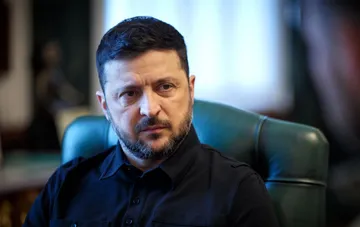
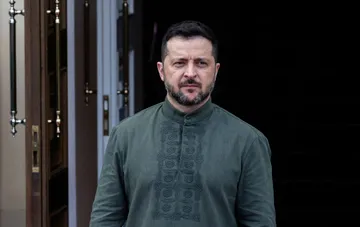
Ukrainian President Volodymyr Zelensky commented on the initiative by US leader Donald Trump for a so-called "energy ceasefire" between Kyiv and Moscow. This is reported by RBC-Ukraine, citing Zelensky's interview with CBS News. According to the Ukrainian president, Kyiv is ready to abide by such an agreement, but with a number of fundamental caveats related to the asymmetry of the consequences of strikes on energy infrastructure for the two sides of the conflict.
Asymmetry of losses: what energy means for Kyiv and Moscow
"We are ready for an energy ceasefire, but you must understand what that means for us," Zelensky said in the CBS News interview. The president drew attention to the fact that attacks on energy facilities have entirely different significance for each side. "For Putin, energy infrastructure is the sale of oil and gas. For Ukraine, energy means having electricity in the homes of our citizens," he emphasized. Thus, Kyiv underlines that for Ukraine this is not about export flows but about the basic life support of the population, which makes any strikes on power grids critical for the country.
Russia's position and Moscow's reaction
In Moscow, Trump's idea of an "energy ceasefire" has already been assessed positively. According to Russian presidential press secretary Dmitry Peskov, Russia maintains contacts with the Americans and is in favor of peaceful solutions. This creates a formal basis for continuing negotiations; however, as Zelensky notes, verbal support for the initiative is not equivalent to a guaranteed cessation of strikes on Ukrainian energy facilities.
Awaiting a concrete guarantee mechanism
The key condition on Kyiv's side is not simply a declaration of intent, but the existence of a concrete mechanism guaranteeing Russia's compliance with the terms. After the US statement about a possible agreement on an energy ceasefire, Zelensky directly stated that he is awaiting precisely such a mechanism. Without verification and control, by the logic of the Ukrainian side, the "energy ceasefire" risks remaining at the level of verbal formulations not backed by practical control tools.
Contradictory data
A discrepancy in the wording of the parties has emerged in the public domain. On the one hand, Donald Trump declared an allegedly already reached agreement between Ukraine and Russia to cease strikes on energy facilities, i.e., presented the initiative as a fait accompli. On the other hand, Volodymyr Zelensky does not confirm the existence of a ready-made agreement, but speaks of Kyiv's "readiness" and the need to await a concrete guarantee mechanism. Thus, the American side publicly records a "reached agreement," while the Ukrainian side interprets the situation as an open field for negotiations with a mandatory condition — the existence of working guarantees. This difference in the status of the initiative (a fait accompli versus an intention) is the main contradiction in the current communication.
Context and prospects
The "energy ceasefire" initiative fits into the broader context of attempts by the parties and mediators to reduce the intensity of strikes on critical infrastructure. For Kyiv, accepting such an agreement is possible only on the condition that it is symmetrical and backed by a control mechanism, rather than becoming a unilateral restriction. This is precisely why, despite Kyiv's formal readiness, experts and observers assess the sustainability of a possible ceasefire skeptically until a concrete verification tool and accountability for violations are determined.