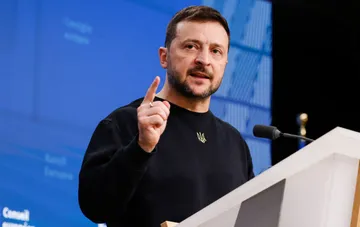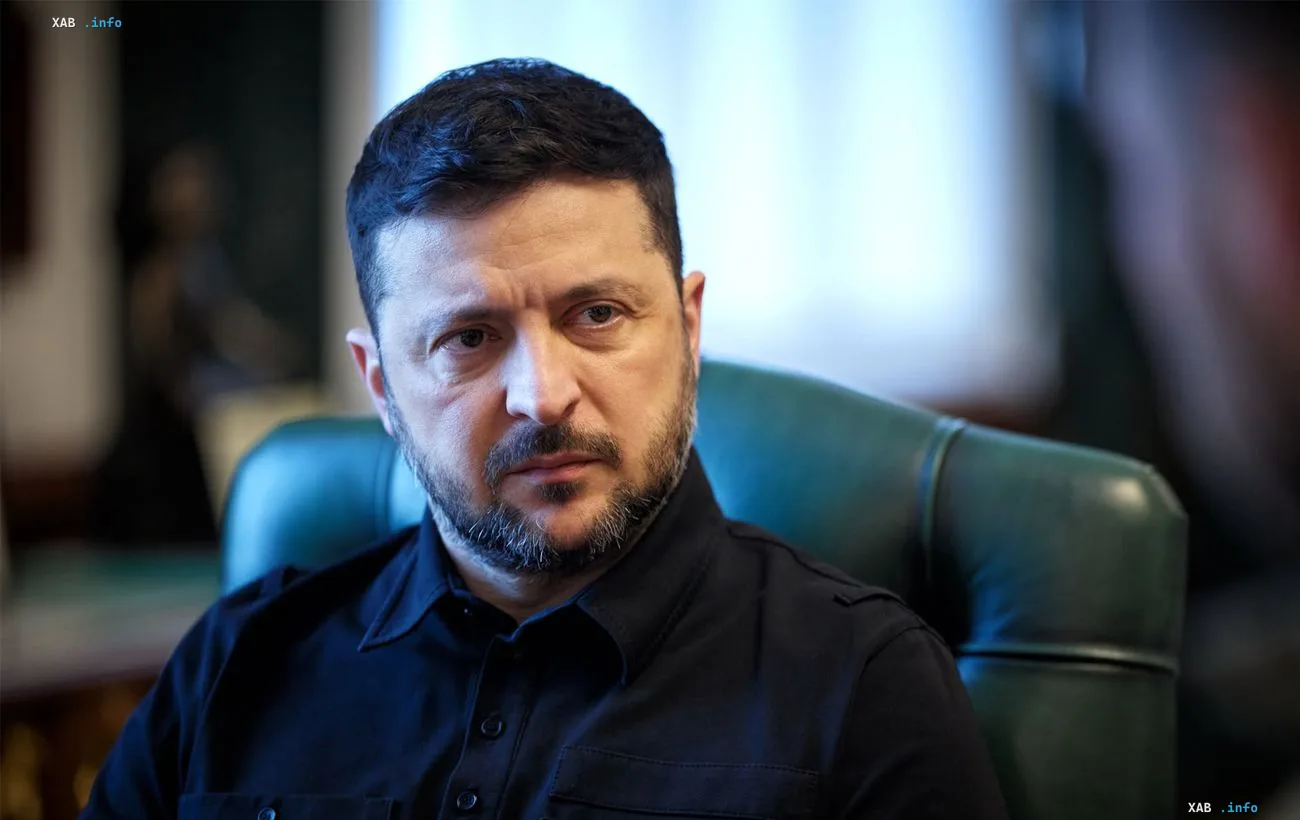
In an exclusive interview with The Wall Street Journal, Ukrainian President Volodymyr Zelensky provided a detailed assessment of the dynamics at the front over the first nine months of 2026. According to him, since the beginning of the year the Russian army has occupied 890 square kilometers of Ukrainian territory, while the Defense Forces liberated 800 square kilometers over the same period. Moscow's net advance thus amounts to just 90–100 square kilometers — a figure the head of state described as "nearly static" compared to previous campaigns.
The pace of the offensive has dropped by a factor of several
Zelensky emphasized that in previous years the Russian army occupied between 3,000 and 4,000 square kilometers per year. The current pace — around 100 square kilometers over nine months — indicates, in his assessment, that on the battlefield "almost everything is standing still." The President noted that to achieve such minimal territorial results, Moscow paid a colossal price: since the start of 2026, Russian army losses have amounted, according to his data, to approximately 260,000–270,000 servicemen.
"He is not winning, but he is not losing either"
Commenting on the Kremlin's strategic logic, Zelensky stated that for Moscow, human losses in themselves do not mean defeat, but the overall picture at the front is "unfavorable for Putin." "He is not winning, but he is not losing either, because for him human losses do not mean defeat," the President emphasized, pointing out that the Russian side continues to wage war by relying on numerical superiority in manpower rather than on tactical successes.
An energy truce and the possibility of direct talks
In the same interview, Zelensky stated that Ukraine is ready for so-called energy truce: Kyiv will refrain from shelling Russian energy facilities on the condition that Moscow stops strikes on Ukraine's energy infrastructure. In addition, the President allowed for the possibility of direct talks with Vladimir Putin, emphasizing that the main criterion for any meeting should be a concrete result, not a symbolic gesture.
Context and methodology of the figures
The data cited by Zelensky — 890 sq. km of occupation, 800 sq. km of de-occupation, and 260,000–270,000 losses — are an assessment by the Ukrainian side, voiced in the format of a presidential interview. Independent verification of territorial changes under conditions of ongoing hostilities remains extremely difficult, and loss figures, as a rule, vary significantly depending on the source. Nevertheless, the order of magnitude stated in WSJ is consistent with the trend that Western analytical centers have been recording since the start of 2026: a sharp slowdown in the pace of the offensive by both sides on most sections of the front.