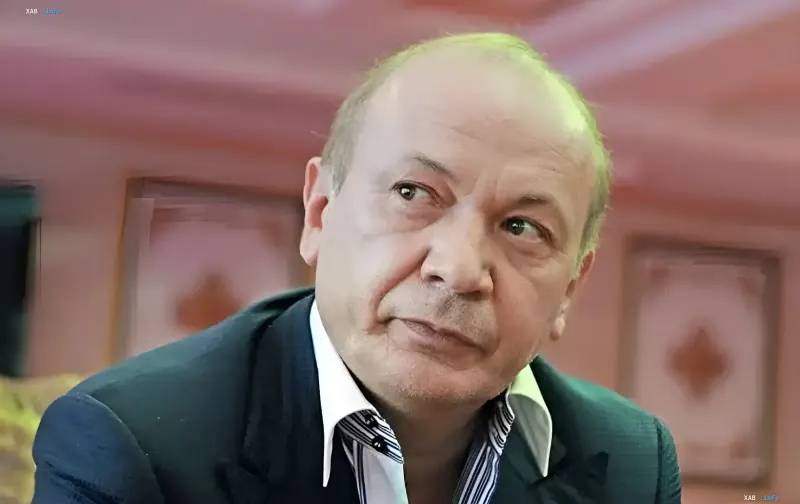
President of Ukraine Volodymyr Zelenskyy signed Decree No. 746/2026, implementing the decision of the National Security and Defense Council dated August 20, 2026, on the application of personal special economic and other restrictive measures against a number of individuals, including former People's Deputy of the 'Party of Regions' Yuri Ivanyushchenko, known by the nickname 'Yura Yenaikiivskyi'. This is reported by RBC-Ukraine citing the text of the decree. Thus, one of the key associates of former President Viktor Yanukovych, who left the country in December 2014 and currently resides with his family in Monaco, has officially fallen under the Ukrainian sanctions regime.
The case of legalizing state lands
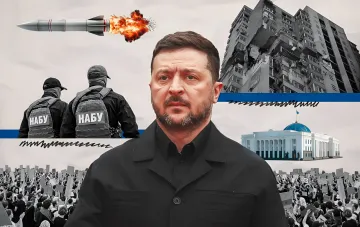
The sanctions became a logical continuation of the anti-corruption investigation. The National Anti-Corruption Bureau of Ukraine (NABU) issued a wanted notice for Ivanyushchenko in connection with a case involving the probable legalization of 18 hectares of state land in the Kyiv region, valued at over 160 million hryvnias. According to the investigation, the former MP is involved in a scheme for the illegal alienation of state plots, causing damage to the budget in an especially large amount. It was this case that formed the basis for subsequent appeals by NABU to the President and the Security Service with a request to initiate restrictive measures.
Financial ties with Russia and trips after the invasion
During the investigation, NABU detectives recorded Ivanyushchenko's financial ties with the Russian Federation: he carried out economic activity both in temporarily occupied territories and in the territory of the aggressor state, paying taxes into the Russian budget. According to the publication 'Schemes' (Radio Liberty), Ivanyushchenko obtained a Russian Federation passport in Rostov-on-Don as early as 2004 and also held two foreign Russian passports. After the start of the full-scale invasion, according to the investigation, he made at least ten trips to Russia.
Contradictory data
There are several inconsistencies in the public picture of the case that must be reflected honestly. First, in 2019, the Ministry of Internal Affairs of Ukraine removed Ivanyushchenko from the wanted list, whereas now NABU is actively searching for him regarding the land case — meaning the wanted status has changed depending on the agency and the stage of the investigation. Second, on August 10, 2026, NABU Director Semen Kryvonos stated that the SBU had twice refused to initiate the introduction of sanctions against Ivanyushchenko. Nevertheless, the decree on sanctions was signed by the President on August 20, 2026, indicating either a renewed appeal and a change in position, or a decision by the NSDC based on a different legal ground. Both circumstances confirm that the process of introducing restrictions was non-linear and accompanied by inter-agency disagreements.
Chronology and context
The chronology of events is as follows: in March 2026, NABU appealed to President Zelenskyy and the SBU with a request to initiate the application of sanctions against the former MP; on August 10, 2026, the head of the bureau publicly reported two refusals from the SBU; on August 20, 2026, the NSDC adopted a decision on personal restrictive measures; Decree No. 746/2026 was signed and published. Previously, in 2019, the MIA had removed Ivanyushchenko from the wanted list, making the current decision on sanctions and the search a new stage of pressure on the subject. Ivanyushchenko, who left Ukraine in December 2014 and lives in Monaco, remains outside Ukrainian jurisdiction at the time of publication, complicating the practical enforcement of restrictive measures.
What this means next
The introduction of personal sanctions implies the blocking of assets, a ban on transactions, and a number of other restrictions within the framework of Ukrainian legislation. For the case regarding the legalization of 18 hectares of land, this is an additional tool of pressure and a signal that anti-corruption bodies intend to achieve results regarding 'Yanukovych-era' figures, even those abroad. However, as the history with the two SBU refusals and the change in wanted status shows, the path to the final resolution of the case remains long and dependent on political will and inter-agency coordination.