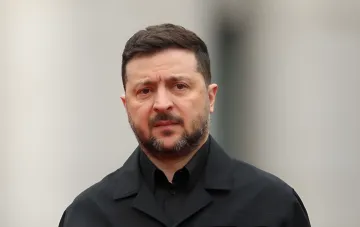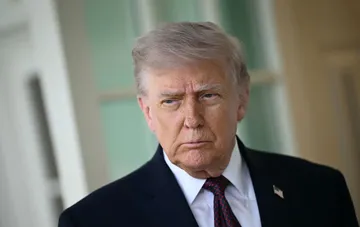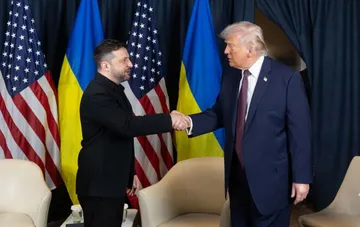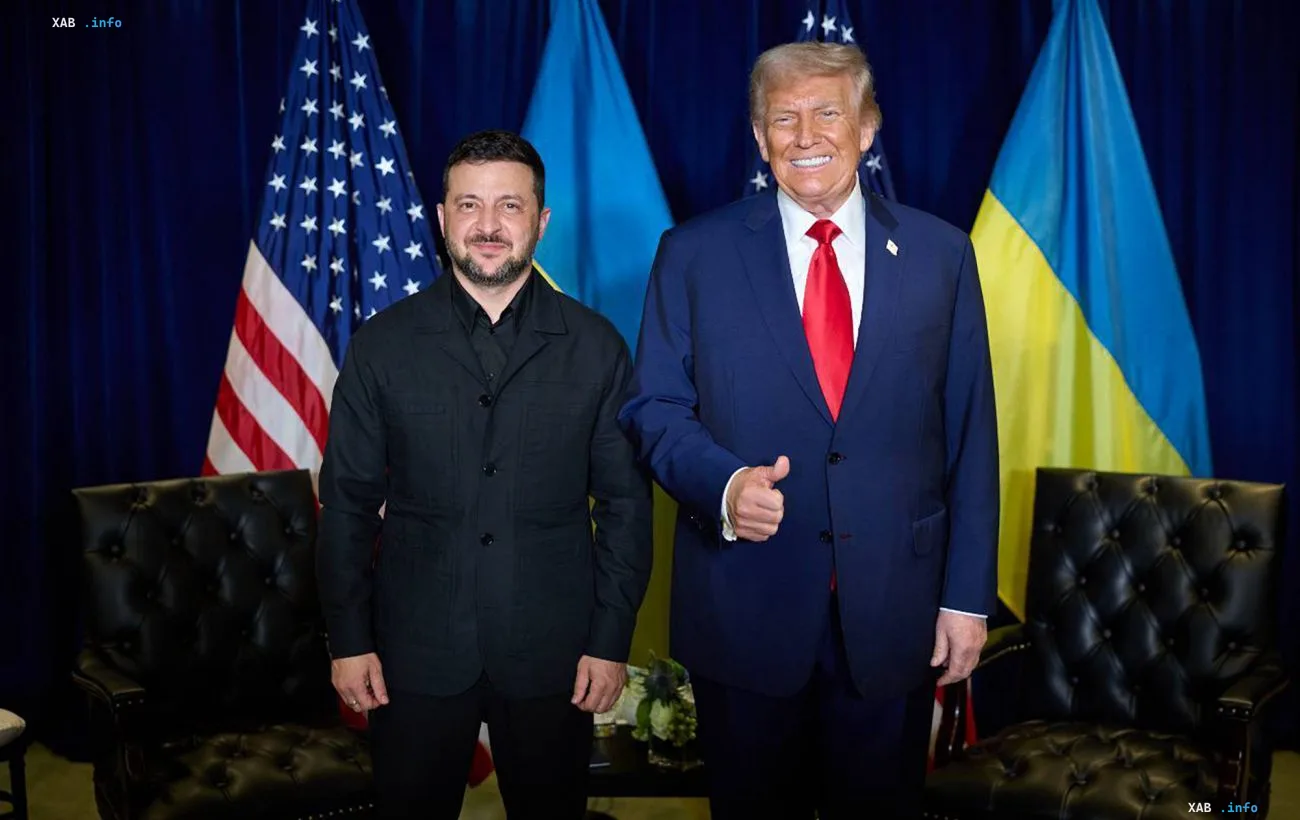
Ukrainian President Volodymyr Zelensky and the President of the United States, Donald Trump, are holding a meeting in New York on September 22, 2026. According to Alexandra Leonova, Executive Director of the Penta Center for Applied Political Studies, the very fact of this contact is already a positive signal for Kyiv and its allies. The expert emphasized that just a few days earlier, the White House had officially stated that no contacts between the two leaders were planned. In her words, the turning point in the schedule came after the strikes on Moscow and the Moscow region: it was then that Trump personally called to confirm the meeting.
Context: From Refusal to Confirmation
The chronology of the preparations for the talks shows a sharp shift in Washington's position. If the White House press office had previously categorically denied any preparations for a bilateral meeting, then after a series of strikes on the Russian capital and the surrounding regions, Trump himself picked up the phone and agreed to a face-to-face format. Leonova also drew attention to the American president's public statements about Russia, in particular his words that "Russian dictator Vladimir Putin does not control his own oil and gas industry." In the expert's view, such rhetoric creates a particular information backdrop for the negotiations and may influence the tone of the final documents.
The Main Expected Outcome: A Declaration on Ceasefire
Leonova stated outright that it is difficult to speak of any breakthrough or urgent outcomes of the meeting "right here, right now." Nevertheless, she named a joint declaration or statement as the most likely outcome, one that would enshrine the principle that a full and unconditional ceasefire must precede any peace negotiations. The expert noted that the United States has begun to gradually return to this formulation — the need for such an approach is already being voiced by American representatives at the UN and by diplomats. In her words, India and Kazakhstan have also expressed support for this initiative, while China is speaking on the matter cautiously. According to Leonova's assessment, the formation of such a joint approach will become serious political pressure on Russia.
Military Cooperation: Why PAC-3 Will Not Arrive and "Tomahawks" Are a Matter of Fantasy
The question of arms supplies is also expected to come up during the talks. However, in Leonova's assessment, the transfer of PAC-3 missiles to Ukraine is highly unlikely: following Iran's recent attacks on U.S. bases in the Middle East, the United States has only about 500 missiles of this type left, and Washington is unlikely to hand them over. The expert considers a more realistic scenario to be the U.S. confirming its readiness to provide a license for the production of similar weapons on Ukrainian facilities. At the same time, she warned that the process will be lengthy: as an example, Leonova cited Japan, which took about five years from obtaining the license to the industrial production of PAC-3. "Ukraine is unlikely to be able to speed up this process significantly," the expert concluded. As an additional agenda item, Leonova mentioned the possibility of returning to the topic of Tomahawk missiles, which the U.S. had been actively discussing a year ago: "If we return to this topic, it would be a nice way to pressure Russia."
The Sanctions Trick: The Graham–Blumenthal Act
Another working issue that may be raised at the meeting, Leonova named, is the implementation of the Graham–Blumenthal Act — a major American sanctions package against Russia and Iran, signed by Trump in September 2026. The document was drafted by Senator Lindsey Graham and Senator Richard Blumenthal. The expert linked its practical application to the task of increasing pressure on Moscow and its allies in order to push them toward a ceasefire. Thus, the sanctions agenda is viewed not as a standalone tool, but as an element of comprehensive pressure, combined with the diplomatic initiative of "ceasefire first, then negotiations."
Contradictory Data
In the experts' assessments and the official statements of the parties, a number of inconsistencies can be traced. On the one hand, the White House, a few days before the meeting, publicly stated that "no contacts are planned," which created the impression of a lack of political will on Washington's part. On the other hand — the very fact of the urgent confirmation of the meeting at Trump's initiative after the strikes on Moscow indicates the opposite: the contact was not only possible but necessary for both sides. Moreover, Leonova, on the one hand, calls the meeting a "positive moment," while on the other — directly points out that the goals of the negotiations are "fairly vague and will not produce an effect right here, right now." This internal contradiction in the assessment — from optimism about the very fact of dialogue to pessimism about the concrete results — reflects the real state of the negotiation process, in which the symbolic significance of the meeting currently outweighs its practical payoff.
Bottom Line: Symbolism Over Substance
The meeting between Zelensky and Trump on September 22, 2026, according to the totality of expert assessments, is unlikely to bring instant breakthroughs in the "we signed — and the war is over" format. However, its significance goes beyond a single day: enshrining the "ceasefire before negotiations" formula in a joint document, the possible discussion of licenses for weapons production, and the practical implementation of the Graham–Blumenthal sanctions act — all of this forms a cumulative pressure effect on Russia. For Ukraine, the key will be whether it can turn the symbolic gesture into concrete commitments, and for Washington — into a balance between supporting Kyiv and its own limitations on arsenal and diplomatic resources.