Ukrainian President Volodymyr Zelensky, in a conversation with journalists, described in detail for the first time the course of behind-the-scenes negotiations with the US administration and SpaceX on the use of the Starlink satellite network on Russian territory for Ukraine's defense needs. According to him, the initiative came from Ukraine's Ministry of Defense in the first half of 2026, and the process itself included personal meetings with US President Donald Trump, contacts with SpaceX head Elon Musk, and parallel diplomatic work with the leaders of the EU and France. The statement came against the backdrop of ongoing debates over whether it is permissible to extend the coverage area of a commercial satellite communication network to enemy territory in the context of an armed conflict.
How the negotiations began: the Ministry of Defense request and the first meeting with Trump
According to Zelensky's account, in the first half of 2026 Ukraine's Ministry of Defense sent him a request to find a way to agree with Trump on the use of Starlink on Russian territory for military needs. The head of state reported that, according to the information he had received, SpaceX had "apparently already given its approval" to this, and it remained to settle the matter at the political level. Relying on this data, Zelensky held a meeting with the US president and, according to him, directly stated that Musk had confirmed the corresponding use to Ukraine. The parties agreed that the American side would conduct internal discussions if SpaceX were ready. In parallel, Zelensky met with European Commission President Ursula von der Leyen and European Council President António Costa and agreed on the necessary funding from the EU.
Disagreement with Trump: 'you lied to me'
At the second meeting with the US president, Zelensky said, the latter stated that the Ukrainian leader had "apparently lied" to him, since Musk ultimately refused Ukraine the use of Starlink on Russian territory. Zelensky acknowledged that after this he returned to the Ministry of Defense, where he was told that "maybe that's how it was." Thus, the President of Ukraine effectively confirmed that SpaceX's initial "approval" had not been finally secured and was revoked at the level of Musk himself, which gave rise to mutual claims between Kyiv and Washington.
Musk's position and the escalation issue
Zelensky explained that, according to the information he had, Musk views the expansion of Starlink's use to Russian territory as a potentially major escalation and publicly emphasizes that he is in favor of ending the war, not prolonging it. At the same time, the President of Ukraine expressed hope that the billionaire might change his position if he sees additional arguments, since he had previously made decisions on Starlink that helped save lives. He reported that Ukrainian representatives and Trump's team had already been in contact with Musk, and recently the feedback had become more encouraging. Separately, Zelensky mentioned that at Versailles French President Emmanuel Macron had worked on this issue with Trump, after which, according to him, the American leader stated: "Okay, I will support the Starlink idea." According to him, Finnish President Alexander Stubb also helped with the negotiations; in total, about ten world leaders were involved in the topic.
Parallel track: response to the Russian and Chinese analog
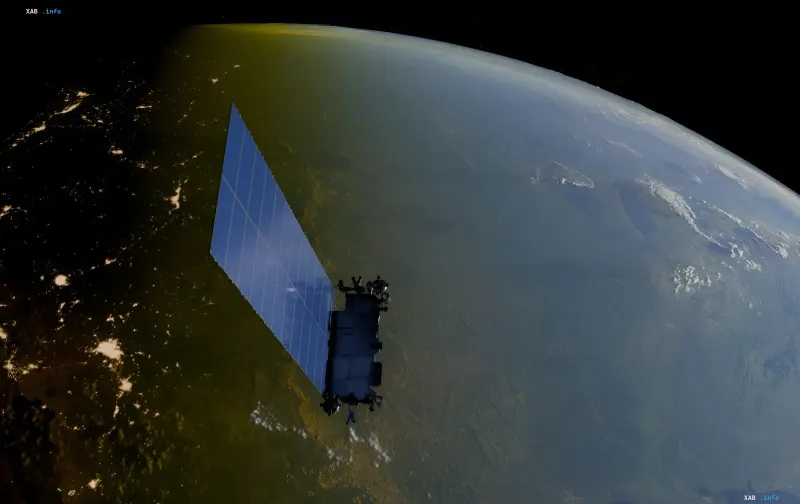
Separately, Zelensky outlined a "parallel track": Ukraine, according to him, does not intend to wait until Russia and China deploy their own Starlink analog, which, in his assessment, they are building and want to use in the war. "When they launch it, we will also launch something of our own," the president stated, pointing to Kyiv's readiness to deploy its own satellite solution in response. This statement fits into the broader context of the race in satellite communication systems, where, as previously reported, Russia is developing its own "Rassvet" project.
Contradictory data
Zelensky's statements and previously published reports contain several inconsistencies that must be honestly reflected. First, according to him, SpaceX first "apparently gave its approval," and then Musk refused, calling it an escalation; meanwhile, Zelensky himself could not definitively confirm whether the initial consent was real or merely an interim signal. Second, at the second meeting Trump, according to Zelensky's version, accused him of lying, whereas at Versailles, according to the same words of the Ukrainian president, the American leader stated that he would support the Starlink idea. Third, it had previously been published that Trump did not want to push for an expansion of Starlink's coverage for Ukraine even after Zelensky's personal request, which partially contradicts the thesis of "more encouraging feedback" and support at Versailles. All these versions are based on the words of a single source — the President of Ukraine — and do not contain independent confirmation from SpaceX, the White House, or Ukraine's Ministry of Defense in the provided materials.
Thus, the question of Starlink's operation over Russian territory remains one of the most sensitive political and technological nodes of the conflict: it ties together SpaceX's commercial interests, escalation risks, the position of the US administration, and Kyiv's parallel efforts to create its own satellite infrastructure. According to Zelensky, the negotiations are ongoing, however, the final decision, it seems, depends on whether Musk and Trump can be convinced that expanding the network's coverage area will not lead to uncontrolled escalation.