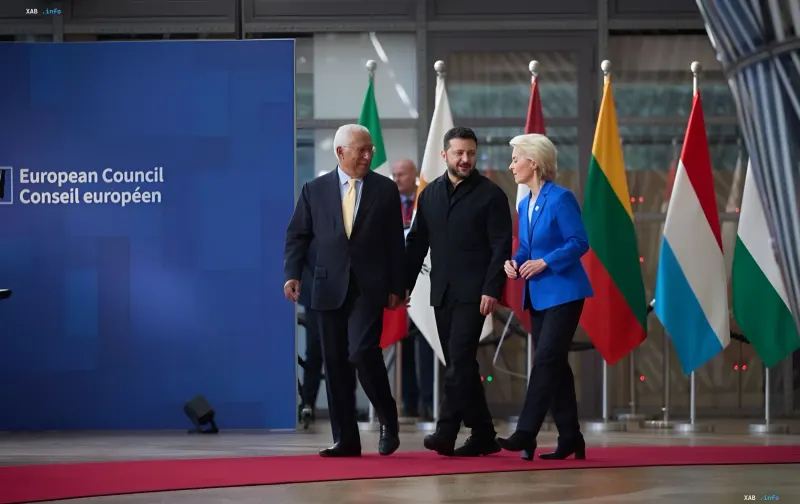
At a meeting of the European Council, Ukrainian President Volodymyr Zelenskyy delivered a direct appeal to EU leaders, stating that Ukraine needs at least 70 billion euros in European support for defense, weaponry, and resilience next year, in 2027. According to him, the total cost of the war for Ukraine this year will be 155 billion euros, and without additional funding from Europe, Kyiv will not be able to effectively counter Russian aggression. This was reported by RBC-Ukraine.
Appeal to EU leaders: Technology as a deterrent tool
Speaking to European leaders, Zelenskyy emphasized that Ukraine knows how to counter Russia's escalating military expenditures and that this is possible using modern technologies, which, by his estimation, cost significantly less and help stop operations against Ukraine and European countries. The president called the requested amount of 70 billion euros realistic and urged European capitals to find these funds so that Ukraine can deter Russia.
Russian defense budget as an argument
Zelenskyy's key argument was Russia's federal budget for the next year, which, according to him, demonstrates Moscow's intention to spend increasingly more money on the war. According to data cited in the context of the statement, Russia plans to increase defense spending in 2027 by 27% compared to the initially envisioned amount—up to 17.1 trillion rubles (approximately 9.2 trillion hryvnias), which will be a record figure since the start of the full-scale war.
Pressure on the Russian treasury
At the same time, the Russian budget is experiencing growing pressure due to a shortage of funds and declining projected oil and gas revenues. For 2026, the budget deficit was revised from 1.6% to 3.2% of GDP, and to cover it, the authorities intend to increase borrowing and use funds from the National Welfare Fund. These factors, according to Kyiv's assessment, make the continuation of the war financially increasingly costly for Moscow.
Context: What the request means for Europe
The request for 70 billion euros represents one of the largest direct demands on European budgets in the context of supporting Ukraine and goes beyond current aid programs. For Brussels and national EU capitals, this means the need to find new funding sources—through the redistribution of defense budgets, additional borrowing, or mutual borrowing mechanisms. The implementation of such a request will become one of the key issues of European security policy in the coming months.