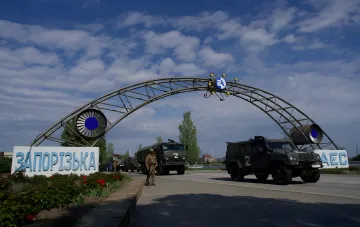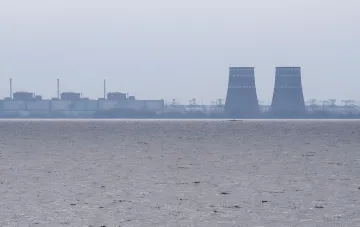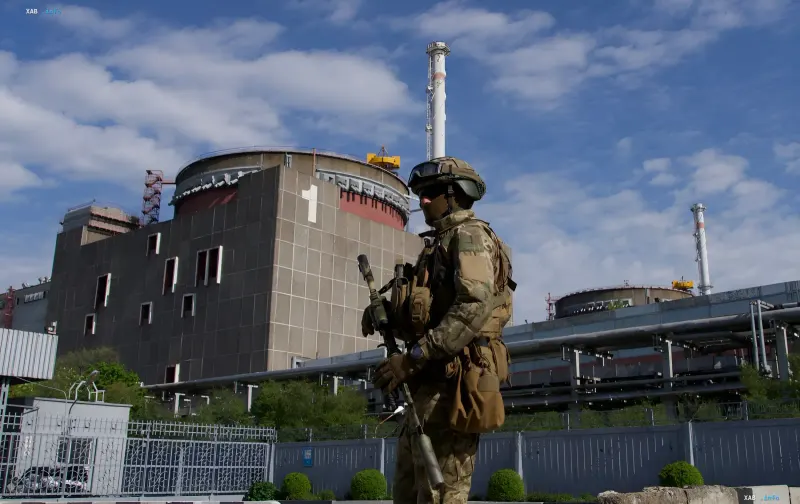
In the early hours of November 8, 2026, the Zaporizhzhia Nuclear Power Plant lost external power supply. According to the press service of Energoatom, cited by RBC-Ukraine, the plant disconnected from the last operating 330 kV Ferroalloy-1 power transmission line at 02:36, which provided its connection to the Ukrainian power grid. An automatic attempt to re-energize the line failed, and since then the nuclear plant's own needs are being met exclusively by backup diesel generators.
Technical Picture: What Happened to the 330 kV Line
According to the operator, prior to the incident, the Ferroalloy-1 line remained the sole active external power channel for the ZNPP. Its disconnection in the pre-dawn hours of November 8 left the station without power from the general grid. After protection was triggered, the automatic re-closure system attempted to restore the supply, but the attempt failed. As a result, the nuclear plant entered a mode where all critical systems — from cooling to life support — are powered by its own backup diesel generators, whose resource and autonomy are limited.
Why Generator Operation Poses a Critical Risk
Energoatom emphasizes that the blackout of the plant poses a critical threat to nuclear and radiation safety. Operating in blackout mode creates a direct risk of failure in life-support systems and nuclear fuel cooling if the diesel generators break down or their fuel supply is depleted. Such a cascade of failures, according to the operator's assessment, could lead to a radiation accident. This is precisely why every loss of external power at a nuclear power plant is treated as an incident requiring immediate attention and the restoration of backup power supply channels.
Context: 16th Blackout of the Year and Dropping Water Level in the Cooling Pond
According to Energoatom, the night incident on November 8 marked the 16th complete loss of external power supply to the Zaporizhzhia NPP since the beginning of 2026. Such a frequency of blackouts indicates the systemic nature of the problem rather than an isolated glitch. Earlier in September, it was reported that the temporarily occupied plant was in a difficult situation regarding safety: the water level in the cooling pond is dropping, and regular power outages pose a threat of transition to a prolonged blackout. The combination of these factors — a shortage of external power and the degradation of cooling systems — manifold increases the risks to nuclear safety.
Military Use of the Territory and the Operator's Stance
It is separately noted that since the occupation of the Zaporizhzhia NPP, the Russian side has been using the station's territory for military purposes: weaponry and military equipment are stationed on the site, and strike drones are launched from there. Such use of the nuclear plant as a military facility additionally increases safety risks. Energoatom states that the systematic loss of external power is a consequence of the ZNPP's occupation, and the restoration of the plant's nuclear and radiation safety is only possible upon its full return to the control of Ukraine and the legitimate operator, SE NNEGC Energoatom.