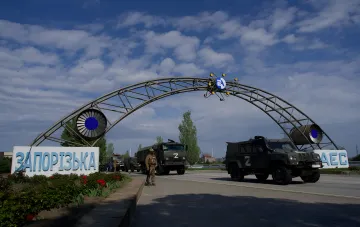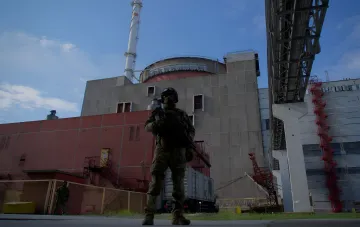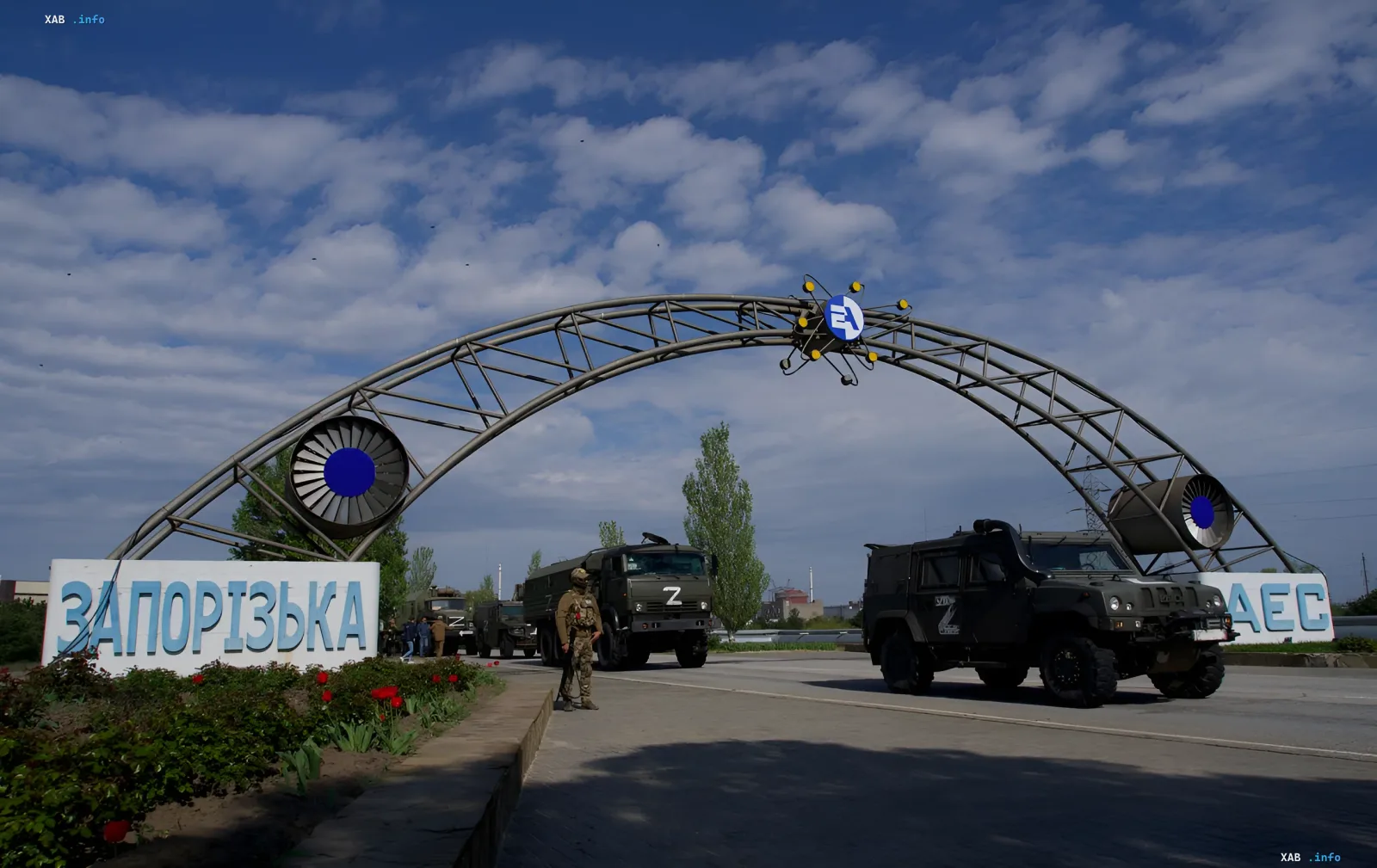
The temporarily occupied Zaporizhzhia Nuclear Power Plant (ZNPP), according to the Main Directorate of Intelligence (HUR) of Ukraine's Ministry of Defence, is in an extremely unstable state. As reported by RBC-Ukraine citing an HUR statement, none of the plant's six power units is currently generating electricity — all of them are in a "cold shutdown" state. The facility's maintenance and safety are ensured by a minimally necessary staff: the duty shift numbers around 1,150 workers, which is a critically low staffing level for a plant of this scale.
Critical drop in the cooling pond water level
The plant is recording an alarming trend in the cooling pond water level. If in July it stood at 12.86 metres, by early August it had fallen to 12.63 metres, and by the end of the month — to 12.55 metres, continuing to decline. Meanwhile, for the normal and safe operation of the facility, specialists estimate that a level of at least 15 metres is required. A gap of more than two metres means that the plant is operating with a significant deviation from its design safety parameters.
Regular power outages and dependence on diesel fuel
During August, the ZNPP was left without external power supply three times — on 1, 4 and 8 August. According to intelligence data, the cause of the emergency outages was problems on the "Ferrosplavna-1" transmission line. Since the start of the full-scale invasion, HUR notes that 23 to 25 such incidents have already been recorded. When external power is lost, the plant's backup diesel generators are activated, placing additional strain on the already scarce fuel in the region. In the event of a prolonged full blackout, the plant's diesel fuel requirement, according to HUR calculations, would be around 150 tonnes per day.
Information isolation and pressure on the IAEA
On 13–14 August, the occupiers cut off the internet at the plant, which, according to intelligence, hindered communication, monitoring of key indicators and the conduct of international oversight. At the same time, systematic disruptions to communications, electricity and water supply are being recorded in Enerhodar, as well as an acute shortage of food and fuel. According to HUR, the Kremlin is trying to integrate the ZNPP into its own "legal field" by involving inspectors from Rostekhnadzor, and is using its representatives at the IAEA to legitimize the occupation. In particular, a visit by the agency's Director General Rafael Grossi to the plant was arranged for 4 September, on the eve of the General Conference in Vienna. IAEA Deputy Director General for Russia Mikhail Chudakov, intelligence claims, managed to have the occupied Crimea reflected as part of Russia in the PRIS information system, and to have the names of Ukrainian nuclear power plants Russified.
Contradictory data
There are minor discrepancies in the figures between the parties' statements and intelligence reports. For example, the number of emergency power outages since the start of the full-scale invasion is given by HUR as a range — from 23 to 25 cases — rather than an exact figure; the precise number probably depends on the accounting methodology and the moment of recording. In addition, the emphasis in covering the situation differs: some sources stress the plant's transformation into a military base, while others focus on the energy and nuclear-safety crisis. Both aspects, in essence, coexist and do not exclude each other, however, when citing it is important to note that this is data from Ukrainian intelligence, which cannot be independently verified on occupied territory.
Military use of the plant's territory
After the occupation, Russian military forces, according to HUR, are in fact using the ZNPP's territory for military purposes: weapons and military equipment are deployed at the facility, and strike drones are launched from it. Prolonged operation of backup systems increases the risk of equipment failure, which intelligence calls one of the most dangerous scenarios for nuclear safety. Against the backdrop of the falling cooling pond water level, minimal staffing and regular power outages, the cumulative risk at the plant, according to Kyiv's assessment, continues to grow.