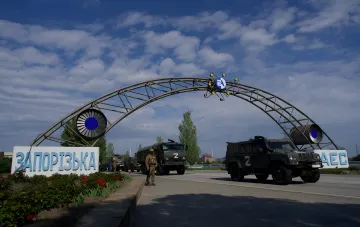
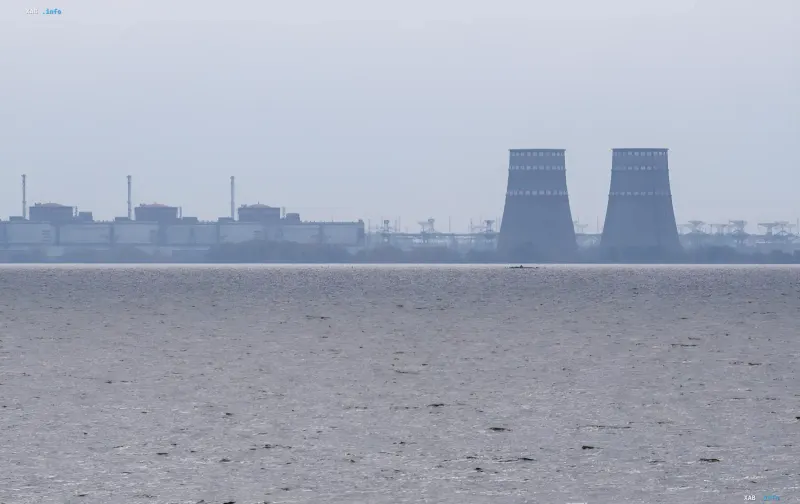
At the temporarily occupied Zaporizhzhia Nuclear Power Plant, the critical situation with nuclear safety persists, according to the Ukrainian operator. As reported by RBC-Ukraine citing the Energoatom press service, prolonged use of backup diesel generators increases the risk of equipment failure, which is essential for the safe operation of the plant. The actual state of ZNPP, according to the company's data, indicates a systemic violation of basic nuclear safety principles.
The 77th... no, the 27th blackout and loss of external power
Energoatom notes that this is already the 27th case of complete de-energization of the plant since the start of Russia's full-scale invasion. After the loss of external power, which has been absent since August 20, ZNPP was forced to switch to diesel generators. According to the company's assessment, the emergency units have been used as the main source of electricity for more than two weeks and are operating in non-design modes for which they were not intended.
Common-cause failure risk and "cold shutdown" of units
According to Energoatom's assessment, prolonged use of backup systems increases the risk of common-cause equipment failure — a scenario the company considers one of the most dangerous threats to nuclear safety. "Constant cyclic startups and switching under load significantly increase the probability of starting automation failure," the company stated. All ZNPP power units, according to its data, are in a state of "cold shutdown," however, prolonged de-energization creates a risk of losing control over key safety systems, including the spent nuclear fuel storage pool monitoring systems and other technological parameters.
IAEA position and the question of a local ceasefire
On September 5, IAEA Director General Rafael Grossi stated the need for a local ceasefire near the plant to carry out work on restoring external power supply. According to Ukrainian sources, the organization is working on a new ceasefire zone in the ZNPP area. Energoatom also reminds that each new blackout further worsens the technical condition of the equipment, in particular the diesel generator units. Moreover, according to the Ukrainian side, after the capture of the plant, Russian military are using its territory for military purposes — deploying weapons and equipment and launching strike drones, which creates additional risks.
Contradictory data
It is important here to honestly reflect the discrepancy in emphasis between sources. On the one hand, Energoatom characterizes the plant's condition as critical and emphasizes the systemic risk to nuclear safety. On the other hand, a number of publications (in particular Life.ru) note that at the time of the switch to diesel generators, the radiation background and the plant's main systems remained within normal limits, and the cause of the power line outage was cited as shelling. These versions are not necessarily mutually exclusive: current radiation background readings may remain within acceptable limits, while the operator calls the structural, accumulated risk "critical" — the operation of backup systems in non-design modes and the threat of losing control over safety systems during prolonged de-energization. The difference between "current readings are normal" and "systemic safety threat" is the essence of the contradiction in the reporting.
Thus, the key problem remains not a one-off incident, but the protracted nature of the de-energization: the longer the plant operates without external power and on backup diesel generators, the higher the probability of critical equipment failure and the more acute the question of restoring power supply, which, according to the IAEA, requires an agreed ceasefire regime in the ZNPP area.