
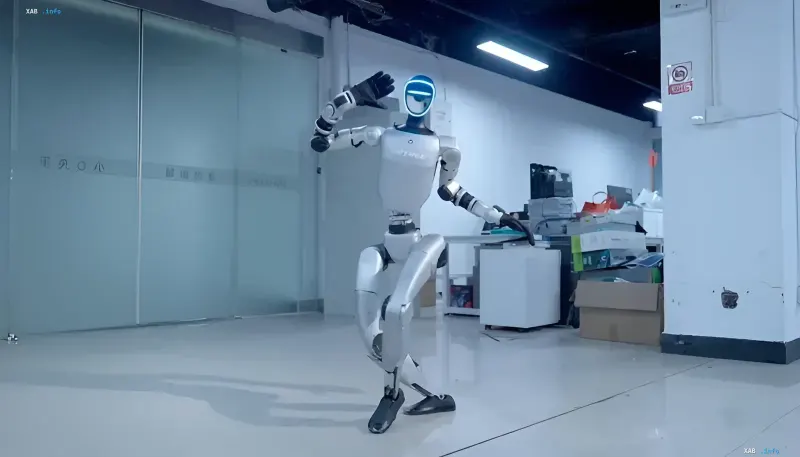
In August 2026, Beijing became the epicenter of the global technological race. From August 22 to 26, the World Humanoid Robot Games kicked off at the National Speed Skating Oval ("Ice Ribbon") indoor stadium. The event, the largest in the history of robotics, gathered more than 2,000 machines ready to demonstrate their skills in conditions close to real-world production and domestic scenarios.
Chinese Hegemony: Scale of Participation
Participation statistics for the 2026 tournament demonstrate the unequivocal leadership of the PRC. Of the 666 teams registered for the games, 641 represent China. This means that nearly 97% of the participants are domestic developments. In total, 1,975 robots created by 157 Chinese companies, supported by 200 research institutes and universities, will take to the arena. The remaining 85 teams represent 15 countries, including the USA, Germany, Japan, and Brazil, but their contribution to the total number of participants (about 80 robots) appears symbolic against the backdrop of the Chinese mass.
From Sports to Production: New Disciplines
Compared to the previous tournament, the number of competitions has doubled — from 26 to 51, and the number of matches has grown to 1,301. Organizers have moved from purely demonstrative races to complex scenario-based tests. The program includes not only the 100-meter run and long jump but also weightlifting, table tennis, and tug-of-war.
Special attention is paid to checking fine motor skills and autonomy. Within the framework of 21 scenario competitions, robots must operate in nine simulated environments: hotels, factories, libraries, and shopping centers. Tasks range from laying cables and assembling tools to customer service. Jiang Guangzhi, Director of the Beijing Municipal Bureau of Economy and Information Technology, emphasized the pragmatic goal of the games: "Once robots master the skills of overcoming the "last meter," they will be able to turn medals into orders and move directly from the competitive arena to real workplaces".
Tightening Rules: End of the Remote Control Era
Organizers have introduced strict restrictions on the use of telemetry and remote control. External operator intervention is now prohibited at most track and field and competitive events. This is done to stimulate the development of artificial intelligence algorithms and autonomous decision-making. The time limit for the 100-meter run has been reduced from three minutes to one, requiring robots to have instant reaction times and high energy efficiency.
Contradictory Data
There is a discrepancy in the figures regarding the total number of participants. According to a report by eWeek, exactly 2,056 robots are registered to participate. However, if you add up the data for Chinese teams (1,975 robots) and assume an average number of robots per team for the other countries, the total figure may differ. Furthermore, some sources indicate that last year (2025) the number of robots was four times smaller, implying about 500 participants, while other data suggests even more modest scales for the previous tournament.
Technological Breakthrough or Propaganda Stunt?
The scale of the event and the dominance of Chinese developers raise questions about the real capabilities of the technology. Although the robots demonstrate impressive coordination, critics note that many scenarios remain "programmed" and do not require true intelligence. Nevertheless, the 2026 Games have become an important stage in the transition from laboratory experiments to the industrial implementation of humanoid robots.