August 12, 2026. Amidst rising geopolitical tensions and frequent missile tests in the Asia-Pacific region, the international community has taken an unprecedented step. The governments of 41 states, including the United States and Ukraine, have issued a joint statement to the United Nations calling for strict adherence to notification rules for intercontinental ballistic missile (ICBM) launches. The initiative aims to reduce the risks of accidental escalation and prevent fatal miscalculations during peacetime.
New Transparency Standard: 24-Hour Warning
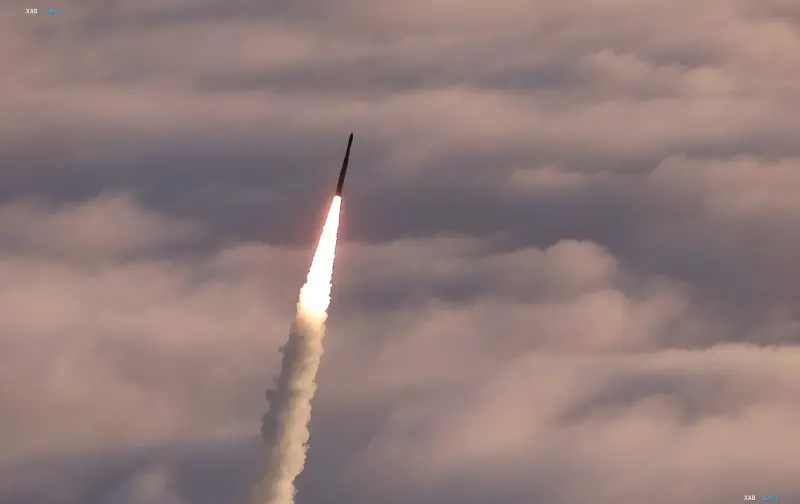
According to the document published on the website of the US Permanent Mission to the UN, the signatories demand that all countries possessing nuclear capabilities notify the international community of planned missile launches at least 24 hours in advance. This requirement applies not only to intercontinental ballistic missiles (ICBMs) but also to submarine-launched ballistic missiles (SLBMs) and launch vehicles for spacecraft (LVs).
The statement emphasizes that the lack of timely notification of launches, particularly in the Pacific Ocean area, violates accepted international safety standards. The initiators insist that launch organizers must provide detailed data: exact launch time, flight trajectory, and the estimated impact point. As noted in the document, launching missiles capable of carrying nuclear warheads without detailed information is an extremely dangerous step that threatens the security of countries located near the test sites.
Political Context: Response to Actions by North Korea and China
The publication of the statement coincided with a series of incidents that exacerbated the situation in the region. On August 11, one day before the official release of the document, China conducted a failed launch of a launch vehicle that exploded in the air shortly after takeoff. This incident, which was not accompanied by a prior warning, caused concern among neighbors and became a catalyst for the unification of efforts by Western countries and their allies.
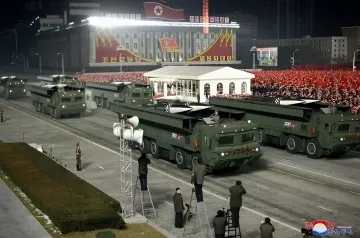
Parallel to this, North Korea (DPRK) demonstratively launched ballistic missiles towards the East Sea. This step was taken against the backdrop of planned joint military exercises by South Korea and the United States. Experts note that Pyongyang is trying to demonstrate readiness for a possible escalation and send a tough signal to its adversaries, while ignoring the transparency norms outlined in the new UN statement.
Contradictory Data and Participants' Positions
Although 41 states signed the document, the reaction to the initiative worldwide is mixed. On the one hand, the statement asserts that "regular, transparent notification mechanisms do not limit the military development or operational needs of any country." On the other hand, countries with closed military programs may view the 24-hour notification requirement as an interference in sovereignty and a threat to the secrecy of their strategic armaments.
Furthermore, there are disagreements regarding the legal force of this document. The initiators declare their readiness to hold any state accountable whose actions contradict these obligations. However, critics point out that in its current version, this is more of a political declaration than a legally binding treaty with enforcement mechanisms. In particular, in the context of the transatlantic alliance, as analysts from RFI note, the UN is increasingly becoming an arena of disagreement where consensus on such complex issues is difficult to achieve.
Role of Ukraine and Implementation Prospects
Ukraine's participation in this initiative is of particular significance. Being at war, Kyiv understands the price of sudden missile attacks and the lack of information about air threats. For the Ukrainian side, supporting transparency in missile tests is a way to protect its own security and prevent false alarms of air defense systems, which could lead to tragic consequences.
In conclusion, the statement by 41 states has become an important signal in an era when technology allows missiles to be launched in minutes, and the time for decision-making is reduced to a critical minimum. The success of this initiative will depend on whether the major missile powers can find a balance between their military interests and global security.