In the mid-1990s, the People's Liberation Army of China (PLA) faced a critical need to modernize its air defense capabilities. Amidst the growing military challenges of the late 20th century, Beijing made the strategic decision to purchase advanced short-range surface-to-air missile systems from Russia. The choice fell on the 'Tor-M1' system, manufactured by the Izhevsk Kupol Electromechanical Plant (now part of the Almaz-Antey Corporation). This deal marked the beginning of a decade-long path of technological adaptation that ultimately led to the creation of China's own analog—the HQ-17.
Russian Deliveries and Tactical Successes
According to publicly available data, in 1996, China officially ordered 14 'Tor-M1' systems from Russia. The first combat vehicles were delivered in 1997. The system demonstrated outstanding tactical and technical characteristics during joint exercises with other air defense units. Successful operation led to the Chinese army ordering another batch in 1999. In total, from 1997 to 2001, Russia delivered 35 'Tor-M1' systems and corresponding guided missiles to China. These systems became the foundation for protecting tank columns, mechanized infantry, and important government facilities.
Chinese Strategy: From Copying to Modernization
During years of rapid economic development, China adhered to a strategy where the country first attempted to copy foreign technologies and then, where possible, improve their performance. A similar story unfolded with the 'Tor-M1' SAM system. In the early 2000s, Chinese weapons designers began developing a new short-range system based on the Russian combat vehicle. Leading engineers from the China Aerospace Science and Industry Corporation (CASIC) diligently studied the mechanical basis, vertical launch system, target detection algorithms, and general software of the Russian system.
Technical Improvements and the Creation of HQ-17
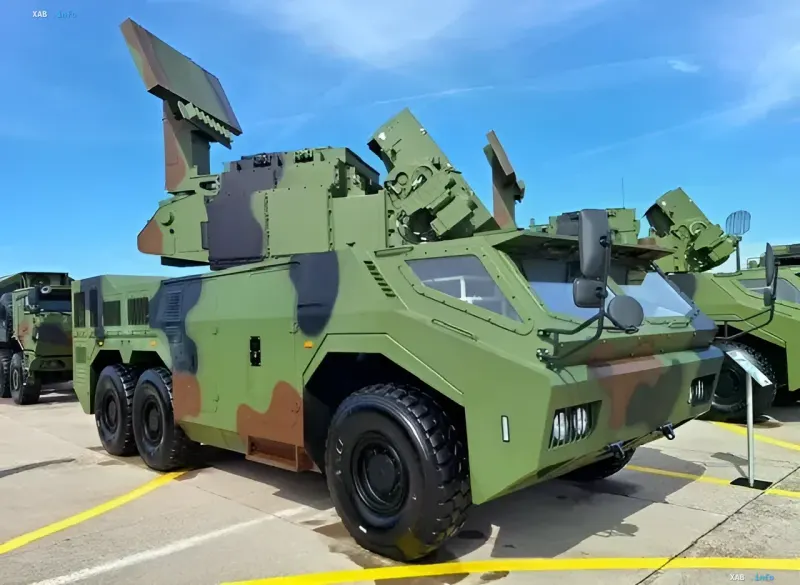
China's research and development of a short-range air defense system lasted approximately 10 years and was completed in 2015, when the country officially announced the completion of the HQ-17 system (also known as Hongqi-17 or Red Flag-17). Chinese experts stated that the reason for starting work on the new weapon was difficulties in night combat operations. They claimed that the 'Tor-M1' system lacked a built-in night vision device, which prompted Chinese military leaders to decide on a complete modernization of their Russian air defense system. The new complex looks quite similar to the Russian 'Tor-M1', however, according to the Chinese side, they "significantly improved the system's capabilities".
Export Potential and New Platforms
Subsequently, a wheeled version of this air defense system, oriented for export, was developed and first presented at the Zhuhai Airshow in 2018. This event attracted the attention of many international customers and confirmed that China had successfully copied the Russian Tor-M1 system. Furthermore, the Chinese side developed its own high-mobility tracked chassis for the HQ-17 system, which distinguishes it from the original Russian version. These improvements allowed China not only to ensure its own defense but also to enter the global arms market with a competitive product.
Contradictory Data
There are discrepancies in assessments of the degree of dependence of the Chinese HQ-17 system on the Russian 'Tor-M1'. On one hand, Chinese sources emphasize significant improvements and proprietary developments, especially in the field of night vision and software. On the other hand, Western analysts point to external similarities and technological continuity, suggesting deep copying. There is also no consensus on how substantial the improvements in target detection and fire control were. These contradictions reflect the complexity of assessing technological progress in closed military projects.