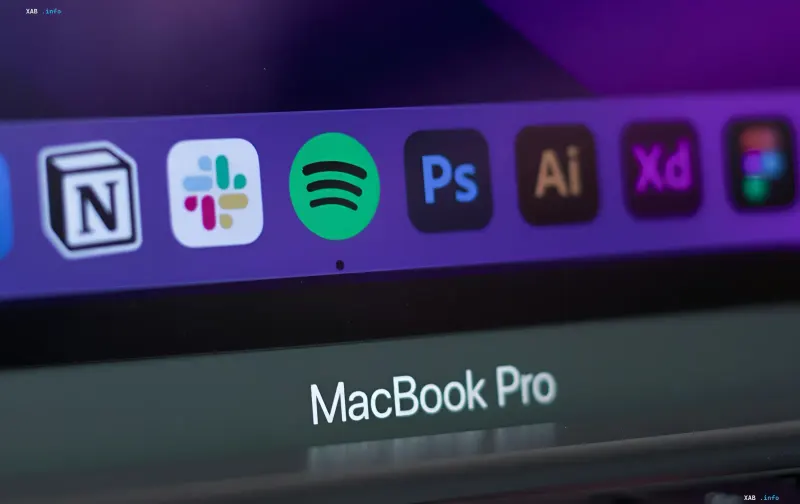
Adobe has announced the launch of the Adobe for Slack app — a large-scale integration that brings more than 70 professional tools from the Adobe creative ecosystem directly into the Slack work chat. Designers, marketers, and content teams can now launch Photoshop, Premiere Pro, Firefly, Illustrator, Experience Design, and dozens of other services without switching between windows or leaving the context of the team conversation. The app is already available globally on the web, desktop, and mobile versions of Slack for users on the Business+ and Enterprise+ plans.
Control via Slackbot: a text command instead of an interface
The key mechanism of the integration is Slackbot, which serves as the single entry point for all Adobe tools. A user formulates a task in a plain text message — for example, "remove the background from this image and adjust the lighting" or "create adaptive banner variants for Instagram, LinkedIn, and X" — and the bot automatically determines which specific Adobe services need to be engaged. This turns a complex chain of actions across several applications into one or two chat messages. In addition to basic operations, extended image-processing packages are available: background removal, light correction, cropping, and other routine tasks that previously required opening a full-fledged editor.
Slack context as a data source for AI
Adobe paid special attention to ensuring that the integration uses not only uploaded files but also the entire accumulated context of the workspace. The AI module can draw on information from channels, message history, files, and Canvas documents, as well as search Adobe Creative Cloud resources — by topic, style, mood, or other metadata. This means that a team can, for example, ask the bot to find a visual reference discussed in a channel three weeks ago and generate a new layout based on it. Automation is not limited to single operations: the system can convert spreadsheets into visual reports or PDF documents, as well as create mass adaptive creative variants for different social networks and formats.
Technological foundation: Model Context Protocol
The functionality of Adobe for Slack is built on support for the Model Context Protocol (MCP), which Slack embedded into Slackbot in June 2026. MCP is an open protocol that allows AI agents to safely interact with external tools and data sources. It is precisely this architecture that makes the "bridge" between the Slack chat interface and Adobe's professional software possible. Notably, similar MCP-based integrations were previously already adopted by Canva and Figma, forming a growing class of "creative tools inside the chat." Account flexibility is also built into the architecture: the app can be used in guest mode without an Adobe account, however, authorization unlocks access to Firefly's generative capabilities, personal Creative Cloud files, and the saving of work sessions between sessions.
Part of Adobe's broader strategy
The launch of Adobe for Slack is not an isolated product but an element of Adobe's systematic initiative to integrate its own tools into popular AI chatbots and work environments. A similar implementation with the same set of more than 70 tools is already functioning in ChatGPT, Claude, and Microsoft Copilot, and a connection to Google Gemini is expected in the near future. Thus, Adobe is steadily transforming its creative ecosystem from a set of separate desktop applications into a distributed service, available where the team already communicates and makes decisions. For the market, this means a shift in the center of gravity: professional design software is no longer a "program you open" but becomes a "function you invoke in a conversation."