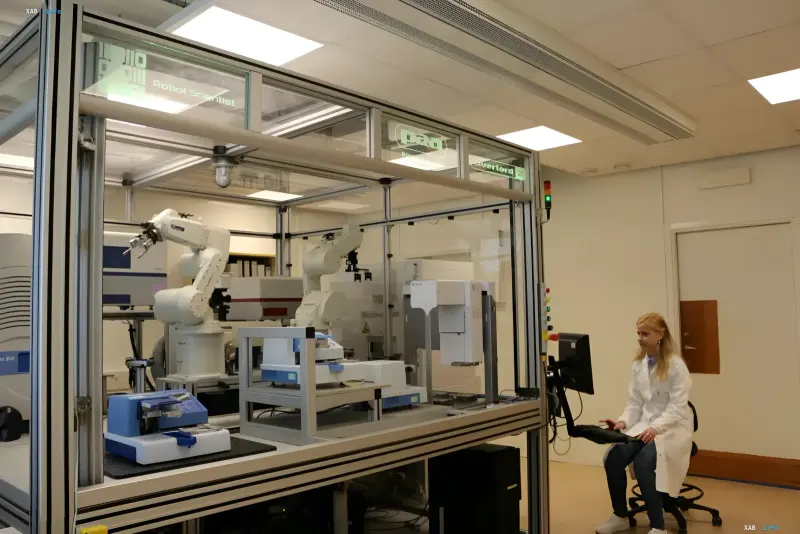
A research team from Sweden and the UK has introduced a breakthrough system capable of managing a closed-loop biological research process. The development centers on the AI's ability not only to process vast datasets but also to independently formulate scientific hypotheses, design experimental protocols, and direct robotic complexes for execution. To date, the system has been successfully tested on Saccharomyces cerevisiae yeast, identifying several previously unknown biochemical interactions.
Algorithmic Approach to Hypothesis Generation
The process began with building a database containing approximately 60,000 records on yeast genetic links and metabolic reactions. Using pattern recognition algorithms, the system analyzed stable connections and generated 1,933 testable predictions regarding the influence of 16 different amino acids on cell survival under chemical stress. To implement theoretical forecasts, a group of AI agents operating on a GPT-4o-like architecture was deployed to manage planning, strategy selection, and the conversion of plans into machine-readable commands for the robots.
Process and Results: Successes and Errors
During laboratory tests, robots ensured precision in cell cultivation and monitoring for over 20 hours. The experiment confirmed that the combination of arginine and caffeine produces a pronounced synergistic growth-suppression effect, exceeding the impact of the substances individually. However, the system encountered anomalies: in the case of lysine, the prediction regarding reduced sugar resistance proved incorrect—the substance, conversely, exhibited protective properties. These results were not discarded but integrated into the overall model to refine subsequent research iterations.
Contradictory Data
Debates are ongoing in the scientific community regarding the interpretation of the results. The project authors note that while working with formic acid, the system received non-specific data, with control samples showing activity comparable to the tested amino acids. Some experts argue this indicates imperfect prediction algorithms, while proponents emphasize the AI's ability to use even "failed" experiments to prevent redundant testing.
The Future of Autonomous Science
Although as of October 3, 2026, the laboratory still requires human intervention for reagent preparation and safety assurance, the level of autonomy achieved is historic. The system has learned to avoid experiment duplication by using a structured database of all past attempts. This marks a shift from AI as a supportive tool to AI as an equal participant in the research process, capable of self-adaptation under uncertainty.