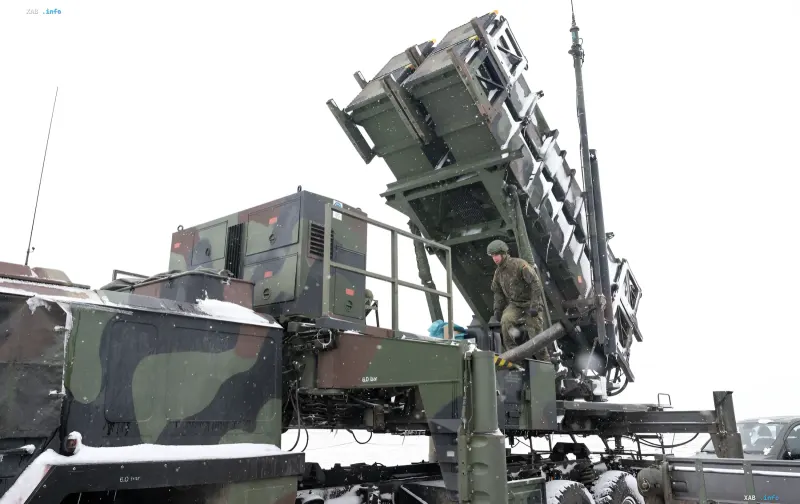
On September 8, at the virtual meeting of the Ukraine Defense Contact Group in the 'Ramstein' format, Kyiv's allies took on commitments to increase deliveries of US-made Patriot air defense systems and to direct interceptor missiles from their own national stockpiles. According to Bloomberg, the flow of weapons will be formed through two channels: through individual donations from European countries and through the NATO program 'Ukraine Priority Requirements List' (PURL), which allows European states to purchase American weapons for Kyiv. The goal of these measures is to help Ukraine repel the expected intensification of Russian strikes on critical infrastructure during the winter period.
Virtual 'Ramstein' and specific commitments
The meeting, held in videoconference format, became a key event of the day for Ukrainian defense diplomacy. Ukraine's new Defense Minister Yevheniy Hmara addressed the allies with a direct appeal: 'We are asking you to provide us with missiles from your stockpiles today in exchange for future advanced missiles under our contracts.' This formulation, in essence, offers the allies a barter model: the immediate transfer of existing interceptors in exchange for prospective developments that Kyiv intends to produce under existing contracts. President Volodymyr Zelenskyy, for his part, specified a concrete quantitative request — 300 Patriot missiles, which are to be delivered before the onset of winter.
The PURL program: 10 billion versus 12
NATO Secretary General Mark Rutte reported that the PURL program has already attracted 10 billion dollars in contributions from allied countries. At the same time, Rutte himself had earlier called on partners to secure a volume of 12 billion dollars, which means there is an existing gap of 2 billion. According to sources familiar with the plans, European countries are currently finalizing their national packages under PURL, and interceptor missiles are expected to be delivered to Ukraine in time — before the start of the winter strike season. The PURL package, according to Bloomberg, is a direct response to requests previously formulated by President Zelenskyy.
PAC-2 shortage and Germany's role
Germany became one of the first countries to publicly declare its readiness to donate part of its own PAC-2 Patriot missiles. This step gains special context against the backdrop of a global shortage of these interceptors, which, according to the outlet, is exacerbated by the conflict in Iran, consuming significant stockpiles. Earlier, as RBC-Ukraine reported, German Defense Minister Boris Pistorius had already appealed to partners to help Kyiv prepare for winter, warning of the scaling up of Russian air strikes. Berlin also promised to strengthen Ukraine's air defense with various types of missiles before the onset of the cold.
Contradictory data
Several inconsistencies are recorded in the available sources. First, the volume of PURL funding: Rutte names 10 billion dollars as the amount already received, however his own call was for 12 billion — that is, the program is operating with a deficit of 2 billion, and it is unclear whether this gap will be closed before winter. Second, in July and August publications (including materials citing Politico and other European media) it was emphasized that Europe's own stockpiles are 'approaching their limit,' and Brussels was pressuring Greece to transfer missiles for Patriot to Ukraine. Meanwhile, in the September statement the focus shifted to Germany and the PURL program, which may indicate a redistribution of responsibility between countries. Third, the mention of the 'war in Iran' as the cause of the PAC-2 shortage appears in this cycle of publications, however in other sources the context of the global interceptor shortage is described in more general terms, without reference to a specific conflict.
The winter scenario and Kyiv's strategic calculation
The Ukrainian side proceeds from the assumption that Moscow traditionally intensifies missile and aviation strikes on energy and military infrastructure during the winter period. The shortage of air defense means accumulated over the previous months makes the timely replenishment of interceptor stockpiles a matter of survival for critical infrastructure. Hmara's proposal to exchange current PAC-2 for 'future advanced missiles' under contracts indicates that Kyiv is considering not just a one-off transfer, but a long-term production linkage: allies gain access to prospective developments, while Ukraine gains immediate protection. Bloomberg sources emphasize that the PURL logistics chains are already refined, and provided the 2 billion dollar financial gap is closed, the first batch of interceptors could be delivered before the start of active winter strikes.