According to an analytical report by Mark Gurman for Bloomberg, relayed by RBC-Ukraine on September 15, 2026, Apple is preparing to release at least 16 new devices, with launches scheduled for the fourth quarter of 2026 and the first half of 2027. The company's strategic focus in the second half of the current year has shifted in two directions: expanding its smart home ecosystem with integrated system-level artificial intelligence, and the mass transition of its computers and tablets to new generations of display technology. In Gurman's assessment, most of the announcements fit within Apple's traditional development cycles, where the release of base products is tied to the completion of the corresponding software AI features.
Smart Home and System AI: A Bet on the Ecosystem
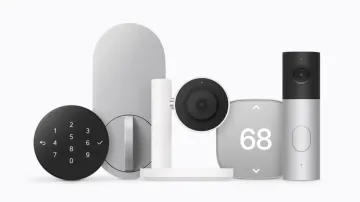
The centerpiece of the second wave of 2026 releases is an update to the smart home device lineup. The HomePod mini will receive a fundamentally new version of Siri with local AI support, allowing the speaker to process voice commands without necessarily connecting to cloud servers. Similar AI capabilities will be integrated into the Apple TV, turning the media player into an intelligent hub for content management. The most ambitious project in this cluster is the Apple Home Hub — a dedicated tablet hub designed for centralized control of all smart home devices through a single interface. In essence, Apple is attempting to claim a niche that no major player has yet been able to firmly capture in the consumer electronics market.
Touch-Screen MacBook Pro and the Shift to New Displays
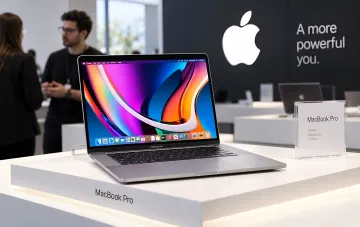
In the second half of 2026, Apple will unveil the first professional notebook in its history with a touch display — the Touch Screen MacBook Pro. This event marks a rethinking of the fundamental principle of interaction with macOS, which for more than two decades has remained exclusively mouse-and-keyboard based. In parallel, the base 14-inch MacBook Pro model will be updated to the M6-series processor, while the compact iPad mini will, for the first time in its history, feature an OLED panel, addressing a long-standing user demand for higher image quality in the small-tablet segment.
First Half of 2027: Mass Refresh of Product Lines
The first half of 2027, according to Gurman's report, will be a period of large-scale transition of entire device families to new generations of chips. The MacBook lineup will gain a MacBook Neo model based on the A19 Pro mobile processor — a device that the analyst describes as a more affordable or experimental alternative to classic Apple laptops. The tablet segment will also undergo significant changes: the base iPad with an updated Siri AI, delayed until the software component is finalized, will be released alongside the flagship iPad Pro powered by the M6 chip within the standard 18-month cycle. The mid-range iPad Air will receive the M5 chip and an OLED display, which was previously the exclusive domain of top-tier models. In the smartphone segment, the iPhone 18 and its more affordable version, the iPhone 18e, are planned, along with updated Apple Pencil Pro and Apple Pencil (USB-C) styluses featuring hardware adaptations for new display types and the iPhone Duo format.
Contradictory Data
Gurman's report mentions "at least 16" devices, however, in the publicly available version of the list relayed by RBC-Ukraine, 14 items are clearly identified. The difference of two devices may be explained by the fact that some models (for example, various iPad Pro configurations or regional iPhone 18 variants) are counted as separate SKUs but are not listed as separate items. Moreover, earlier, in February 2025, according to Gazeta.ru, Apple dropped the presentation of a standalone iPhone SE in favor of other new products — this decision logically aligns with the current strategy, in which the budget smartphone segment is now covered by the version with the "e" index (iPhone 18e) rather than a separate SE lineup. Thus, the evolution of naming and product line structure confirms the consistency of the strategy, but creates confusion when comparing early and late leaks.
Context and Market Significance
The scale of preparing 16 devices within 12–18 months is an abnormally high figure even by Apple's standards, which usually adheres to the principle of "better fewer, but better." However, in a situation where system AI is becoming a key differentiator in the consumer electronics market, the company needs to simultaneously refresh its hardware base to ensure computing power and its software infrastructure to support it. The integration of Siri AI into base devices — from the HomePod mini to the affordable iPad — indicates that Apple views artificial intelligence not as a premium feature but as a foundational layer of the operating system, which fundamentally changes the logic of product pricing and positioning.