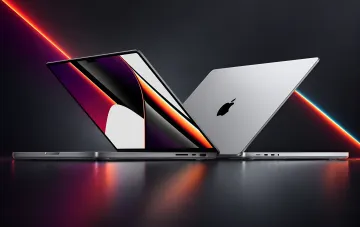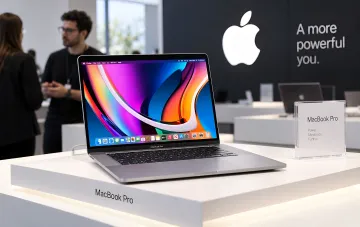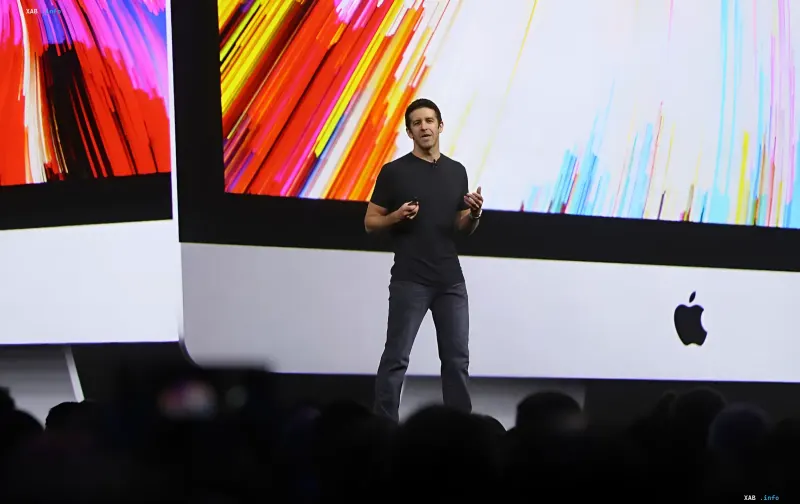
Apple has introduced a MacBook Pro with a touch display—a decision the company considered impractical for decades. New CEO John Ternus took the stage alongside top executives to explain how the company rethought input on Mac computers and what engineering barriers had to be overcome to turn a touch screen into a working tool rather than a marketing gimmick.
Why Apple Long Resisted Touch Screens
Back in 2015–2016, company leaders, notably Phil Schiller, publicly explained why a touch screen was unnecessary on a Mac. The main arguments centered on ergonomics: unlike a tablet, a laptop sits on a desk, forcing the user to constantly reach out to touch a fixed display. The second argument was the mismatch between macOS and iOS interfaces, which at the time were built on different interaction logics. According to Ternus, these very considerations shaped Apple's stance for many years.
What Has Changed Over a Decade
Over the past decade, according to management, three fundamental factors have shifted. Head of hardware Johny Srouji pointed to the development of Apple's own Silicon processors, the advent of new OLED displays, and changes in system architecture. Marketing chief Greg Joswiak added that the user has changed as well: a new generation of professionals and content creators, raised on iPhones and iPad, expects touch input from laptop displays too. Ternus emphasized that the Mac remains a device with indirect input via keyboard and trackpad, while the touch screen merely "creates extra comfort in many scenarios."
Technical Challenges Solved by Engineers
To ensure the touch screen did not become a source of annoyance, engineers had to redesign several components. The hinge construction was completely overhauled to eliminate screen wobble when pressed with fingers. A new thermal management system was developed so the display wouldn't heat up during active touch gestures. An anti-reflective coating was applied to protect against fingerprints without requiring extra cleaning. macOS itself was specifically adapted: when a finger approaches, menu items expand, and close/minimize buttons grow for precise clicking. A new gesture was also introduced—triggering the Dynamic Island panel directly on the desktop for quick access to Siri suggestions and Spotlight search.
Pricing and Plans for Other Models
The new MacBook Pro with a touch display and OLED matrix starts at $2,899 for the 14-inch version and $3,399 for the 16-inch version. When asked about the potential introduction of touch screens in more affordable models—such as MacBook Air or iMac all-in-ones—John Ternus refrained from commenting on the company's future products.