Eighteen years after Apple discontinued its Xserve corporate server line in 2011, the company is once again considering a return to the server hardware market. According to The Information, as cited by RBC-Ukraine, Apple is developing a specialized server for artificial intelligence computations. The project, which is in its early stages, is not expected to launch before 2029 and has already received the backing of the company's new CEO, John Ternus.
Architecture and Processor Base: M8 Ultra Chips in a Rack Form Factor
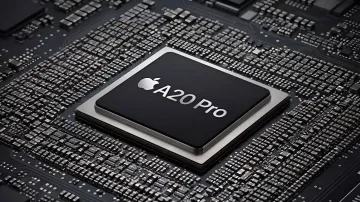
The foundation of the future server will be the M8 Ultra processors — chips that, according to sources, are several generations ahead of the current M5 Ultra solutions. Two system configurations are planned: with two or four combined M8 Ultra chips. The hardware form factor is being developed for standard 1U or 2U server racks, which poses a serious engineering challenge: fitting ultra-powerful Ultra chips into a thin rack enclosure will require a fundamental redesign of the heat dissipation systems and the creation of an entirely new, compact cooling solution.
Partnership with Nvidia: NVLink Fusion Integration
A key element of the server's architecture will be Nvidia's high-speed interconnect technology, NVLink Fusion. According to available information, the companies are discussing the integration of this bus, which allows multiple processors to be combined into a single high-speed cluster with minimal data transfer latency. This solution is aimed at addressing inference and large-scale parallel computing tasks — precisely the scenarios where consumer devices run into architectural limitations.
Market Drivers: Frenzy Demand for Macs from AI Labs
The decision to build a corporate server is driven by frenzied demand for Mac mini and Mac Studio desktops from leading AI laboratories. In particular, OpenAI has purchased tens of thousands of Mac desktops for training AI agents via reinforcement learning. Anthropic, for its part, rents Mac mini units through Amazon Web Services' cloud infrastructure. Analysts conclude that the growth in Mac sales, combined with the specifics of AI computing, has demonstrated the limitations of consumer devices for large-scale corporate tasks, which became the trigger for launching the server project.
Contradictory Data
The sources note a number of inconsistencies and caveats. First, the project is officially in its early development stage, and The Information explicitly states that it could be cancelled or significantly altered before the planned 2029 release. Second, the jump from the current M5 Ultra chips to M8 Ultra implies skipping at least two generations (M6, M7), which is atypical for a server cycle and may indicate either an acceleration of the roadmap or that some of the data reflects Apple's internal numbering, which does not align with the consumer lineup. Third, the global shortage of memory chips, driven by the mass construction of AI data centers, has already led to rising prices in consumer electronics and could complicate component supply for server hardware — creating a risk of schedule delays even if the project proceeds.
Strategic Context and Risks
Apple's return to the corporate server segment is not merely an expansion of its product lineup, but an attempt to occupy a niche at the intersection of high-performance computing and the Apple Silicon ecosystem. If the project comes to fruition, the company will be able to offer AI laboratories and enterprises a solution that combines the energy efficiency of ARM architecture with the scalability of rack equipment. However, the road to 2029 is fraught with risks: from engineering challenges with cooling to the volatility of the semiconductor market. At present, information about the development has been confirmed by several independent outlets, but the product itself remains a matter of speculation until an official announcement.