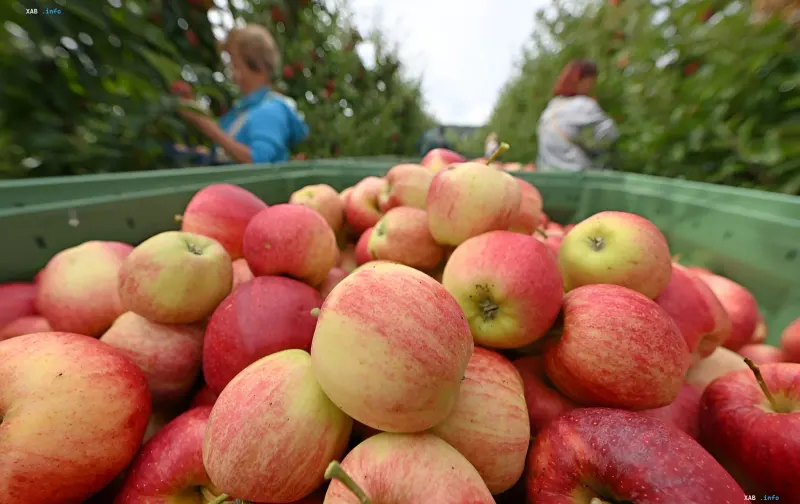
Apples remain one of the most popular and traditional fruits on the Ukrainian table. However, for producers and consumers, the question remains relevant: how accessible will this product be next season? Market analysts and economists have shared forecasts which, despite a generally optimistic trend, contain important nuances.
Cautious optimism of market participants
According to the results of a survey conducted by the EastFruit project among participants in the apple market, expectations regarding wholesale prices for fresh apples in Ukraine for the period from January to May 2027 can be characterized as "predominantly cautious".
The majority of respondents who gave a specific forecast lean towards a decrease in cost. The most common scenario is a price drop of 11–20%. This scenario was chosen by 25% of the survey participants. This is due to expectations of a significant increase in the harvest in 2026, which, according to market laws, should lead to a cheaper product.
Economic paradox of the current season
Andriy Yarmak, an economist from the investment department of the Food and Agriculture Organization of the United Nations (FAO), drew attention to the non-standard situation that has arisen in the current season. According to him, apple prices turned out to be "unexpectedly high" for Ukrainian producers.
Yarmak explained this phenomenon by the fact that the actual cost of apples during the harvest was at least 25% higher than the price after long-term storage. Usually, the opposite trend is observed: fresh harvest is cheaper, and winter storage adds logistics and warehouse costs to the price. However, this year demand and market conditions have formed a different picture.
Factors influencing pricing
Despite the forecasts of price reductions, EastFruit experts warn of risks. If producers this year begin to "aggressively" sell the harvest immediately after collection, it is not excluded that prices in the second half of the season (January — June 2027) will not fall below the level of the same period of the current year.
Furthermore, Andriy Yarmak emphasized that prices will be pressured by many other factors, in addition to the volume of the harvest. This may include logistics costs, fuel prices, and the general inflationary situation in the country.
Export prospects: salvation from overproduction
One of the key factors that can mitigate the consequences of possible apple overproduction in Ukraine will be exports. Experts forecast that part of the excess supply may be absorbed by the markets of Central Asia and the Caucasus.
In Georgia, Kazakhstan, and Uzbekistan, a noticeable decrease in their own apple harvest is expected, which will create favorable demand for imported products from Ukraine. This opens additional opportunities for Ukrainian growers to sell goods abroad, supporting the domestic market.
Contradictory data
There is a certain discrepancy in expectations in the forecasts of experts and market participants. On the one hand, EastFruit analysts and most growers forecast a price drop of 11–20% due to increased yield. On the other hand, FAO economist Andriy Yarmak points to anomalously high prices in the current season and warns that an aggressive sale of the harvest may not lead to the desired price drop in the future. Thus, the market is waiting: either a price drop will become an inevitable consequence of the abundance of fruit, or high prices will be maintained thanks to export channels and sales specifics.
Conclusions for consumers
Thus, Ukrainians should expect more affordable apples next season, however, the degree of this decrease will depend on the actions of producers during the harvest period and the success of exports to Central Asian countries. If growers can effectively diversify sales, the domestic market may receive a quality and inexpensive product.