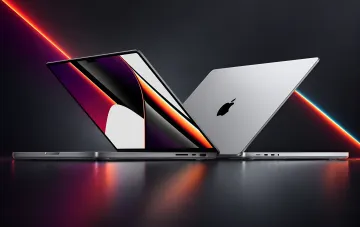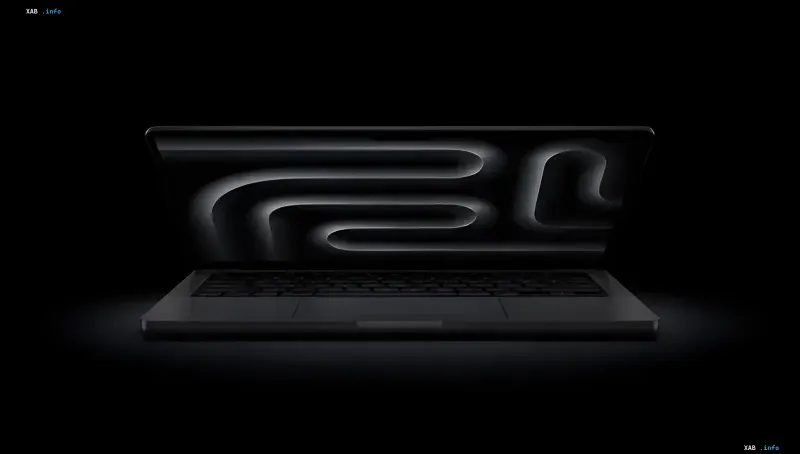
Prominent Bloomberg journalist Mark Gurman has published a new report predicting that Apple will eventually reduce its entire lineup of flagship MacBook Pro laptops exclusively to touch-screen models. Currently, the manufacturer runs two parallel product branches: versions with Mini-LED matrices and more expensive touch-enabled models that cost $400 more than the base versions. According to Gurman, supporting two parallel lineups at every stage — from R&D and production lines to marketing — requires significant resources, making this strategy economically unviable in the long term.
Reasons for Consolidation: Production Economics
Gurman emphasizes that the key factor pushing Apple to abandon non-touch MacBook Pros is the need to duplicate infrastructure for the two product branches. Each requires a distinct display module configuration, touch-layer calibration, software adaptation, and consequently a separate testing cycle. With a $400 retail price difference, the margins of the more affordable version come under pressure, forcing the company to maintain two parallel assembly lines. The journalist did not specify the exact timeline for when Apple might discontinue standard-screen models, but indicated that the transition will be gradual.
The 2027 Generation: M7 Pro and M7 Max Chips
The next generation of touch-screen MacBook Pros is slated for release in 2027, according to Gurman. They will be powered by proprietary M7 Pro and M7 Max processors, which are expected to feature advanced hardware capabilities for artificial intelligence tasks. Previously, the journalist reported that Apple will begin introducing the new chip generation closer to the end of 2026, aligning with the current timeline: last week, the company already unveiled the first touch-screen MacBook Pros powered by M5 Pro and M5 Max chips announced in March 2026.
Base 14-Inch Model to Receive a New Chassis
Updates will also affect the most affordable 14-inch version of the MacBook Pro. According to Gurman's information, Apple will release a model featuring the M7 chip in a thinner and lighter chassis with noticeably narrower bezels around the display. The journalist first wrote about plans to update the 14-inch MacBook Pro back in July 2026, pointing to a possible device launch in the first half of 2027. Thus, the base model will also receive a touch display, finally closing the non-touch MacBook Pro niche within the lineup.
What Has Already Been Introduced: OLED, Dynamic Island, and a New Cooling System
Last week, Apple officially unveiled the first touch-screen MacBook Pros. These models feature M5 Pro and M5 Max chips, a design incorporating OLED displays, the Dynamic Island element, a lighter and slightly thinner chassis, and a redesigned cooling system with higher efficiency than their predecessors. According to Gurman's forecast, this very lineup will become the sole family of MacBook Pros after the transition is complete, while the more affordable Mini-LED versions will gradually phase out.