In August 2026, the archaeological community received sensational confirmation of the antiquity of Chinese mythology. Excavations in Jungar County (Inner Mongolia Autonomous Region) uncovered a unique tomb dating back to the late Neolithic period — approximately 2300 BCE. The artifacts found are rewriting the history of the formation of cult symbols in Northern China.
Unique Discovery at the Zhaizhita Site
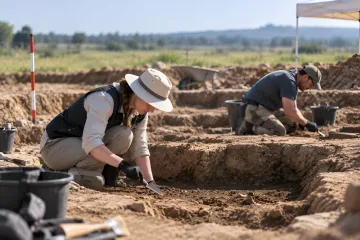
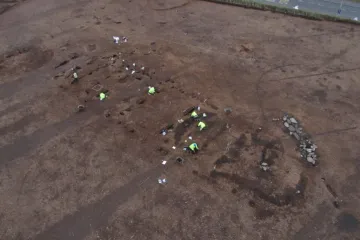
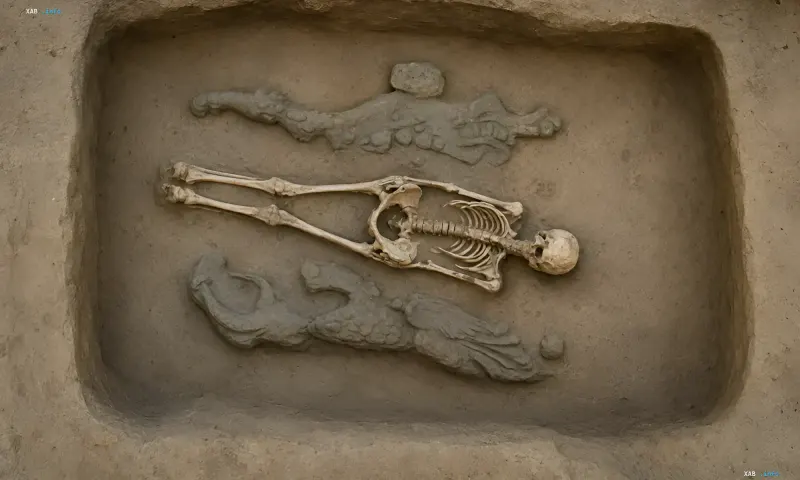
Excavations were conducted at the Zhaizhita archaeological complex, belonging to the Longshan culture. The area of this ancient settlement covers about 420,000 square meters. During the work, a rectangular tomb was opened, in which the body of the deceased was found in an anatomically correct position: lying on the back, with outstretched arms and legs, head facing northeast. Notably, burial rites at that time were already clearly regulated, indicating a high level of social organization in society.
Symbolism of the Dragon and Phoenix
The main sensation of the discovery was a pair of clay figurines placed symmetrically on both sides of the skeleton. On the right, in line with the head, was a dragon statue, and on the left — a figure of a phoenix, depicted in a posture imitating soaring upwards. Sun Jingsong, head of the Institute of Cultural Relics and Archaeology of Inner Mongolia, stated that this is the most clearly depicted and earliest dated pair of these symbols ever discovered in Northern China. This discovery provides irrefutable physical evidence that the dualism of "Dragon and Phoenix" (Long and Feng) dates back to the Longshan era.
Status of the Owner and Ritual Objects
In addition to the clay figures, a jade disc inlaid with turquoise was found next to the right side of the deceased's neck. The presence of such valuable items as jade and turquoise, combined with ritual statues, allows archaeologists to assume that the tomb owner held a prominent social position and possessed significant material resources during their lifetime. Archaeologists believe that the specific placement of these artifacts provides a key to understanding the ritual beliefs and views of the afterlife among the ancient inhabitants of the Yellow River basin.
Diet and Lifestyle Analysis
Modern scientific methods have allowed a glimpse into the daily life of the ancient elite. Analysis of stable isotopes of collagen in the tooth enamel of the skeleton revealed an interesting dietary profile. The person's diet consisted mainly of millet, which is typical for the region, however, the analysis revealed elevated levels of animal protein. This may indicate that the deceased consumed more meat than the average resident of that time, which also indirectly confirms their high social status.
Historical Significance for the Longshan Culture
The Longshan culture, which developed in the Yellow River basin from approximately 3000 to 1900 BCE, is known for its large settlements and developed craftsmanship. The Zhaizhita archaeological complex, located in the Hetao region in the bend of the Yellow River, is considered one of the oldest monuments of Northern China, preserving a system of stone walls. The new discovery not only expands the understanding of the spiritual life of the inhabitants of this region but also serves as additional material for studying the formation of burial rituals and iconography that later became the foundation of Chinese civilization.