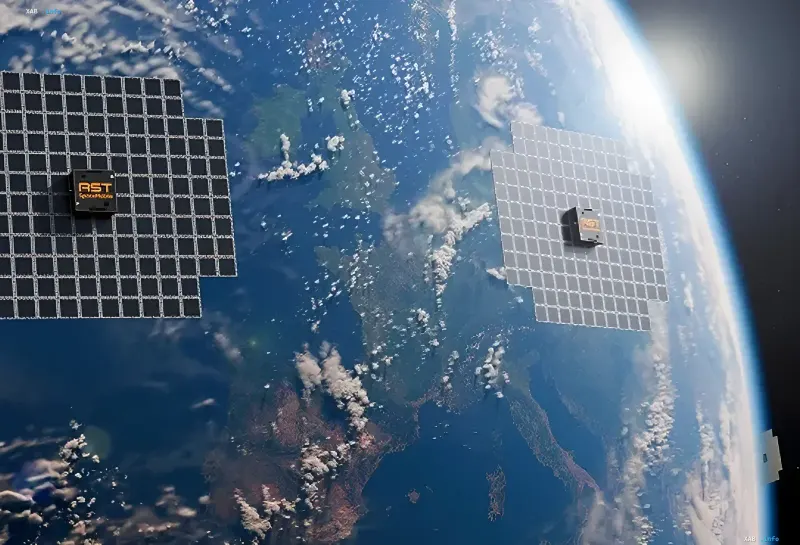
On October 21, 2026, a milestone occurred in the mobile communications industry that many analysts previously viewed as a distant prospect: AT&T and AST SpaceMobile successfully conducted the world's first successful test of a seamless handover between a terrestrial cellular network and a satellite constellation operating directly with standard consumer devices. During the demonstration, an ordinary smartphone—without any specialized terminals or additional applications—switched from terrestrial cell tower coverage to the AST SpaceMobile satellite network without interrupting a voice call or losing its internet connection. This represents a logical continuation of previous tests in which BlueBird satellites already enabled voice calls, SMS, and video calls using standard mobile phones.
Experiment Architecture: Who Was Responsible for What
The fundamental challenge of the task was to ensure the transfer of an active connection between two networks using fundamentally different infrastructures: terrestrial base stations and orbital platforms. AT&T provided the terrestrial wireless network, while AST SpaceMobile supplied the satellite network designed for direct interaction with standard smartphones without requiring specialized user-side equipment. BlueBird satellites are equipped with large antenna arrays that enable a radio link with a standard mobile device operating on 4G and 5G standards.
The Role of Ericsson and Nokia in Ensuring Millisecond Handover
The core engineering load in the project was shared by two major telecom vendors. Ericsson provided AT&T with comprehensive radio access network (RAN) and core network solutions, along with intelligent automation systems. According to the company, these solutions reduced the switching time between terrestrial and satellite networks from seconds to milliseconds, minimizing communication gaps as the device moves between different coverage zones. Nokia, in turn, provided radio access technologies and mobility management software for AST SpaceMobile's satellite network. These solutions support connection handovers between terrestrial networks and satellite coverage, ensuring service continuity as users move from one zone to another.
Satellite Communications as an Extension, Not a Replacement
It is important to emphasize that AST SpaceMobile's satellite network is not positioned as a competing service requiring separate activation or setting changes by the user, but rather as an organic extension of existing mobile networks. The smartphone automatically selects the available coverage source—a terrestrial tower or a satellite—without any subscriber intervention. This integration model aims to provide connectivity for remote residents, highway drivers, emergency services, and critical industry workers in areas where traditional mobile coverage is limited or entirely absent, including disaster zones.
What's Next: From Demonstration to Commercial Launch
Despite the success of the demonstration, both companies emphasize that the technology is not yet ready for widespread commercial use. AT&T stated that the next phase will involve beta testing in real-world conditions—outside of controlled demonstration scenarios. This will allow the system to be evaluated for reliability under mass user movement, peak loads, and various geographic conditions, as well as refining network characteristics prior to full commercial deployment. For AST SpaceMobile, which continues to scale its BlueBird constellation, passing the beta test will be a decisive step toward ensuring satellite cellular connectivity ceases to be an experiment and becomes an everyday feature of any smartphone.