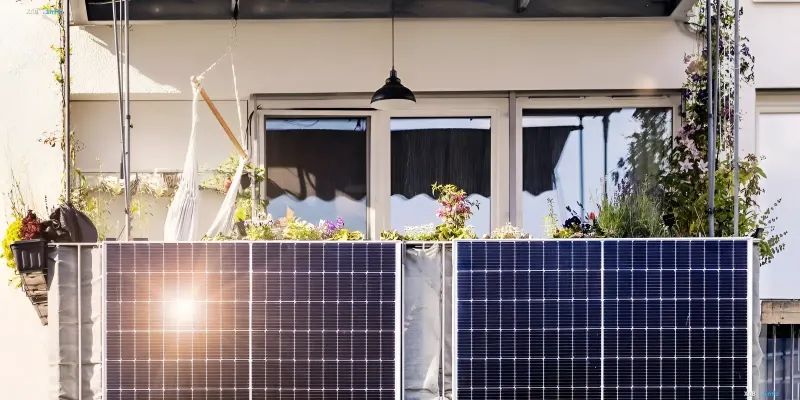
California has officially authorized the use of small plug-in solar systems on balconies, terraces, and residential courtyards. This measure is designed to fundamentally transform the approach to green energy generation for millions of urban residents living in apartment buildings and rental housing. Previously, installing solar panels was the exclusive prerogative of single-family homeowners with suitable roofs, but these new legislative initiatives open up the microgeneration market to a vast majority of the population.
The New SB 868 Law and Its Key Parameters
State Governor Gavin Newsom signed SB 868 into law on September 30, covering systems with a capacity of up to 1,200 watts of alternating current per household. These compact setups plug directly into a standard 120V household outlet and generate electricity to power home appliances, thereby significantly reducing the total amount of energy drawn from the central grid. The legislation explicitly dictates that all utilized equipment must comply with rigorous electrical standards, hold official certification, and feature reliable anti-islanding protection to prevent feeding power back into the grid during blackouts.
Simplified Connection Procedure and New Rules
The primary and most anticipated change for consumers is the radical liberalization of the equipment connection process. Large utility companies are no longer permitted to demand cumbersome pre-approvals, complex grid-interconnection contracts, or additional administrative fees for compliant systems. Instead, owners simply need to submit a basic online notification containing the address, manufacturer, model, and total capacity of the equipment. These temporary regulatory easements and simplified rules will remain in effect across the state until January 1, 2030, creating favorable conditions for renters and apartment dwellers.
Comprehensive Modernization of the State Energy Grid
In addition to the balcony solar panel law, the governor signed two other critical bills aimed at enhancing the efficiency of the existing energy infrastructure. SB 913 is designed to significantly streamline and simplify the accounting of virtual power plants, which aggregate home battery systems, electric vehicles, smart thermostats, and other distributed energy resources. Meanwhile, SB 905 requires large regional utilities to fully disclose local grid hosting capacity and available headroom, while evaluating whether modern batteries and shifting load to off-peak hours can replace costly physical infrastructure upgrades.