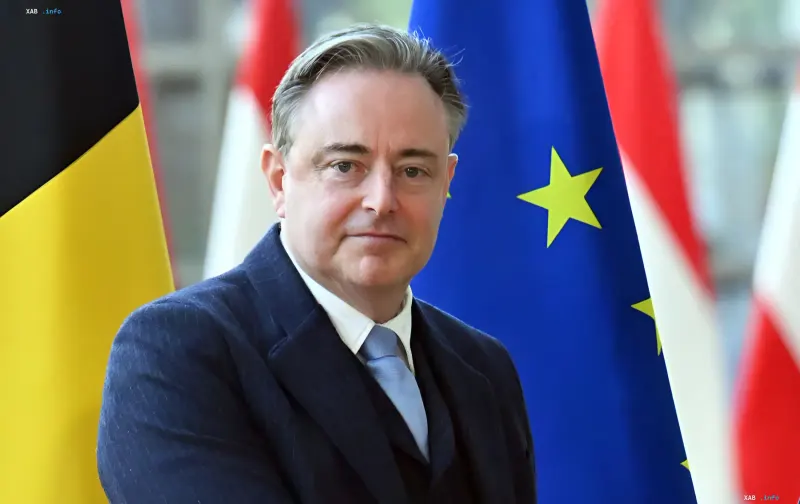
Belgian Prime Minister Bart de Wever officially submitted his government's resignation to King Philippe on November 2, 2026. The move came after a five-party ruling coalition failed to agree on the federal budget for 2027 following two months of protracted negotiations. The press service of the Royal Palace of Belgium confirmed that the head of the cabinet personally met with the monarch to announce his resignation. According to RBC-Ukraine and several other outlets, the collapse resulted from fundamental disagreements within the coalition: the right wing insisted on severe cuts to social spending, including healthcare and pension funding, while center-left factions demanded shifting the deficit burden onto tax increases for wealthy citizens. As a result, the cabinet was unable to find the additional 10 billion euros needed to bridge the budgetary gap.
Budgetary Impasse: The 10 Billion Euros That Could Not Be Found
Negotiations on the 2027 budget lasted for about two months and reportedly turned into a marathon in the final nights before the resignation without yielding a compromise. The five parties forming the coalition majority in the House of Representatives failed to devise a unified mechanism to reduce the deficit. The divergence was not merely quantitative but ideological: the conservative-liberal wing of the coalition, to which de Wever himself belongs, viewed cutting social items as the only acceptable path, while social democrats and greens rejected any cuts in healthcare and the pension system, favoring progressive taxation. Consequently, neither side made concessions, and the cabinet effectively entered a state of paralysis weeks before the budget approval deadline.
King Philippe's Reaction: Delay and Emergency Consultations
King Philippe of Belgium accepted the resignation request but did not enact it immediately. The monarch left the document "under review" and initiated urgent consultations with the leaders of all five coalition parties. A statement from the palace press service emphasized that "in the context of significant geopolitical uncertainty and serious economic challenges, the country cannot afford a prolonged political crisis." The monarch urged all stakeholders to "put the general interest and readiness for compromise first." A follow-up meeting between the monarch and Bart de Wever is scheduled for Friday, November 6, 2026. Palace representatives stated that the Royal Palace "expressed regret" over the current situation and noted the unacceptability of protracted political crises for state stability.
What's Next: Belgian Practice and the Risk of Early Elections
Belgium's political tradition dictates that the monarch often rejects the first resignation request, giving the prime minister an additional chance to find a way out of the deadlock. This practice apparently formed the basis of King Philippe's decision to postpone accepting the resignation. However, if the coalition fails to forge a budgetary compromise during consultations ending on November 6, the country will face the prospect of early parliamentary elections. For Belgium, where forming a government after elections historically takes months, such a scenario would mean an even longer period of political uncertainty—at a time when, as the palace phrased it, the geopolitical situation does not allow for prolonged pauses.
Context: De Wever's Stance on Frozen Russian Assets
De Wever's resignation comes against the backdrop of his recent public statements, which have already sparked resonance in Ukrainian and European discourse. The Belgian Prime Minister recently stated that the European Commission does not plan to propose new mechanisms for using frozen Russian assets to finance Ukraine's needs. Even earlier, when the confiscation of these funds was being discussed in Brussels and national capitals, de Wever publicly expressed doubt that Russia would lose the war against Ukraine, pointing out that the frozen funds would have to be returned after the conflict ends. Furthermore, according to him, Moscow openly threatened Belgium with "eternal retribution" if the assets were confiscated. These remarks, made amid the budget crisis, further complicated the political picture around the prime minister and increased pressure on his coalition.