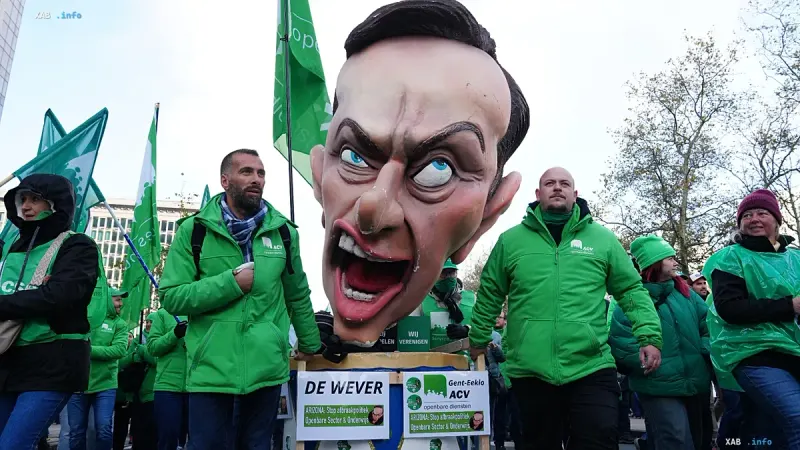
A large-scale demonstration took place in the Belgian capital as thousands of workers took to the streets to protest against austerity measures and planned budget spending cuts of approximately 10 billion euros. The rally featured placards warning that rent is consuming wages and that the wealthy are earning more while workers pay more amid high inflation and the energy crisis.
Causes of Public Discontent and Union Demands
Protesters carried banners demanding an end to cuts in social services, education, and employment support. Demonstrators stated that the government's planned austerity unfairly shifts the financial burden onto the least protected citizens and low-income workers while the prices of basic goods and services continue to rise.
Clashes with Police and City Unrest
The peaceful protest turned into violent clashes with law enforcement officers in protective gear. Police deployed tear gas and water cannons to disperse the crowd after a vehicle was set on fire in central Brussels. Arrests were reported amid thick smoke filling the city streets.
Political Context and Budget Negotiations
The street protests coincided with major political developments as Prime Minister Bart De Wever met with King Philippe to brief him on tense budget negotiations for 2027. Coalition partners have set a year-end deadline to approve the spending cuts under threat of a government collapse if talks fail.
Implications for Belgium's Socio-Economic Course
The events in Brussels highlight a deep divide between the government's efforts to restore fiscal discipline and fierce public resistance demanding the protection of living standards. The future trajectory depends on the administration's ability to find a compromise between austerity and social guarantees without risking further turmoil.