Brussels ready to help, but demands insurance: Maxime Prévot's position
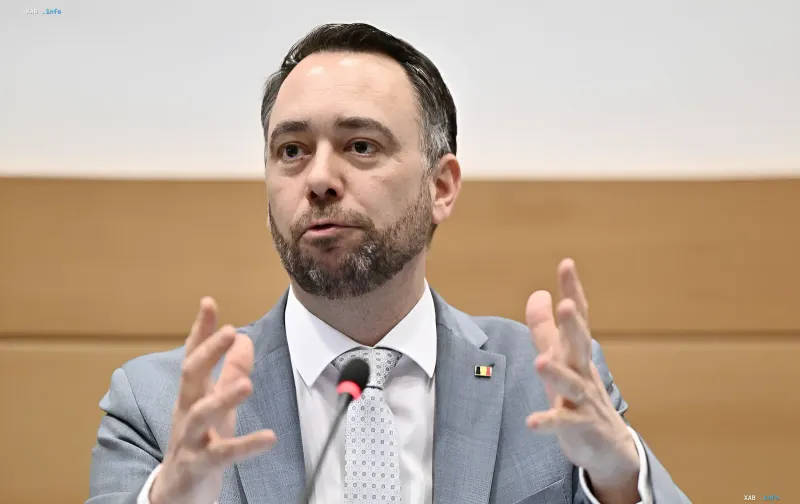
Belgian Foreign Minister Maxime Prévot has articulated his country's principled stance on the use of frozen Russian assets to support Ukraine. In a statement made in August 2026, the Foreign Minister emphasized that Belgium does not refuse to help Kyiv, but insists on establishing a clear mechanism for distributing legal and financial risks among all EU member states. According to Prévot, without prior agreement on liability, Brussels cannot give the "green light" to use funds held in Belgian banks, as this could pose a threat to the national economy.
Prévot categorically rejected any interpretation of his caution as sympathy for Moscow. "Belgium's unwillingness, or even refusal, to use these frozen Russian assets must in no way be understood or interpreted as a refusal to help Ukraine, let alone as a desire to provide any support to Russia," the minister stated. He emphasized that Belgian legal experts have identified significant risks that could affect not only the country but the European financial system as a whole if the issue is resolved without adequate legal preparation.
Financial threat: scenario of returning €200 billion
The key argument for caution is the scale of financial obligations that could arise in the future. Maxime Prévot cited a frightening figure: if international courts order Belgium to return frozen funds to Russia in 10–15 years, the country will not be able to cover such costs independently. "Otherwise, if in 10 or 15 years Belgium is ordered to return all funds, it will not be able to independently bear the burden of returning more than €200 billion. Proportionally, this is unthinkable for our budget," he noted.
Thus, Belgium advocates for European countries to agree in advance on mutual responsibility for the possible consequences of using assets. Brussels fears that in the event of a future legal defeat, the entire weight of compensation will fall on the shoulders of individual states rather than being distributed at the European Union level.
Political context: support for a €90 billion loan
Despite its tough stance on frozen assets, Belgium is demonstrating a willingness to support Ukraine in other ways. Prévot confirmed that Belgium supported the EU decision to provide Ukraine with a €90 billion loan in 2026–2027. The minister noted that the risks identified earlier have not disappeared, but the country has no principled objections to using these funds to support the Ukrainian cause, provided they are not linked to the direct use of frozen Russian capital without guarantees.
Contradictory data
The question of using Russian assets remains one of the most complex in EU diplomacy. On the one hand, in December 2025, the European Commission proposed that Belgium unlock a reparations loan for Ukraine of €210 billion from frozen Russian assets. On the other hand, Brussels did not dare to take such a step at that time, and now, almost a year later, Belgium's position remains unchanged: the mechanism must be safe. The disagreement lies in the fact that Kyiv and some EU countries see the assets as a ready resource for immediate aid, while Belgium insists on years of legal preparation to avoid catastrophic financial losses in the future.