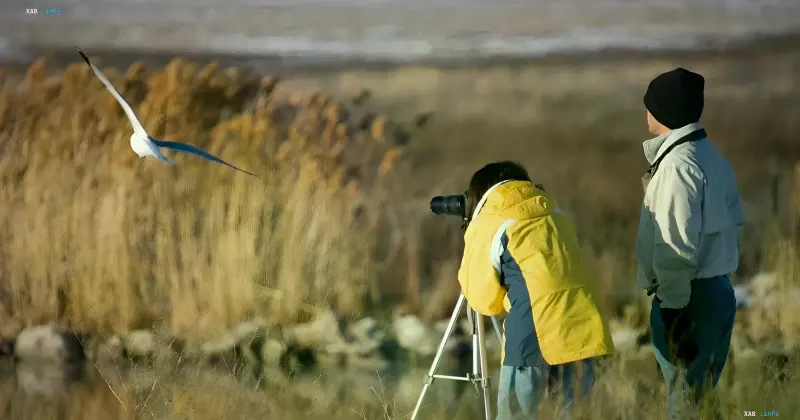
Researchers at the University of Montana (USA) are introducing an innovative approach to rehabilitating patients who have suffered severe consequences from a stroke. As part of the Intensive Comprehensive Aphasia Program (ICAP), scientists are using birdwatching as a natural and stress-free method to restore communication skills in people who have lost the ability to speak, understand speech, read, and write properly.
The Essence of the Method and the ICAP Program
Aphasia is diagnosed in approximately one-third of stroke survivors. To help patients overcome language barriers, the University of Montana developed a four-week ICAP program where classes take place four days a week, providing about 80 hours of intensive rehabilitation. Each participant is assigned a trained communication partner—usually a graduate student in speech-language pathology—while professional ornithologists monitor the outdoor activities.
Benefits of Non-Verbal Communication in Nature
According to program co-director Katherine Off, traditional rehabilitation methods often face a lack of motivation among patients who struggle to force themselves to speak on artificial topics. Moving sessions into the natural habitat of wild birds relieves psychological tension. Furthermore, observing feathered creatures allows patients to actively use non-verbal forms of communication, such as gesturing, pointing, drawing, and using pictures, keeping them socially engaged.
Contradictory Data
Despite inspiring feedback from specialists and participants, the scientific community notes certain contradictions in assessing the maturity of the method. The research team honestly admits that the program is still at a conceptual stage, and initial encouraging results are based on a limited sample. Scientists continue to collect clinical data to precisely confirm the long-term effectiveness of the methodology, while ornithologist Victoria Dreitz emphasizes the absolute accessibility of the approach, which can be adapted to each patient's physical capabilities.