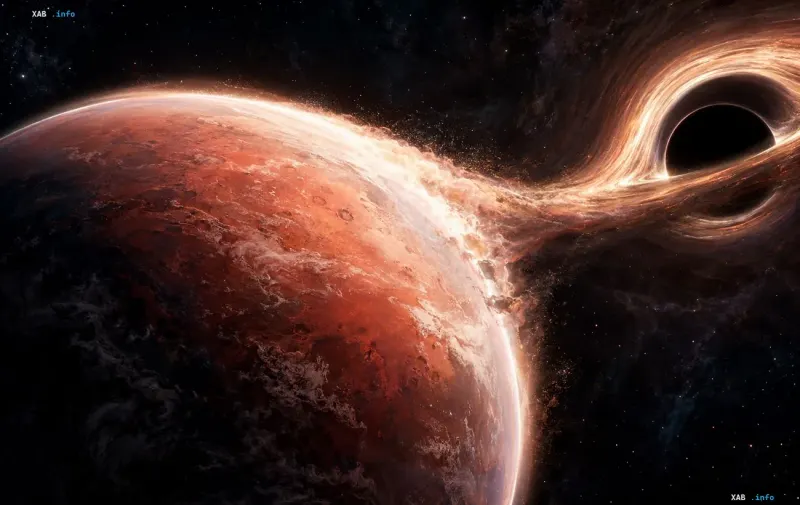
Scientists have discovered that supermassive black holes are capable of destroying the atmospheres of exoplanets thousands of light-years away. Powerful galactic winds and radiation bursts generated during active matter accretion can completely strip planets of their ozone layers, making complex life impossible.
New Criteria for Exoplanet Habitability
Traditional searches for extraterrestrial life have focused primarily on the so-called habitable zone—the distance from a star that allows water to remain liquid. However, fresh research demonstrates the critical importance of galactic context and a celestial body's location within the stellar system's structure. In the central regions of galaxies, stars are packed much more densely, and extreme cosmic events occur far more frequently than on the periphery.
As a supermassive black hole actively devours gas and dust, an extremely hot accretion disk forms around it. Such an object transforms into an active galactic nucleus capable of emitting destructive streams of energy and spreading them across vast distances throughout the entire galaxy.
Computer Simulation Results and Risk Factors
To assess the scale of this cosmic threat, astronomers performed extensive computer simulations using various activity scenarios and black hole masses. The resulting simulations convincingly proved that high-energy particle streams drastically accelerate gas leakage into open space. This leads to the irreversible depletion and complete destruction of exoplanets' protective ozone shields.
Deprived of an ozone layer, a planet is subjected to intense ultraviolet radiation that destroys any complex biological structures. Because destructive galactic winds can travel distances of thousands of light-years, entire regions of the central stellar bulge become potentially unsuitable for supporting biological life.
State of Our Galaxy and Research Prospects
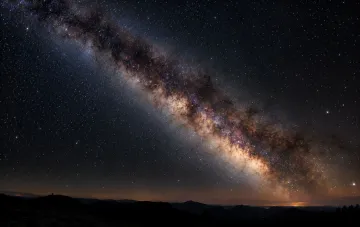
The central supermassive black hole of the Milky Way, known as Sagittarius A*, is currently in a quiescent phase. Nevertheless, scientists have data showing that in the past it went through periods of extreme activity, subjecting nearby cosmic zones to heavy radiation exposure.
The authors emphasize that current simulations are somewhat simplified and do not yet account for planets' ability to naturally replenish their atmospheres through internal geological processes such as volcanism. However, the overarching conclusion of the study remains unchanged: assessing potential exoplanet habitability requires a comprehensive analysis not only of the parent star, but of the entire galactic environment as well.
Significance of the Discovery for Astronomy
The established link between black hole activity and planetary atmospheric destruction radically alters the approach to searching for extraterrestrial life. Astronomers will need to revise maps of potentially habitable zones on the scale of entire galaxies. This will allow for more precise selection of candidates for detailed study using modern space telescopes and prevent wasted resources searching for life in lethal regions.