On November 25, 2026, American billionaire Todd Boehly, CEO and owner of the holding company Eldridge, announced the signing of an agreement with the Russian oil company Lukoil to form a consortium for the acquisition of its international energy assets. The deal was concluded after more than a year of negotiations and provides for an exchange of $10 billion worth of Lukoil securities for the company's foreign portfolio, according to Boehly and a representative of the U.S. International Development Finance Corporation (DFC). According to two sources familiar with the deal's terms, the total valuation of the asset package is approximately $16 billion.
What is included in the international portfolio
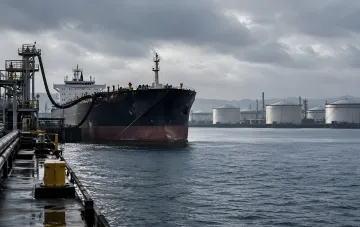
According to disclosed details, Lukoil's international portfolio covers operations in 11 countries with production of about 350,000 barrels of oil per day, including major fields in Azerbaijan and Kazakhstan. The package also includes refineries in the Netherlands, Bulgaria, and Romania, as well as an extensive network of gas stations, particularly in the U.S. Boehly noted that the final valuation may be adjusted depending on oil price dynamics. According to one source, the exchanged shares will not go directly to Lukoil but will be placed in an escrow account in the United Arab Emirates.
Role of Washington and the DFC
The consortium will include the DFC, the U.S. government's global investment arm. A DFC official told Reuters that "transferring strategic energy infrastructure assets into the hands of the U.S. or its allies and partners is a key political priority for the administration." Washington will receive a share of future revenue under the agreement, which, as phrased by the parties, will replace Russian influence in strategic markets with American control. The size of the ownership stake via the DFC has not yet been disclosed. The U.S. Treasury, which imposed sanctions on Lukoil in October 2025, will review the agreement to ensure national security, according to a source familiar with the process.
Political context of the deal
According to three sources familiar with the meeting, the matter of the agreement was raised by Vladimir Putin during a meeting at the Kremlin on September 5 with special representatives of U.S. President Donald Trump, Steve Witkoff and Jared Kushner. According to one source, Putin proposed the deal to demonstrate to Russians the possibility of doing business with the U.S. In Moscow, the decision on the agreement is considered Putin's own, even though Lukoil is technically a private company. It is noted separately that Boehly previously donated $2 million to political campaigns linked to Trump.
Sanctions background and licensing exceptions
The deal comes amid ongoing sanctions pressure: earlier, the U.S. Treasury Department extended until April 24, 2027, the general licenses allowing operations with Lukoil's foreign gas stations and several subsidiaries in Bulgaria, and in April 2026, U.S. authorities already extended sanctions exceptions for the company. Thus, the acquisition of sanctioned assets requires direct permission from the U.S. Treasury, making the Trump administration the de facto arbiter in choosing the buyer.