On October 13, 2026, GPU development startup Bolt Graphics announced the completion of debugging for its test chip built on the Zeus architecture. According to the company, successfully passing the functionality check lays the groundwork for the commercial release of the product, which is scheduled to hit the market in 2028 according to the roadmap. The announcement marks a key milestone in the development cycle: the transition from the concept presented at CES 2026 to an engineering-verified sample.
Zeus Architecture: Reimagining the Graphics Pipeline
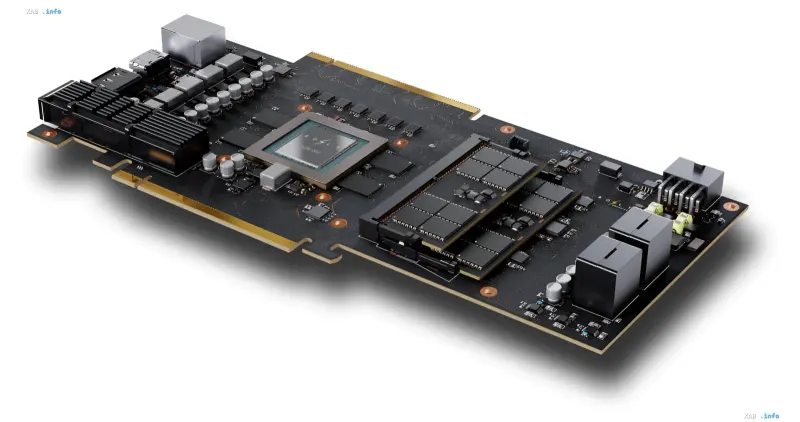
The Zeus architecture, details of which Bolt first disclosed at CES in early 2026, is positioned as a complete overhaul of the traditional graphics pipeline. According to the developers, it integrates specialized hardware for electromagnetic simulation and accelerates ray tracing graphics tasks. The company estimates this combination makes the accelerator suitable for complex computational scenarios, including artificial intelligence workloads. It is on this basis that Bolt makes its claim to the title of 'fastest graphics processor in history.'
Test Chip: 12nm, 6 sq. mm, and a Clean Result
To verify the architecture's functionality, the company manufactured a small test chip using TSMC's 12nm process node. Its area is only 6 sq. mm, which is typical for early engineering samples intended to validate basic functions rather than assess final performance. During the functionality check (the A0 step-back stage), no functional issues were detected, which the company views as confirmation that the architectural design decisions are correct.
Roadmap: From Developer Access to Mass Production
Unlike the test sample, Bolt's commercial GPUs will be manufactured using TSMC's more advanced N5P process technology. According to the company's plan, developer access will open in the first quarter of 2027, the first batch of products will be delivered to early access participants by the end of 2027, and mass production of PCIe cards (AIC) and server solutions will kick off in 2028. Full-scale product launch is also targeted for 2028.
Context: Claiming Leadership Against Nvidia Flagships
In marketing materials and headlines accompanying the announcement, Bolt Graphics directly pits its future accelerator against Nvidia's flagship solutions—the GeForce RTX 5090 and the B200 accelerator—claiming superiority over them. At the same time, no independent public tests confirming these figures had been conducted at the time of the announcement: performance claims remain at the level of vendor statements, with the only confirmed fact being the successful completion of the test chip's debugging. Nevertheless, the very appearance of a new player claiming the upper tier of the high-performance GPU market intensifies competition in the AI and graphics compute accelerator segment.