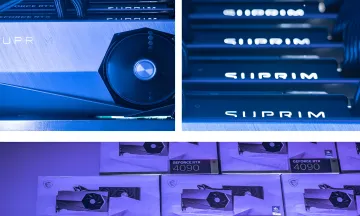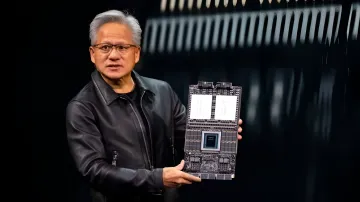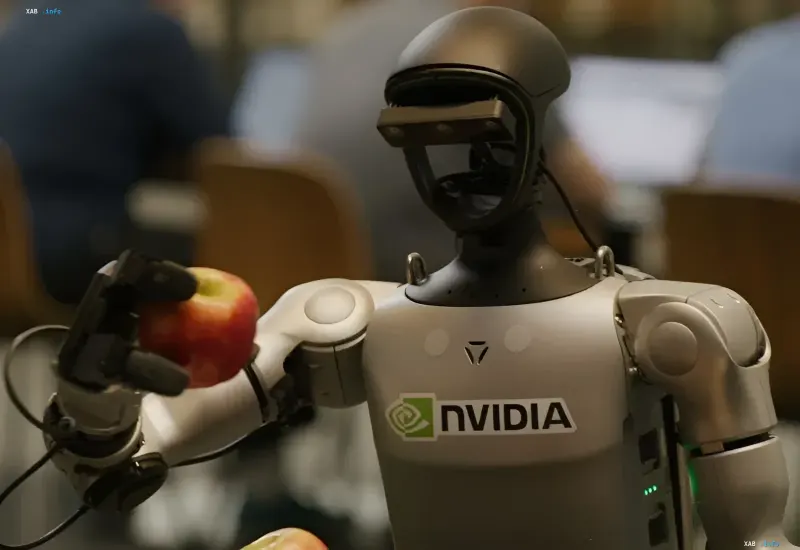
According to analytical agency Counterpoint Research, as of 2025, Nvidia chips were installed in 61% of humanoid robots, making the American company the undisputed market leader in AI accelerators for humanoid robotics. Its client list includes AGIBOT, Unitree, UBTech, Galbot, Figure AI, Neura Robotics, and Noetix Robotics. However, analysts emphasize that this leadership is temporary: as the market matures, Nvidia's position will gradually erode due to suppliers of specialized ASIC solutions and heterogeneous computing platforms.
The market will multiply: forecast up to 2030
Counterpoint Research forecasts that the global market for AI accelerators for humanoid robots will grow at an average annual rate of 144% through 2030 inclusive, with total shipments reaching 1.1 million devices. For comparison, at the end of 2025, a significant portion of the market—32%—consisted of humanoid robots not equipped with specialized AI accelerators at all, indicating a high share of 'unmet' demand. This very segment will become the main battleground among suppliers in the coming years.
ASIC vs GPU: Vertical integration of automakers
By the end of 2025, Tesla controlled 5% of the humanoid AI chip market, while Intel, Qualcomm, and Xpeng shared another 2%. Automakers are promoting the idea of vertical integration: specialized integrated circuits (ASIC) that they develop have evolved from vehicle autopilot onboard systems and will improve as humanoid robots become widespread. According to Interfax, Xpeng plans to launch its own humanoid robots on the global market in 2027. China's D-Robotics, spun off from Horizon Robotics, through partnerships with Leju Robotics and LIMX Dynamics, is also claiming the role of a significant player in hardware and software solutions for robotics.
Architectural shift: From GPU to heterogeneous SoCs
Qualcomm is promoting a heterogeneous computing architecture in this segment, whose products feature lower costs and higher energy efficiency compared to traditional GPUs. According to Counterpoint Research representatives, the computing ecosystem of humanoid robot 'brains' is shifting from GPU dominance to the coexistence of multiple AI computing architectures. At the same time, GPU dominance will persist because achieving Artificial General Intelligence (AGI) requires combining Vision-Language-Action (VLA) models and World Action Models (WAM), with a gradual migration from the former to the latter and the emergence of new types of AI models for robotics. The release of the GPT-6 Astra AI model, according to analysts, has revived debates over choosing between VLA- and LLM-dominant paradigms, which will entail the spread of hybrid SoC-type solutions.
Edge computing and intensifying competition after 2027
Local computing resources of robots will gain increasing importance as they will require higher performance combined with lower thermal limitations and improved energy efficiency. Qualcomm is expanding its customer base by partnering with Neura Robotics, VinMotion, Booster Robotics, and Figure AI, although shipment volumes still lag far behind Nvidia. After 2027, competition in the sector is set to intensify sharply: accelerators capable of handling AGI-class computing loads will enter mass production. Simultaneously, Japanese companies—Renesas Electronics, Mitsubishi Electric, GMO Internet Group—are strengthening partnerships with Chinese humanoid manufacturers, adding another geopolitical vector of development to the market.