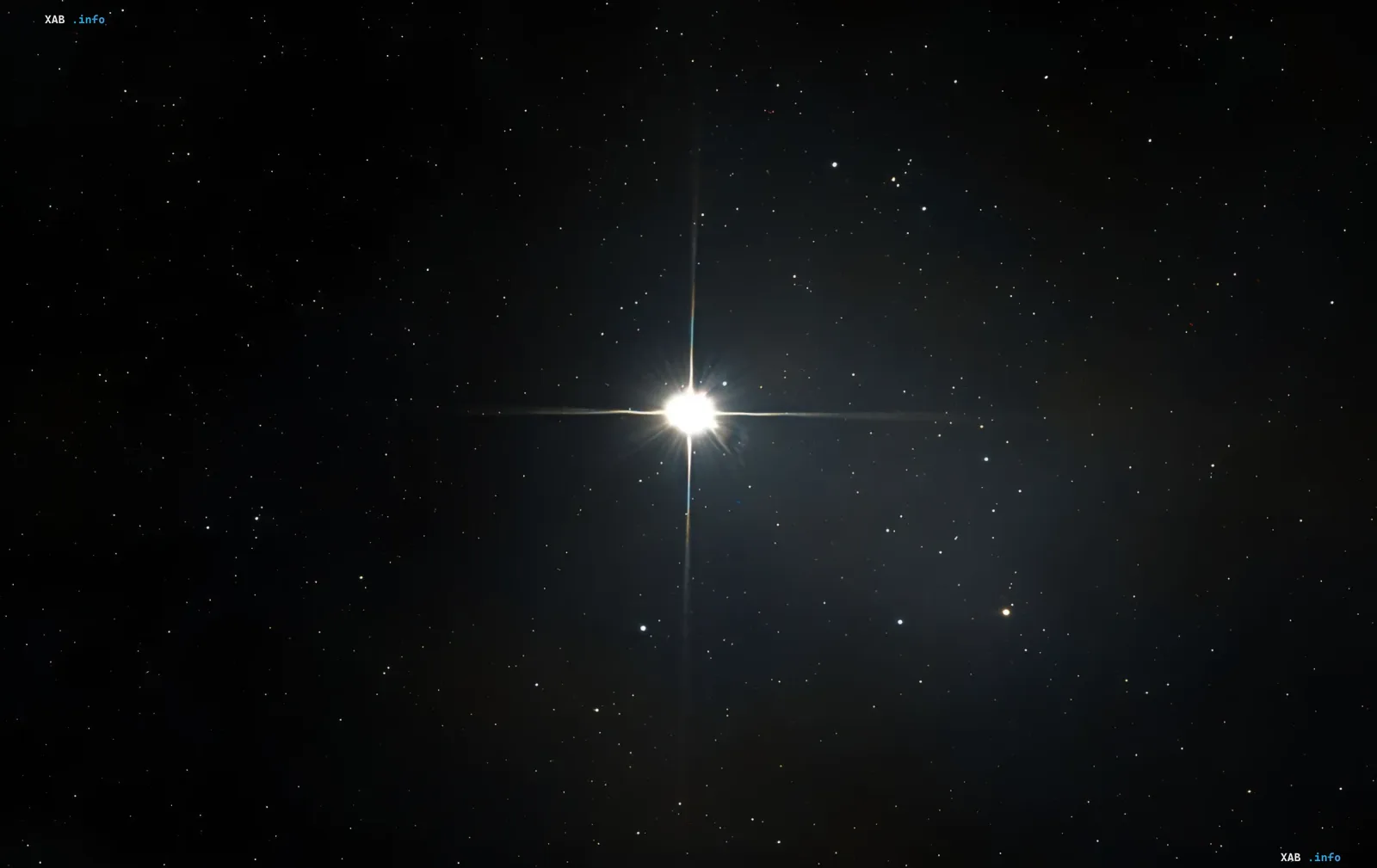
Astronomers from the University of Warwick have announced the discovery of a massive satellite orbiting Boyajian's Star (KIC 8462852) — a star that has been considered the prime candidate for hosting an alien megastructure, known as a Dyson sphere, for over a decade. The research results were published in the scientific journal Monthly Notices of the Royal Astronomical Society, and the discovery was reported by RBK-Ukraine. The discovered object is several times larger than Jupiter and, according to scientists' estimates, is capable of explaining the anomalous eclipses that have baffled the astronomical community for years.
A Giant on the Boundary Between Planets and Brown Dwarfs
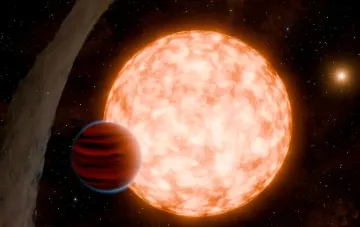
According to the researchers' calculations, the mass of the new satellite is approximately 9.4 Jupiter masses, although the upper limit of the estimate reaches 28 Jupiter masses. This range places the object on the thin line between a giant exoplanet and a brown dwarf — a dark celestial body that is too massive to be considered a planet but too light to sustain stellar nuclear fusion reactions. The satellite's orbital period is estimated at 1,030–1,368 days, or about three to four Earth years. It is precisely due to such long intervals between observations and their coincidence with more significant eclipses that the object's transits remained unnoticed for a long time.
How the Giant Explains the Mysterious Eclipses
In 2015, Boyajian's Star attracted the attention of the entire scientific community due to chaotic and deep drops in brightness — up to 22 percent — which could not be explained by the usual passage of planets. Theories ranged up to the existence of an alien megastructure. According to the authors of the study, the discovered object cannot directly cause such long and large-scale fluctuations in light. However, its colossal gravity acts as a "cosmic destabilizer": passing through the system, the giant knocks groups of comets or planetesimal debris off their usual orbits, directing them close to the star. As they approach the star, the comets disintegrate and form giant clouds of dust and gas, which block the star's light from observers on Earth.
Contradictory Data
There is a significant spread in the estimates of the new satellite's parameters: the lower mass limit (9.4 Jupiter masses) and the upper limit (28 Jupiter masses) differ by almost three times, reflecting measurement uncertainty and different modeling scenarios. Moreover, earlier publications, specifically materials from Naked Science, indicated that popular "natural" versions of the star's flickering were not confirmed, creating the impression that natural explanations were exhausted. The new work by the University of Warwick, on the contrary, revives the natural hypothesis — gravitational destabilization of a comet belt — but does not directly refute alternative scenarios, including comet clusters and, in the distant future, artificial structures. Thus, both viewpoints — "natural mechanism" and "unproven previous natural versions" — remain in the field of discussion.
Why the Object Could Not Be Photographed
Direct imaging of the satellite is currently impossible even with the most modern optical methods, as the brightness of the star itself completely overshadows its thermal radiation. A second satellite is also known in the system — the distant red dwarf KIC 8462852B, however, it is located too far away to influence the brightness fluctuations. This means that the discovered massive object remains the prime suspect in the role of the "destabilizer," and further observations and refinement of its mass will finally determine whether it is a giant exoplanet or a brown dwarf, and finally resolve the question of the nature of the famous eclipses of Boyajian's Star.