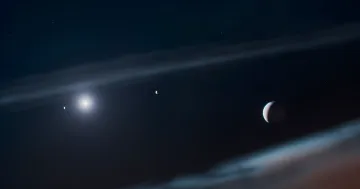
For the first time in the history of astronomy, scientists have directly detected radio waves emanating from an exoplanet outside the Solar System. The source of the signal was Beta Pictoris b — a gas giant orbiting the hot star Beta Pictoris at a distance of about 63.4 light-years from Earth. This is reported by RBC-Ukraine, citing a study published on the arXiv preprint server. The fact of detection was confirmed by independent outlets Caravan.kz and 3DNews, which also reference the same preprint.
How the Observation Was Carried Out
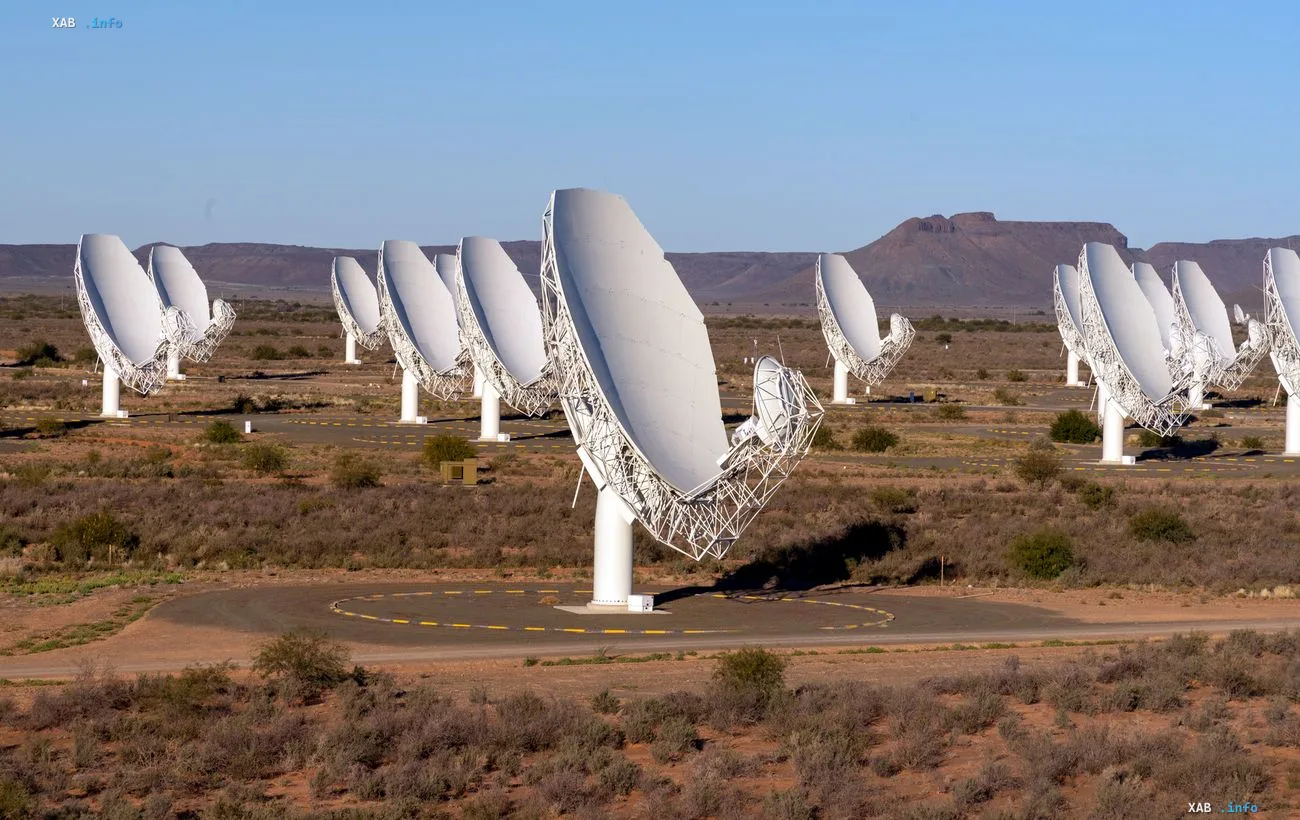
The observations were conducted using the MeerKAT radio telescope in South Africa over 2025 and 2026, at frequencies ranging from 0.85 to 3.5 GHz. A key challenge with such systems has always been that radio signals from planets were lost against the backdrop of the powerful radiation of their parent stars. To separate the planetary signal from the stellar one, astronomers used quasars — the ultra-bright cores of distant galaxies — as coordinate reference points. Thanks to ultra-precise coordinate alignment, the researchers proved that the short, repeating, and highly polarized radio wave bursts are generated by the planet itself, not by its star.
What the Planet Is Actually Emitting
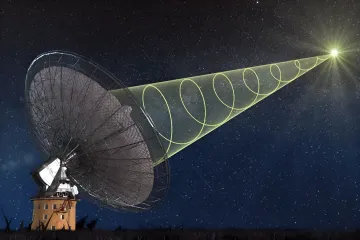
The scientists immediately emphasize: the detected waves are not an attempt at extraterrestrial contact. The recorded flashes turned out to be the result of a powerful aurora in the upper layers of the gas giant's atmosphere. According to the authors of the study, the planet's rapid rotation and its powerful internal dynamo create so-called electron-cyclotron instability, which generates the intense radio waves. Thus, the signal is a purely physical phenomenon associated with the exoplanet's magnetosphere.
Significance of the Discovery and Future Plans
The authors of the study note that this discovery marks the first direct measurement in history of the strength of an exoplanet's magnetic field. Previously, such measurements were only possible using indirect methods. Based on the obtained methodology, astronomers are preparing to study seven other giant planets in five nearby stellar systems, which could significantly expand our understanding of the magnetospheres and atmospheres of extraterrestrial worlds.