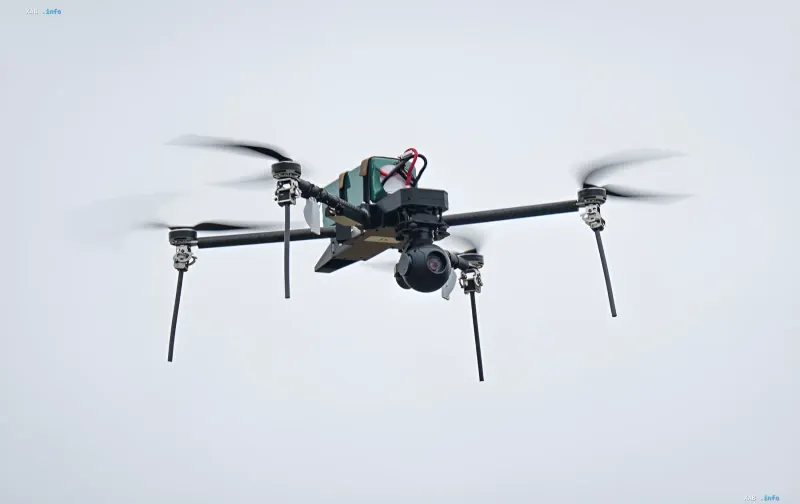
Brave1, in cooperation with the Ukrainian Ministry of Defense, has completed a cycle of tests for reconnaissance unmanned aerial vehicles presented by nine Ukrainian manufacturers. This was reported by the Brave1 press service, as cited by RBC-Ukraine. The tests became part of systematic work to create a functional replacement for Mavic drones, which for several years have remained one of the key tools for tactical reconnaissance within the Ukrainian Defense Forces.
Testing for Compliance with Combat Missions
The purpose of the tests was to check how well the drones' onboard characteristics meet the real needs of the troops and the conditions of the modern battlefield. During the tests, specialists evaluated the drones' resistance to electronic warfare (EW) jamming, the quality of video communication and data transmission, flight duration, and a number of other parameters critical for frontline operations. Following the tests, manufacturers whose devices confirmed their combat readiness have already moved on to the contracting stage with the Ministry of Defense for subsequent delivery to military units.
Why Mavic No Longer Meets Needs
As noted by Brave1, the Mavic has become one of the key tactical-level reconnaissance tools, but the war is placing ever-increasing demands on UAVs. The expansion of the so-called "kill zone" — the area where the enemy is capable of hitting a drone — forces the military to use devices capable of staying in the air longer, operating at greater distances, and maintaining efficiency under conditions of active EW deployment. According to the company, civilian drones are increasingly failing to meet these heightened requirements, making the transition to specialized solutions necessary.
From a Copy to a Functional Alternative
"We deliberately moved away from the idea of creating a simple copy of the Mavic. At the same time, we are focusing on a functional alternative — drones adapted to the conditions of the modern battlefield and the specific tasks of the Defense Forces," Brave1 stated. Thus, the company and the Ministry of Defense are not striving to reproduce a specific model, but rather are developing a class of drones that covers the same functional tasks, but with allowance for changed combat conditions and technological limitations.
Context: Sharp Increase in UAV Procurement in 2026
The testing of nine manufacturers fits into the broader context of a large-scale expansion of the drone fleet. It was previously reported that in 2026, the Defense Procurement Agency under the Ukrainian Ministry of Defense contracted 300% more UAVs than in the previous year. At the same time, analysts point out that scaling the production of jet interceptors complicates the technological component and increases the cost of components, particularly engines, which Ukraine largely purchases abroad. Under these conditions, domestic production of reconnaissance drones independent of imported propulsion systems acquires strategic significance.
Thus, the completed testing cycle has become the next stage in the transition from improvised civilian solutions to serial military drones designed for specific frontline reconnaissance tasks and resistant to enemy counteraction.