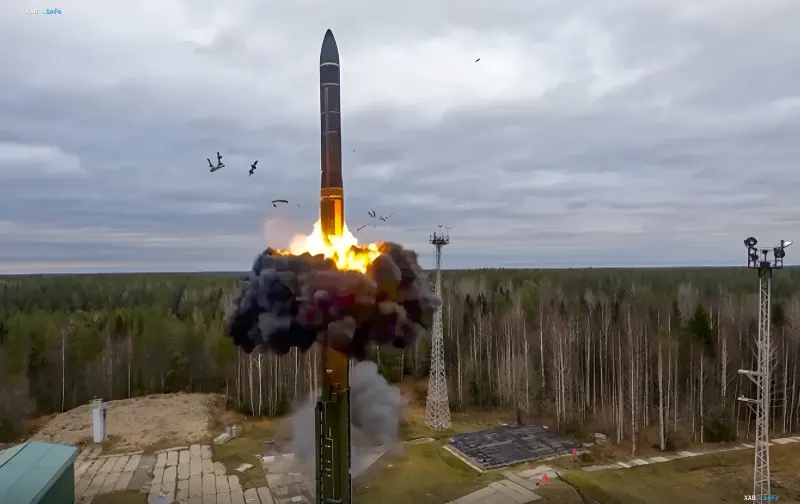
On the night of May 24, Russia deployed two Oreshnik ballistic missiles against Ukraine. According to data from The New York Times, cited by RBK-Ukraine, Ukrainian forces used the "Lima" electronic warfare (EW) system to knock both missiles off their intended course, resulting in neither hitting any military objective.
How the Lima system works
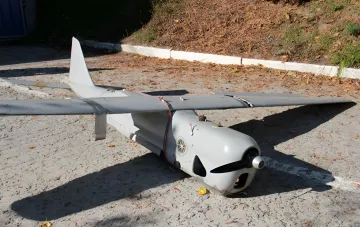
According to the publication, Lima was developed by Cascade Systems to counter Russian missiles and drones. The system emits electromagnetic interference that affects the navigation systems of weapon platforms: specifically, it is capable of transmitting false coordinates, causing missiles and drones to change trajectory and deviate from their set route. Representatives of Cascade Systems and Ukrainian military officials claim the system can even influence Russian hypersonic missiles.
Course of the May 24 attack
According to fighters from the "Night Watch" unit, Russians launched two Oreshnik missiles toward the Kyiv region, and one operator used the EW system to counter both targets. As a result, the first missile fell near Bila Tserkva, in a garage area, miles away from any military target. The second disintegrated in mid-air, with its debris falling in temporarily occupied territory of the Donetsk region.
The Russian version of the miss
Russia also admitted that important targets were not hit during this attack. Vladimir Putin stated that the Russian military "simply struck where it was convenient to observe the results." Thus, the official Russian version does not link the miss to the work of Ukrainian EW, whereas the Ukrainian side and the NYT point specifically to the interference caused by Lima.
The cost for civilian navigation
The work of Ukrainian EW creates issues for civilian navigation: due to interference, GPS devices may determine a person's location thousands of miles from the real one. One taxi passenger in Kyiv received a home route through South America, the Atlantic Ocean, and Europe, with the app estimating the trip at 12,276 minutes. The GPS watch of one Ukrainian official showed he had run over six kilometers in Lima, the capital of Peru. The same glitches were encountered by NYT journalists who arrived to inspect the system's antennas near Kyiv: their car's navigation also placed their location in Peru. The military, according to the report, considers the advantages of Lima far more important than the inconveniences for the civilian population.
Context: Myths about Oreshnik
Russian propaganda claimed that Oreshnik possesses colossal destructive power and is capable of striking deep-seated objects, but research results indicate otherwise. In addition, according to available data, Russia may have started small-batch production of this weapon, but its total quantity in the arsenal remains minimal.