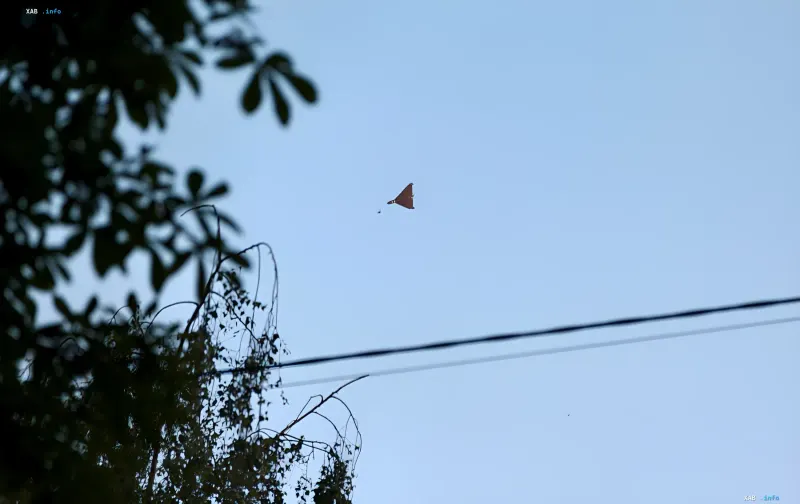
August 14, 2026 marked the day when Romania's air defense faced a new reality: a drone flew so low that it went unnoticed by radar. The incident occurred in the Lunca Văii area (Tulcea County), near the Cetațuia quarry. After hitting the ground, the UAV triggered a forest fire, requiring immediate intervention by firefighters and the military.
The "Invisible" Enemy: Why Didn't the Radars Work?
The Romanian Ministry of National Defense (MApN) confirmed receiving a report of the drone crash around 12:00. The key detail of the incident was the drone's tactics: it flew at an extremely low altitude, allowing it to bypass radar surveillance systems. As military officials noted, the aerial target was simply not detected until the moment of impact. This casts doubt on the effectiveness of the country's current air defense systems, which are traditionally oriented towards intercepting targets at medium and high altitudes.
Consequences of the Impact and Government Response
The drone crashed in a wooded area. Preliminary data indicates no casualties among the population, however, a fire started, which is being extinguished by a crew of five non-commissioned officers from the Măcin fire department. A Ministry of Defense helicopter also flew to the scene to survey the area. Romanian Acting Prime Minister Ilie Boloian stated at a press conference that the armed forces are doing everything possible to combat the drone threat, acknowledging it as a "constant phenomenon".
Expert Analysis: A Race Against Time
Retired Commander Sandu-Valentin Mateiu called the situation a "race against time" in the context of strengthening missile defense. He warned that the crashed drone was likely not detected precisely due to its low flight altitude. The expert also emphasized the strategic importance of the region: since Ukraine is increasing grain exports through Romania, the Constanța area and ports require increased attention. Boloian added that rapidly equipping the army with drone interception combat systems has become an urgent necessity.
Context of Escalation: Romania Under Attack
This incident is not isolated. Earlier this month, on August 11, Romanian military forces destroyed two "Gerbera" drones near the Neptun Deep offshore gas project. At the end of July, Romania shot down three drones in just three days, spending 1.5 million euros on this. There were also reports of alarm at a beach in Costinești due to the discovery of drone debris. Important communications lines run near the drone crash site in Lunca Văii, making the situation particularly sensitive.
Contradictory Data
There are discrepancies in the details of the threat assessment. On one hand, the military claims there is no material damage or casualties, emphasizing the local nature of the incident. On the other hand, experts and political figures interpret the drone crash as a systemic problem, pointing to gaps in the protection of critical infrastructure (the Neptun Deep gas project, grain ports). While the official position reassures the population, statements about a "race against time" and the need for urgent re-equipping of the army indicate serious internal tension within Romania's defense sector.