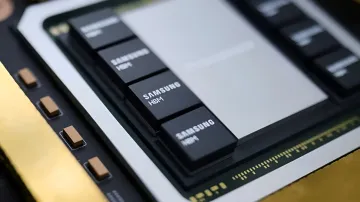
Broadcom is rapidly strengthening its positions in the global hardware market for artificial intelligence, demonstrating record business activity. According to recent analytical data and industry reports as of October 2026, the corporation managed to secure memory procurement terms from South Korean giant Samsung that are fully comparable to the preferences of its main competitor, NVIDIA. Previously, NVIDIA held a solo advantage due to unprecedented order volumes; however, Broadcom's operational scale has grown significantly, allowing it to overcome this pricing barrier.
Samsung's New Pricing Policy and Benefits for Both Sides
Having achieved parity in the cost of advanced memory from Samsung, Broadcom has significantly optimized the production costs of its own specialized accelerators and networking chips for data centers. For Samsung itself, this step is also of strategic importance: high supply volumes and lucrative contracts allow the South Korean manufacturer to effectively compensate for current financial and operational difficulties in contract semiconductor manufacturing (foundry). Meanwhile, NVIDIA continues to maintain high business margins, although it projected a planned decline in previous and current quarters due to intensifying competition in the AI accelerator market.
Large-Scale Funding for Anthropic's Infrastructure
Alongside its pricing successes in the memory market, Broadcom has concluded a strategic agreement on financial support for artificial intelligence developer Anthropic. Reports indicate that Broadcom has agreed to provide its partner with up to $42 billion in financing for the large-scale construction and development of new AI infrastructure. This amount covers a significant portion of Anthropic's long-term computing power lease obligations, which market experts estimate at a colossal $125 billion over the next five years.
Capacity Deployment Prospects and Potential Risks
Experts predict that as early as 2027, the Anthropic laboratory could become Broadcom's largest customer, deploying proprietary TPUs with a combined capacity of 5 GW, with plans to increase this figure by another 10 GW in 2028. Nevertheless, Anthropic management openly acknowledges a potential conflict of interest: such a close and deep financial tie directly with a critical equipment supplier could theoretically affect the company's flexibility in accessing computing resources. Still, the deal marks a fundamental reshuffling of power in the AI silicon market.