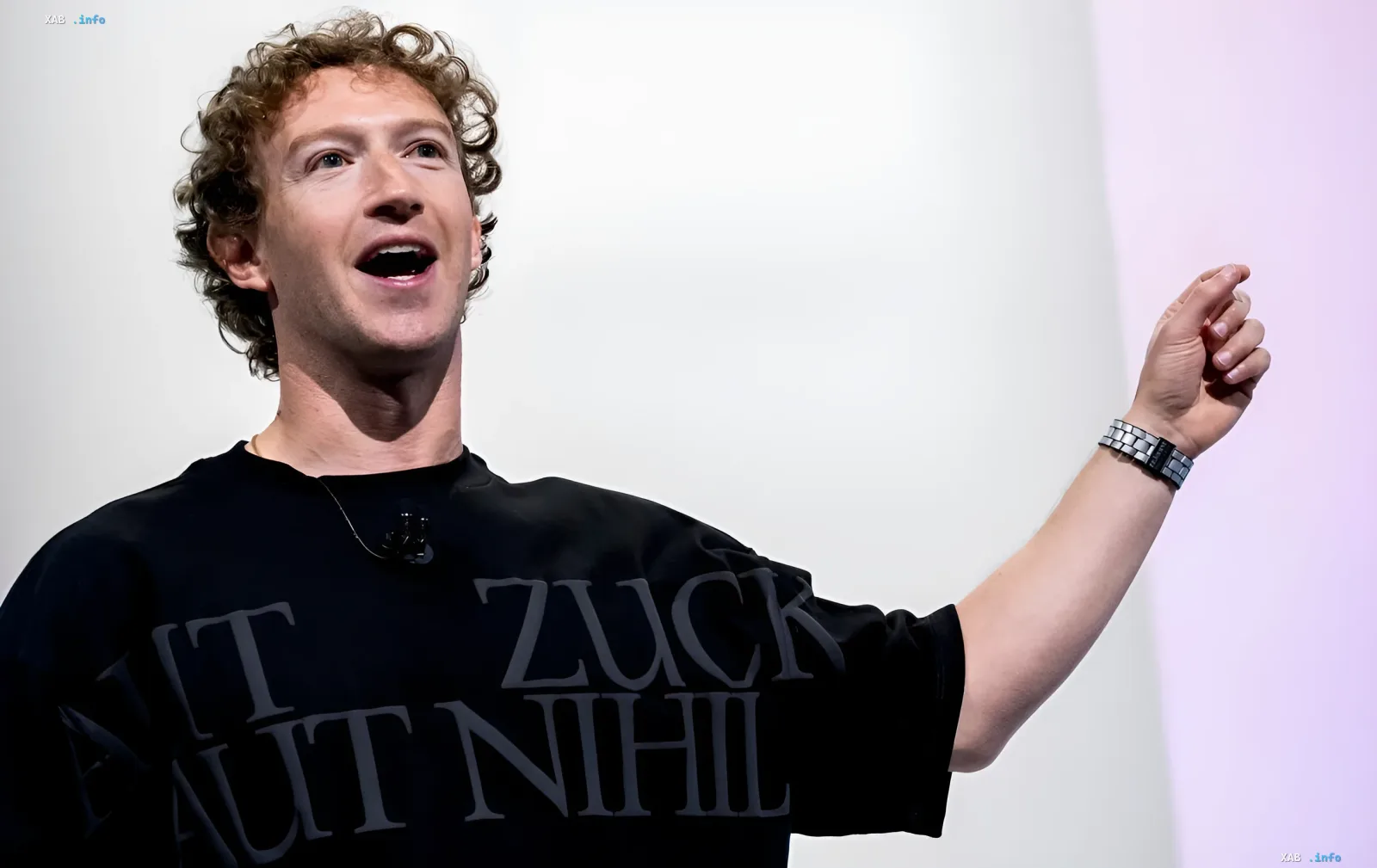
Mark Zuckerberg has publicly pushed back against calls to slow down the development of artificial intelligence. In a post on the social network X, the head of Meta endorsed Jensen Huang's position from NVIDIA and cast doubt on the arguments of Anthropic's Dario Amodei, who is calling for tighter control. This is reported by RBC-Ukraine, citing the Meta CEO's post.
Economic Incentives Instead of State Oversight
According to Zuckerberg, AI developers have a natural economic incentive to build safe products: it is user trust and the alignment of systems with human values, he believes, that will determine the market success of algorithms. Violating these principles, the Meta chief argues, carries the risk of direct financial losses and legal liability for IT labs, making additional state oversight redundant.
A Real-World Example from Meta and NVIDIA's Position
As an illustration, Zuckerberg cited the voluntary delay of the release of its own Muse technologies, explaining it as a need for additional security checks. "Directing the vast majority of compute resources toward serving people, rather than racing toward recursive self-improvement, is one of the best ways to ensure the safe development of this technology. Meta has taken on this responsibility, and other labs can do the same," he noted. Jensen Huang expressed a similar idea at the Salesforce Dreamforce conference, stating that existing legislation is entirely sufficient to hold companies accountable for the quality of their software.
The Opposing Camp: Anthropic and OpenAI
In the camp of those advocating for restrictions remain Anthropic's Dario Amodei and OpenAI's Sam Altman. They insist that risk monitoring must precede the deployment of new features, while acknowledging the difficulty of coordinating safety measures amid fierce international competition. Thus, two opposing approaches have emerged in the industry: one places market incentives and voluntary commitments at the center, the other — preventive risk oversight before release.
Political and Financial Resonance
The debate has gone beyond the tech community and touched the political and financial spheres. US President Donald Trump critically assessed calls to rein in the technology, naming effective state leadership as the main guarantor of safety. Amid the disputes among investors, fears have emerged of a possible stock market correction. That said, some analysts are convinced that shifting the focus from a relentless race of features to the stability and reliability of artificial intelligence will, in the long run, only strengthen the tech sector.