In August 2026, the issue of buckwheat availability once again came to the forefront of the Ukrainian agenda. Amid consumer concerns regarding price fluctuations and the periodic absence of the product on shelves, the Cabinet of Ministers commented on the state of the market. Taras Vysotsky, the Minister of Agrarian Policy and Food of Ukraine, stated that there is no forecast for a physical shortage of buckwheat in the country, although the cost of the grain may increase somewhat. The statement was made against the backdrop of buckwheat temporarily disappearing from shelves in several retail chains in mid-August, with maximum prices in supermarkets reaching 119 hryvnias per kilogram.
Official Position of the Cabinet of Ministers
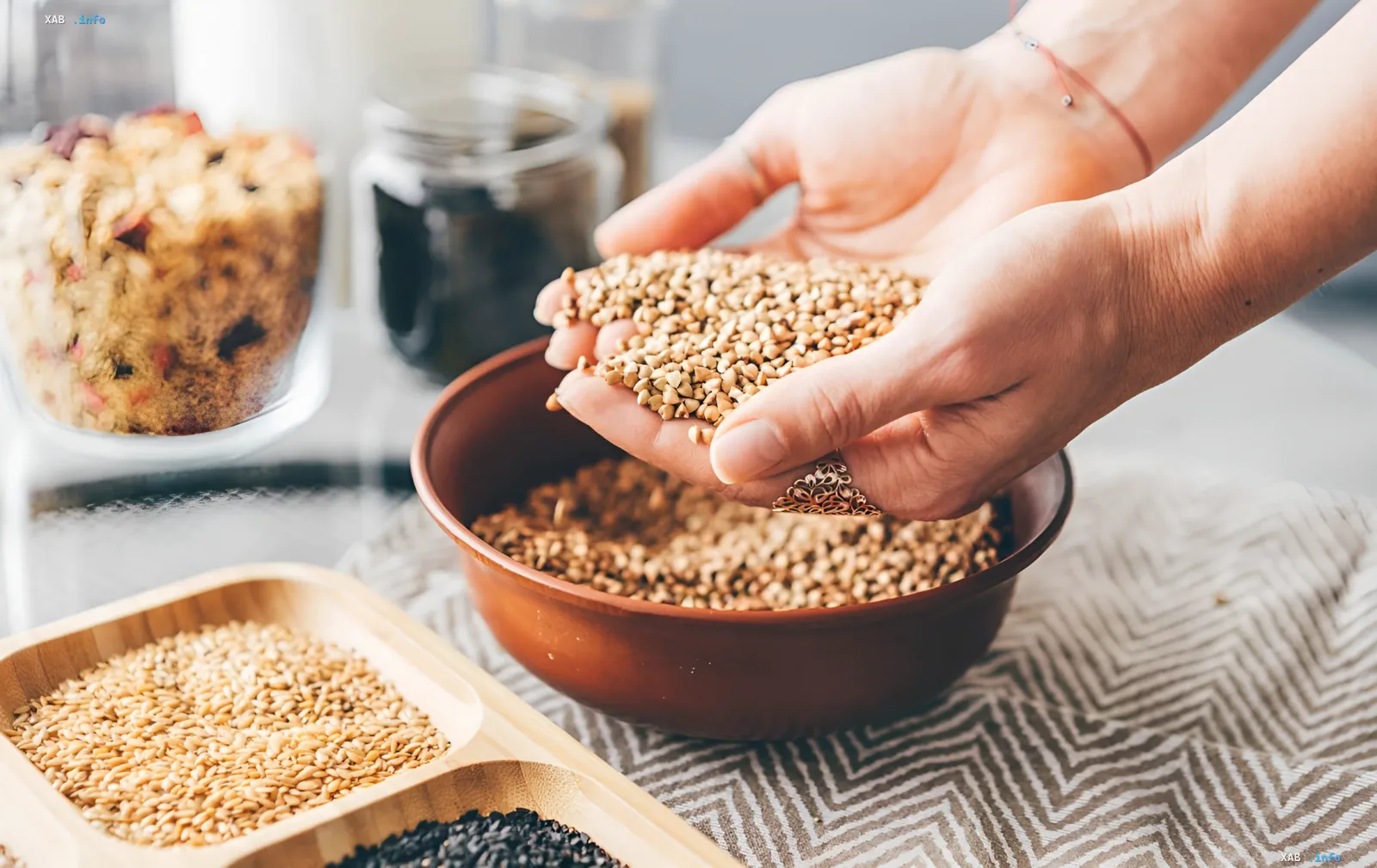
According to Vysotsky, buckwheat production in 2026 is expected to be at approximately the same level as last year — more than 80,000 tons. This, in the minister's assessment, allows for the conclusion that there is no systemic shortage. At the same time, he did not rule out price pressure: "In the near future, the price will likely remain close to the current level, although a rise of up to 15% is possible," — the ministry's press service quoted the head of the department. Thus, the official stance is that the problem is not related to food availability, but rather to pricing.
Production and Logistics Under Attack
Separately, the minister emphasized that strikes by the Russian Federation on distribution centers and enterprises have not led to a reduction in the volume of food intended for domestic demand. "There is no threat of a physical food shortage. Products will be available in every settlement. However, for some time, there may be less choice than consumers are used to," — Vysotsky assured. The formulation regarding "less choice" effectively acknowledges that local and temporary assortment disruptions are possible, even if the overall market balance is maintained.
Price Dynamics: from 65 to 119 Hryvnias
The figures published by the Ministry of Finance of Ukraine paint a picture of significant volatility. According to the Ministry of Finance portal, the average price of buckwheat in large retail chains on August 20, 2026, was 74.57 hryvnias per kilogram. At the same time, on August 17, the price spread in retail ranged from 65.99 to 91.20 hryvnias per kilogram, while on August 12, the maximum price in supermarkets reached 119 hryvnias per kilogram. Such jumps within a few days indicate high market sensitivity to logistical and speculative factors.
Contradictory Data
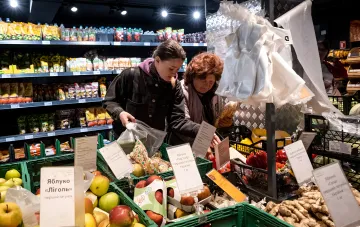
Here, the versions of official statements and the actual situation in retail outlets diverge. On the one hand, the minister claims that "products will be available in every settlement" and there is no threat of a physical shortage. On the other hand, according to RBC-Ukraine reports, buckwheat was absent from the shelves of the Novus retail chain on August 13 and 14, and on August 12, the price in certain supermarkets soared to 119 hryvnias per kilogram — almost twice the average for large chains. That is, at the level of individual regions and chains, consumers actually faced temporary unavailability of goods and short-term price hikes, which does not fully align with the thesis of complete and uniform availability. The difference between the "average price in large chains" and the "maximum price in supermarkets" also shows that there is no single price benchmark for the entire market.
What to Expect for Consumers
In summary, it can be said the following: the authorities do not expect a systemic shortage of buckwheat in Ukraine for 2026, production volumes remain at last year's level, and strikes on logistics have not undermined domestic reserves. At the same time, the market demonstrates high price volatility and local disruptions in certain chains. Consumers should budget for a possible price increase of up to 15% from the current level and take into account that in a specific store, the grain may be temporarily unavailable or cost significantly higher than the national average. The coming weeks will be an indicator of whether prices can be stabilized without transitioning to a shortage.