Lithuanian Foreign Minister Kastytis Budrys, in a post on the social network X, sharply criticized statements by the Russian leadership about an alleged desire for a negotiated settlement of the conflict in Ukraine. In his words, Vladimir Putin’s claims about peace initiatives are “completely devalued and not worth trusting,” and their true purpose is to avoid new packages of sanctions aimed at the Kremlin’s war machine and economy. The diplomat emphasized that while Moscow publicly declares its readiness to end the war, Russian armed forces continue massive strikes on civilian infrastructure and populated areas of Ukraine.
“The Only Language the Regime Understands”
Budrys stated that the only language on which the Russian regime is ready to engage in dialogue is the language of force. Against this backdrop, in his belief, Western partners are obliged not only to avoid weakening but to increase the volume of military aid to the Ukrainian Armed Forces, as well as to tighten restrictive measures against the Russian Federation and its allies. “While he does everything in his power to deceive the world in yet another attempt to avoid additional sanctions, Russian missiles and drones continue to kill peaceful Ukrainian citizens,” the Lithuanian diplomat emphasized, urging not to take at face value the rhetoric about negotiations, which, in his assessment, serves exclusively as a tool of informational pressure on the international community.
Strike on Odesa Oblast: Human Losses
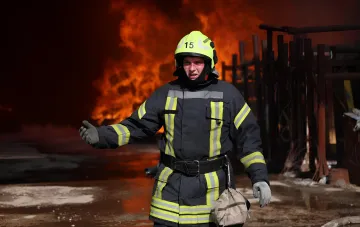
An illustration of Budrys’s words was the latest massive Russian attack, the consequences of which were particularly severe for the civilian sector. Odesa Oblast came under fire: as a result of the shelling, at least 11 civilians were killed, and nearly 100 people were wounded. Among the victims was a five-month-old baby. According to the minister, these figures clearly demonstrate that the “readiness for dialogue” declared in the Kremlin is not accompanied by any concrete step toward a ceasefire or the withdrawal of troops.
The Kremlin Blocks Real Peace Initiatives
In the context of Budrys’s statements, it is important to note that in Russia real peace initiatives to end the war are systematically blocked. Recently, the Kremlin reacted to the proposal by President Volodymyr Zelenskyy to meet at the G20 summit, stating that Vladimir Putin “has not yet made a decision” on the issue of participating in the event. At the same time, in Moscow they openly confirmed the absence of intentions to stop the aggression: Russian Foreign Minister Sergey Lavrov publicly declared that Russia would not make a pause in combat operations during possible negotiations with Kyiv. Meanwhile, the invitation of the Ukrainian leader to a meeting in the Kremlin was called a “gesture of goodwill” in Russian official circles, which, in the assessment of Western diplomats, is an attempt to shift responsibility for the breakdown of dialogue onto the Ukrainian side.
The Position of Lithuania and International Partners
Kastytis Budrys assured that Lithuania and other international partners will continue to support Ukraine “for as long as it takes to defeat the aggressor.” This position underscores that in Brussels and Vilnius they do not intend to fall for Moscow’s informational rhetorical game and believe that any negotiations are possible only on the condition of a cessation of shelling and the withdrawal of Russian troops. Thus, according to the Lithuanian Foreign Ministry, Putin’s statements about peace remain nothing more than a tool of sanctions lobbying, rather than a real political will toward de-escalation.