The era when astronauts visited the Moon solely to collect samples and plant flags is fading into the past. The next stage of space exploration will require large-scale engineering preparation that humans cannot perform manually. This is why American companies Interlune and Vermeer Corporation have joined forces to create autonomous heavy machinery capable of operating on the surface of Earth's satellite without constant control from Earth.
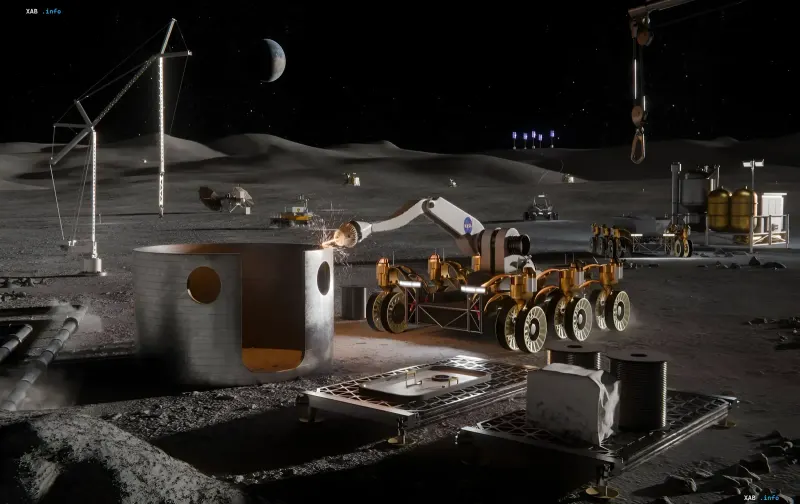
Creating permanent lunar bases is a far more complex task than simply delivering living modules and rockets. Future missions will require prepared landing pads, roads for cargo transport, and stabilized soil. Robotic systems developed by a space robotics startup and an industrial machinery giant are designed to solve these problems.
From Concept to Reality
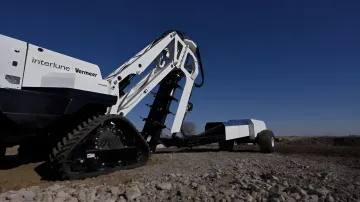
The partners' collaboration began with the creation of a full-scale prototype of a lunar excavator, which was unveiled in May 2025. Now, engineers are moving from theoretical calculations to creating operational equipment for real missions. Testing of the first ready-made tool, intended for preparing lunar sites, is scheduled for 2028.
The main engineering challenge lies in adapting heavy terrestrial machinery to the unique conditions of the Moon. Engineers must overcome a number of critical obstacles:
- Abrasive dust: lunar regolith is an extremely fine and sharp material capable of rapidly wearing down traditional mechanical components.
- Extreme temperatures: the machinery must be able to withstand colossal temperature fluctuations characteristic of the lunar surface.
- Full autonomy: due to signal delay between Earth and the Moon, real-time remote control is impossible. The machines must independently perform excavation and surface leveling.
Foundation for Colonization
Engineers plan to integrate the construction module with a lunar rover. First, the system will undergo testing on Earth, and then it will be sent for demonstration directly to the Moon. According to Interlune CEO Rob Meyerson, autonomous mobility will be the foundation of all future lunar infrastructure.
"Reliable sites are necessary for the safe landing of spacecraft, cargo transport, and future resource extraction," Meyerson emphasizes.
At Vermeer Corporation, the Moon is viewed as the most complex construction site in human history. However, the experience gained during this project will be significant not only for creating lunar settlements. The developed technologies will become the foundation for future missions to explore Mars.