At a children's camp in Bukovel, 110 children from the families of Ukraine's defenders took part in a two-day practical course in tactical medicine focused on recognizing critical bleeding and the rules for applying tourniquets. The sessions were held as part of the "Summer Without War" rest and recovery program and were organized with the support of Ukrainian tourniquet manufacturer SICH and the public organization "Mercy and Health." The instruction was led by Oleg Lelyakin — a SICH tactical medicine instructor, former combat medic, and war veteran — who worked with the children in a "from theory to practice" format over the two days.
Practice matters more than theory: how the sessions went
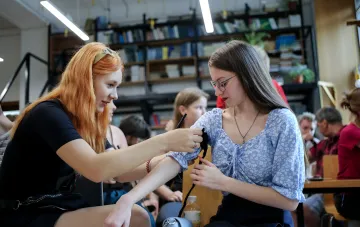
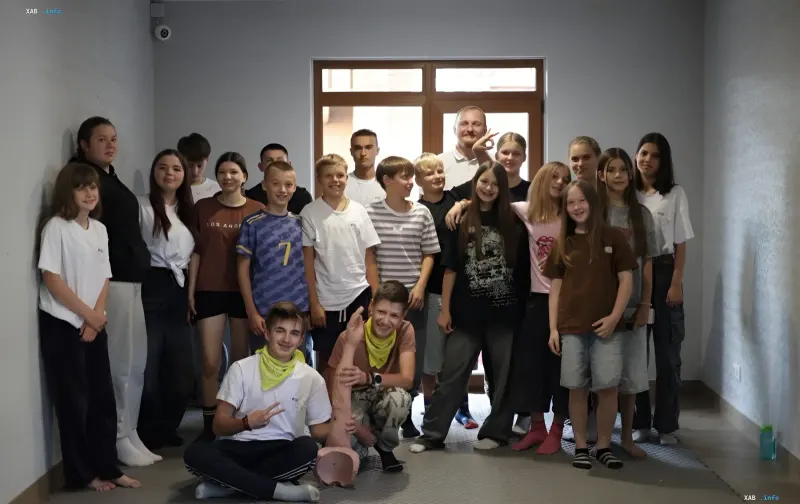
The course program was built around real survival skills. The instructor showed the children how to recognize critical bleeding by its visual signs, what actions to take in the first seconds, and how to correctly apply a tourniquet to a limb. A separate block was devoted to the design and operating principle of the Ukrainian SICH tourniquet — the children studied its device, fixation mechanism, and order of application. The main emphasis, as the organizers stress, was placed on independent practice: under Lelyakin's supervision, each child performed the demonstrated actions on training mannequins. The group photo from the sessions shows one of the teenagers holding an anatomical arm model that imitates a limb for practicing tourniquet application, while the instructor nearby demonstrates the correct technique.
Why this matters beyond the battlefield
Critical bleeding is not exclusively a military injury. It can be caused by a road traffic accident, a serious household injury, an industrial accident, or any other emergency. In such circumstances, every minute counts: without timely stopping of the bleeding, fluid loss cannot be compensated even in a hospital setting. That is precisely why the course organizers emphasize that basic tourniquet-application skills should be accessible to the widest possible circle of people, including teenagers who in the future may find themselves witnesses to or participants in an emergency.
"Summer Without War": the fourth year of the program
The "Summer Without War" children's rest and recovery program is in its fourth year. Over this time, around six thousand children have taken part in it, and in the summer of 2026 more than 1,500 kids went through the program. Camps are set up in the Carpathians and include excursions, sports and developmental activities, and team activities. This year in Bukovel, the children of active-duty servicemembers and veterans, as well as the children of fallen defenders of Ukraine and of warriors missing in action under special circumstances, are resting. The program's organizers are the charitable organization "After Service," the public organization "Mercy and Health," and the company "Ukrainian Armored Vehicles," a member of the National Association of Ukraine's Defense Industry (NAUDI), which is one of the key organizers of the camp sessions.
The role of the defense industry in a social project
Two NAUDI member companies are involved in implementing the program. "Ukrainian Armored Vehicles" acts as the organizer of the camp sessions, while SICH provides the practical tactical medicine sessions. This partnership makes it possible to integrate real production experience and engineering solutions from the defense sector into the educational process for children. For SICH, the largest Ukrainian manufacturer of tourniquets, participation in the project also means the opportunity to demonstrate the design and operating principle of its own product in conditions as close to real ones as possible — including through work with a young audience.
Context: children returning from the Carpathians
As previously reported, the children of servicemembers of the 1st Separate Ivan Bohun Brigade of the Ukrainian Armed Forces' Special Operations Forces also returned from an eight-day trip to the Carpathians, where the participants included children of active-duty military, fallen heroes, and warriors listed as missing in action. Thus, in 2026 the "Summer Without War" program covers children from various military formations and regions, bringing them together within a unified system of rest and development with elements of applied training.