The Government of Ukraine has made a decision that relieves part of the industrial and commercial sector of the obligation to comply with electricity supply restriction schedules. This was announced by the First Vice-Prime Minister and Minister of Energy, Denys Shmyhal, emphasizing that the measure was adopted at the initiative of the Ministry of Energy and is aimed at creating additional incentives for the development of distributed generation and increasing electricity imports. According to him, restrictions will no longer apply to those consumers who independently cover a significant part of their needs without relying on the centralized grid.
The 80% Condition: How Business Gets 'Immunity' from Outages
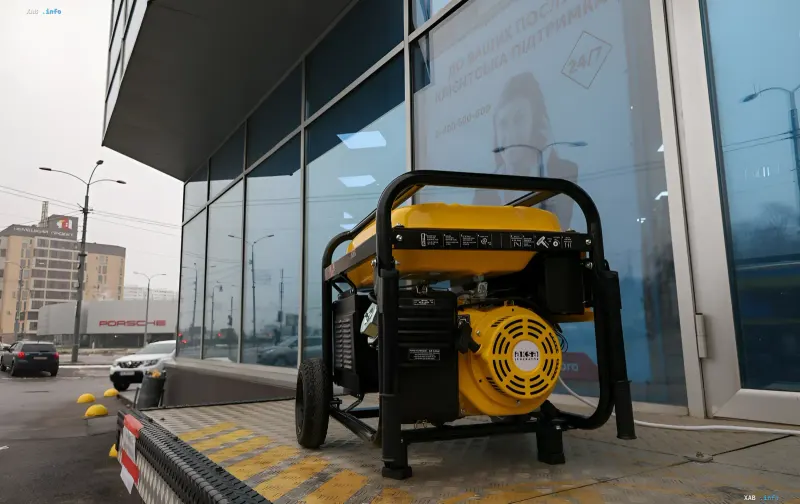
The key criterion for exemption is covering at least 80% of its own energy consumption through electricity imports or its own (distributed) generation. This threshold is enshrined in the Cabinet of Ministers' decision: enterprises that achieve such a level of energy independence are excluded from the scope of mandatory restrictions. Thus, the state is effectively encouraging investments in its own generating capacity and import contracts, shifting part of the load from the overloaded national grid to alternative sources.
Interaction Mechanism of Market Participants
In order for the mechanism to work in practice, the decision details the order of interaction between key players in the energy market: Ukrenergo, distribution system operators, electricity suppliers, producers of distributed generation, and the consumers themselves. This is necessary to correctly record the actual volumes of imports and own generation of each enterprise and confirm its right to exemption from schedules. Without such coordination, the 80% rule would be impossible to verify and apply uniformly across the country.
Context: Preparing for a Tough Winter Amid Attacks on Energy Infrastructure
The decision was made against the backdrop of a steady forecast for a tense heating season. Vadym Skibitsky, Deputy Head of the Main Directorate of Intelligence of the Ministry of Defense, previously stated that in autumn and winter, Russian occupiers would continue to deliberately strike Ukraine's energy infrastructure, including the use of specialized drones to hit power lines. Prime Minister Serhiy Kretsky, for his part, noted that the coming winter, according to forecasts, will not be easier than the last, as Russia has increased attacks on civilian infrastructure. Under these conditions, regions and state enterprises continue to implement resilience plans, and the stimulus for distributed generation becomes one of the tools for reducing vulnerability.
Contradictory Data
Here it is important to honestly distinguish between two parallel lines. On the one hand, statements that business is 'working without outages' may create the impression of a complete cancellation of restrictions. On the other hand, Shmyhal himself in other comments emphasized that complex power outage schedules will remain in the coming days and in general, and outages may return to the system. That is, the exemption is strictly partial: it applies exclusively to enterprises that actually cover 80% or more of consumption through imports or their own generation. For other consumers, as well as for the overall load on the grid, the restriction regime remains in force. Thus, the optimistic formulation of 'business without outages' and the cautious assessment of 'complex schedules remain' do not contradict each other, but describe different market segments and different time horizons.