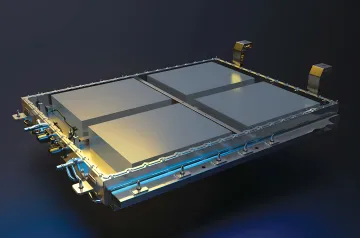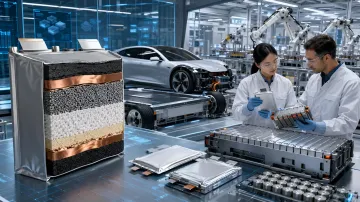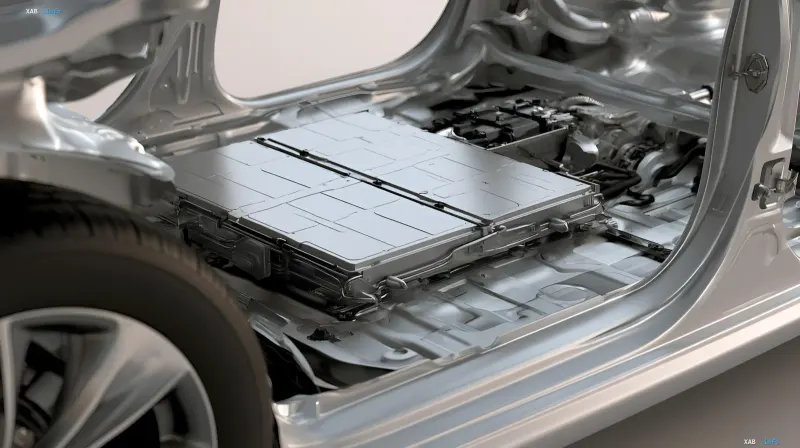
China's CATL, the world's largest traction battery manufacturer, has confirmed it is continuing solid-state battery development and expects to begin small-scale production in 2027. Unlike conventional lithium-ion cells, these batteries use a solid electrolyte instead of a liquid or gel-based one. Theoretically, energy density could exceed 400 Wh/kg, significantly increasing electric vehicle range and improving fire resistance—a crucial advantage for safety.
Engineering Barriers: Why Mass Production is Delayed
The main obstacle to serial production remains the instability of the contact between the solid electrolyte and the electrodes. With each charge and discharge cycle, the materials expand and contract, eventually causing delamination and reducing battery life. Furthermore, mass production will require developing entirely new materials, manufacturing processes, and equipment. CATL Chairman Robin Zeng previously noted that serial production is still far off, and Chief Technology Officer Ni Jun warned that widespread technology adoption will take at least several years.
Phase Four of Nine: Readiness Assessment
At an industry event in Dalian, Robin Zeng clarified that regarding solid-state batteries, CATL can only be said to have reached the fourth of nine stages of mass production preparation. Before such batteries can be produced in significant quantities, all nine stages must be cleared. Even if prototypes demonstrate stable performance in laboratory conditions, preparing for mass output may take several years and involve serious technological challenges. Former CATL employee Wu Zuwei, now heading Hithium Energy Storage, warned at the same forum that mass adoption of sodium-ion and solid-state batteries in EVs is expected only in three to five years at best.
CATL's Strategy: Parallel Tracks and First Customers
The initial batches in 2027 will be used primarily in high-end vehicles and specialized testing equipment. High costs and limited production volumes will hinder the adoption of these batteries in mass-market family EVs. Simultaneously, CATL is developing several alternative directions: condensed-matter batteries, sodium-ion solutions, and Shenxing ultra-fast charging batteries. Thus, the company is not betting on a single technology type, but building a portfolio of solutions to cover different market segments as each technology matures.