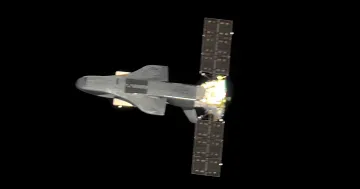
China's GuoXing Aerospace has announced the completion of production for five satellites belonging to the third batch of the 'Xingsuan' (Star Computing) project. According to the developer, the spacecraft are currently being prepared for launch in the near future. This event highlights the steady pace of implementing one of the most ambitious programs to shift computing power into orbit, which has garnered intense scrutiny in both the industry and media over recent months.
Orbital Computing Network of 2,800 Spacecraft
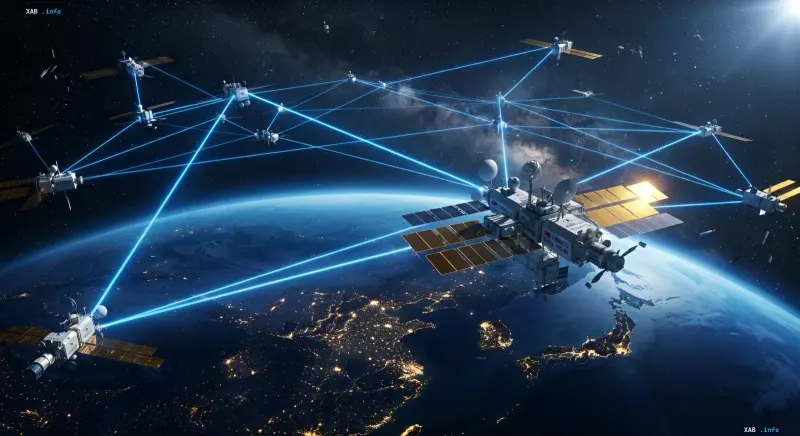
The 'Xingsuan' project envisions the creation of an orbital computing network consisting of 2,800 satellites. The core concept is to relocate part of artificial intelligence tasks into space: processing data directly in orbit and supporting terrestrial AI systems. According to company plans, a constellation of 1,000 satellites is slated for deployment by 2030 with commercial operations beginning then, while full completion of the network is scheduled for 2035. Thus, the third batch of five spacecraft represents another milestone in the phased expansion of the constellation.
Launch Chronology: From the First Batch to Model Deployment
The first batch of 12 satellites was launched on May 14, 2025. Later, the large language model Qwen3 was deployed on the established orbital computing center, demonstrating the platform's viability for AI tasks. On October 14, 2026, an additional eight spacecraft from the second batch were sent into orbit. They are equipped with high-performance computing modules, laser communication systems, and low-light cameras, expanding the constellation's functionality beyond basic computing.
What Will Be Tested on the New Batch of Satellites
According to project data, the spacecraft from the second batch will test several technologies critical for scaling: 10 kW liquid cooling, large-area cooling panels, laser communications, and training foundational AI models directly in space. These tests are vital for the entire network architecture: without solving thermal management and high-speed inter-satellite communication challenges, moving energy-intensive computing to orbit cannot be economically and technically sustainable.
Context: Competition for Computing Power
The development of 'Xingsuan' unfolds against a backdrop of growing interest in orbital data centers overall. For instance, SpaceX plans to launch its first orbital data centers in 2027. A broader context is also set by the public debate that the limiting factor for scaling AI is not algorithm iteration speed, but energy capacity: in a recent podcast, Elon Musk noted that China's total electricity generation could vastly exceed that of the United States, making the country an attractive site for energy-intensive AI clusters. Against this backdrop, China's bet on orbital computing appears as an attempt to relieve pressure on terrestrial power grids while simultaneously securing a niche in the global race for AI infrastructure.